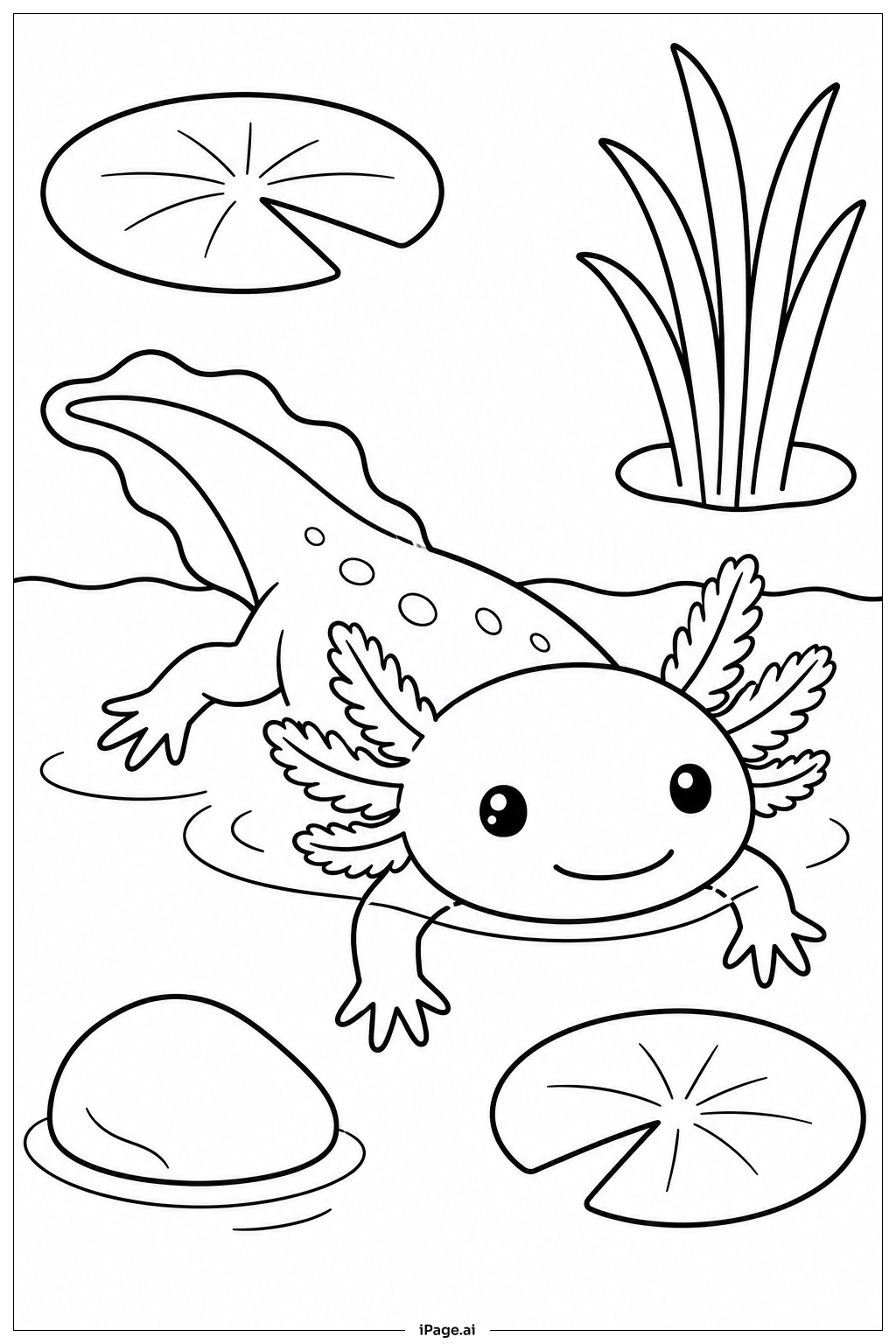
Coloring tips: How to color Axolotl In Shallow Water coloring page well?
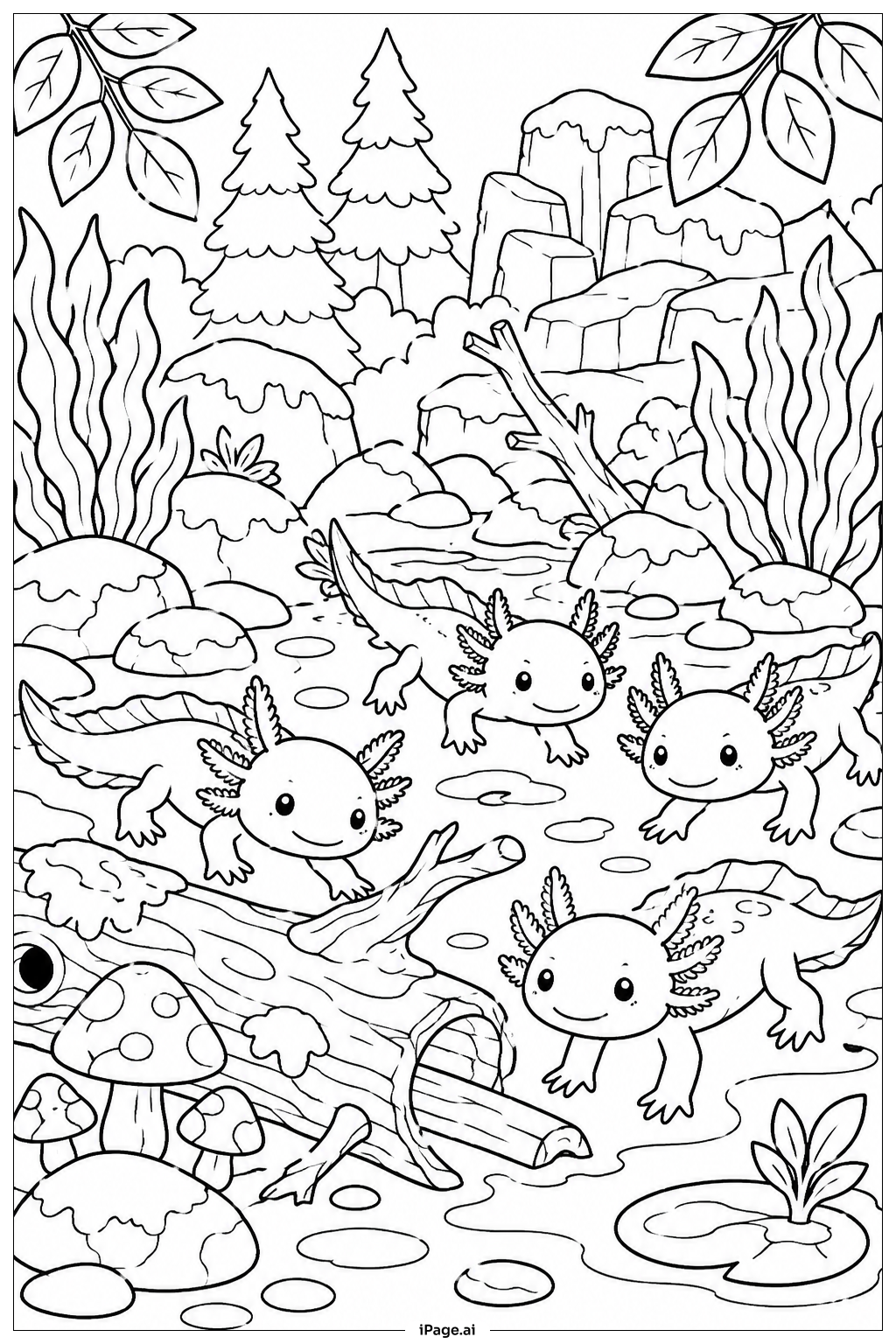
For this image, you can use soft and gentle colors to bring the Axolotl to life. Try light pinks or pale peach shades on the Axolotl’s body to show its delicate skin. The feathery gills can be colored with a mix of soft reds and oranges for a vibrant look. The shallow water can be shaded with blues and greens to represent clear, clean water. Use lighter tones near the surface and darker tones for deeper parts. For the stones and plants, earthy browns and fresh greens will add natural contrast. Bright shades like yellow or light green can highlight leaves floating on the water. Feel free to blend colors to show reflections and ripples for more depth. This coloring allows you to explore soft pastels and natural water tones.
Coloring challenges: Which parts are difficult to color and need attention for Axolotl In Shallow Water coloring page?
• Fine Details of Gills: The Axolotl’s external gills have many thin branches. Coloring these small, delicate parts requires patience and a steady hand to avoid coloring outside the lines.
• Water Ripples: The ripples around the Axolotl are curved and flowing. Capturing their movement with smooth color gradients can be challenging but adds realism.
• Transparent Water Effect: Showing how the water partially covers the Axolotl and stones needs careful layering of light and dark colors to create a transparent look.
• Small Surrounding Elements: The tiny stones and aquatic plants have varied shapes. Coloring each with appropriate shades requires attention to detail to keep the scene lively but balanced.
• Contrast Balance: Choosing colors that make the Axolotl stand out without overpowering the subtle water background can be tricky. It’s important to balance bright and soft colors well.
Benefits of coloring books: Advantages of drawing Axolotl In Shallow Water coloring page
Coloring this image helps develop fine motor skills due to the small, detailed gills and surrounding elements. It encourages attention to detail when shading water ripples and transparent effects. This activity also promotes creativity by allowing children to experiment with natural color combinations, such as blues, greens, pinks, and browns. Coloring the Axolotl scene can be calming and meditative, fostering focus and patience. It introduces children to unique animals and water habitats, sparking curiosity and learning about nature. Overall, it offers both artistic practice and educational value in an enjoyable way.