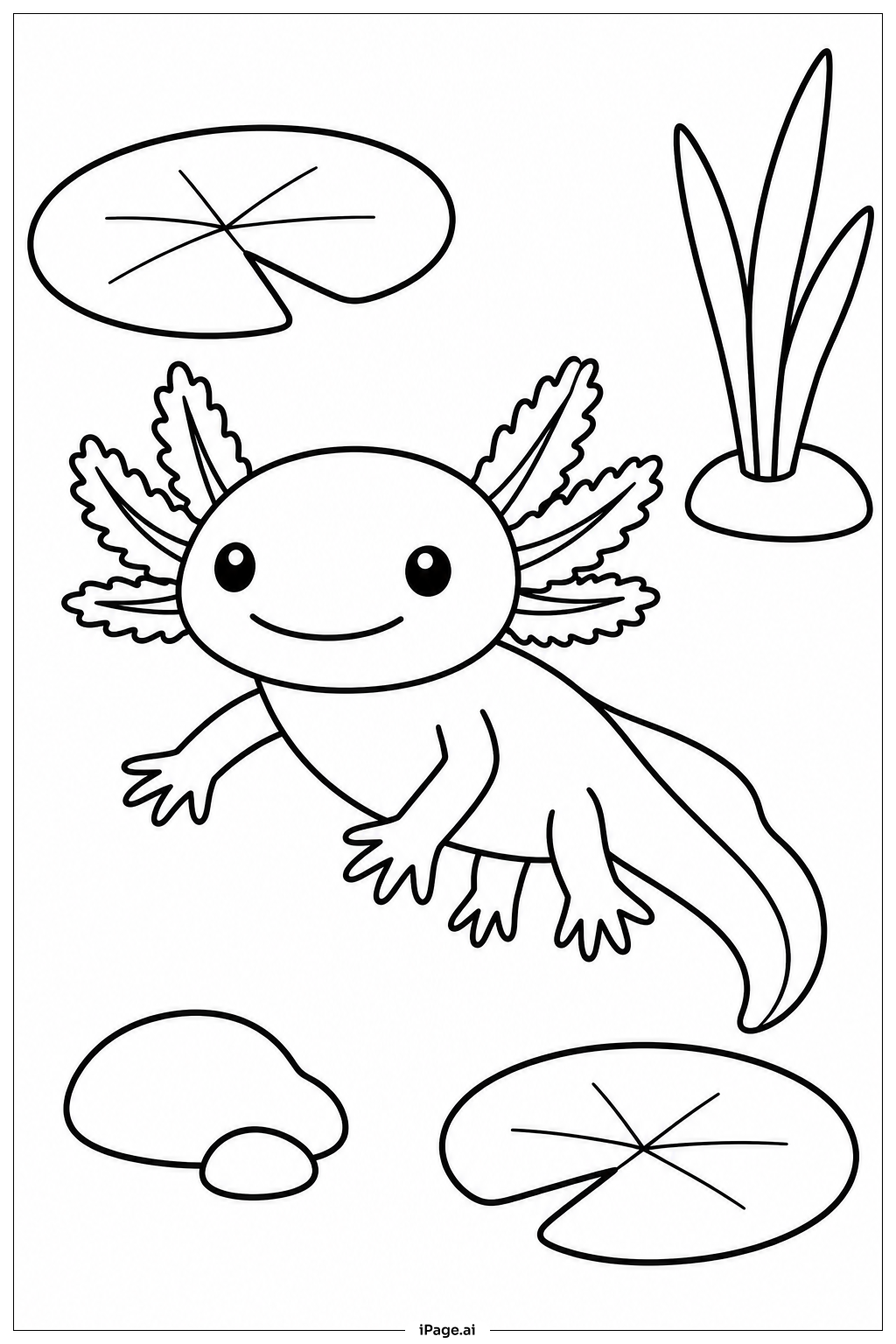
Coloring tips: How to color Axolotl In Pond coloring page well?
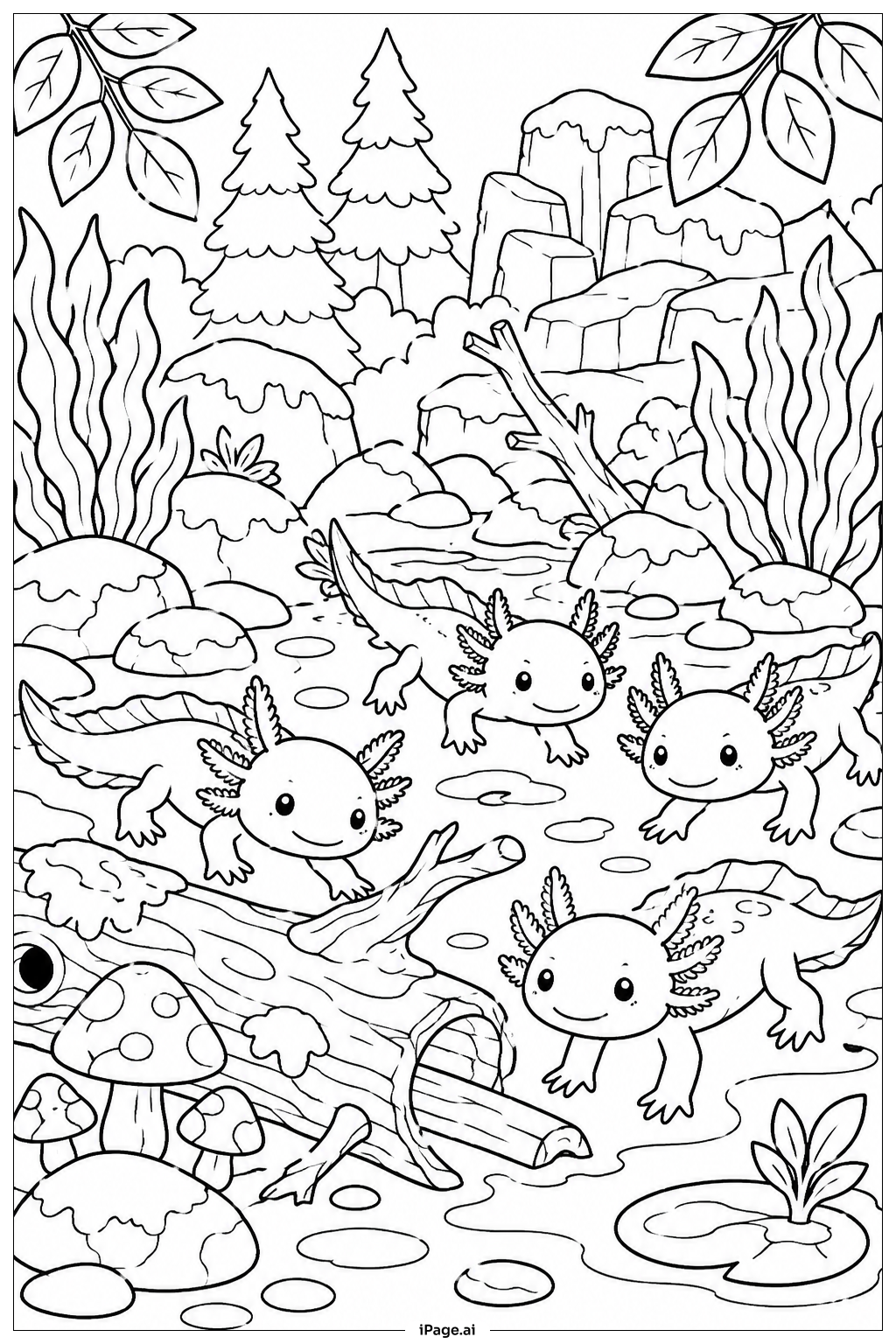
To color this image, try using soft pastel shades for the Axolotl’s skin, like gentle pinks, light oranges, or pale yellows to show its delicate texture. Its feather-like gills can be shaded with slightly brighter colors, such as reds or coral tones, to make them stand out. For the water, use calming blues and greens to create a peaceful pond atmosphere. The lily pads and water plants can be a variety of greens, with touches of yellow or brown for natural variation. Adding shading around the stones with gray or brown will give the image depth. Coloring the subtle water ripples in lighter shades will help show movement. Remember to use light layers and blend smoothly to capture the calm feeling of the pond.
Coloring challenges: Which parts are difficult to color and need attention for Axolotl In Pond coloring page?
• Fine Details: The Axolotl’s external gills are intricate and thin. It takes patience to color these small parts carefully without bleeding outside the lines. Using fine-tipped coloring tools or markers can help.
• Blending Colors: The body of the Axolotl has smooth gradients from lighter to darker shades to show its shape. Achieving natural-looking color blending can be a challenge, especially for younger colorers.
• Water Reflection: The water around the Axolotl has subtle ripples and reflections. Capturing these soft effects requires gentle coloring techniques and attention to detail to avoid making the water look flat.
• Plant Textures: The lilies and pond plants have different textures and shapes. Coloring them realistically means varying the greens and adding shadows and highlights.
• Stones and Background: The stones at the bottom of the pond need shading and texture to avoid looking like plain shapes. This requires some practice with light and shadow effects to show depth.
Benefits of coloring books: Advantages of drawing Axolotl In Pond coloring page
Coloring this Axolotl In Pond image helps develop focus and fine motor skills because of its detailed features like the gills and water plants. It encourages patience as children learn to color within tight spaces and experiment with blending colors. The image also inspires creativity by allowing the choice of imaginative or realistic color palettes. Coloring the peaceful underwater scene can be calming and promote mindfulness, reducing stress. Finally, this activity teaches appreciation for unique animals and nature, sparking curiosity about amphibians and pond habitats.