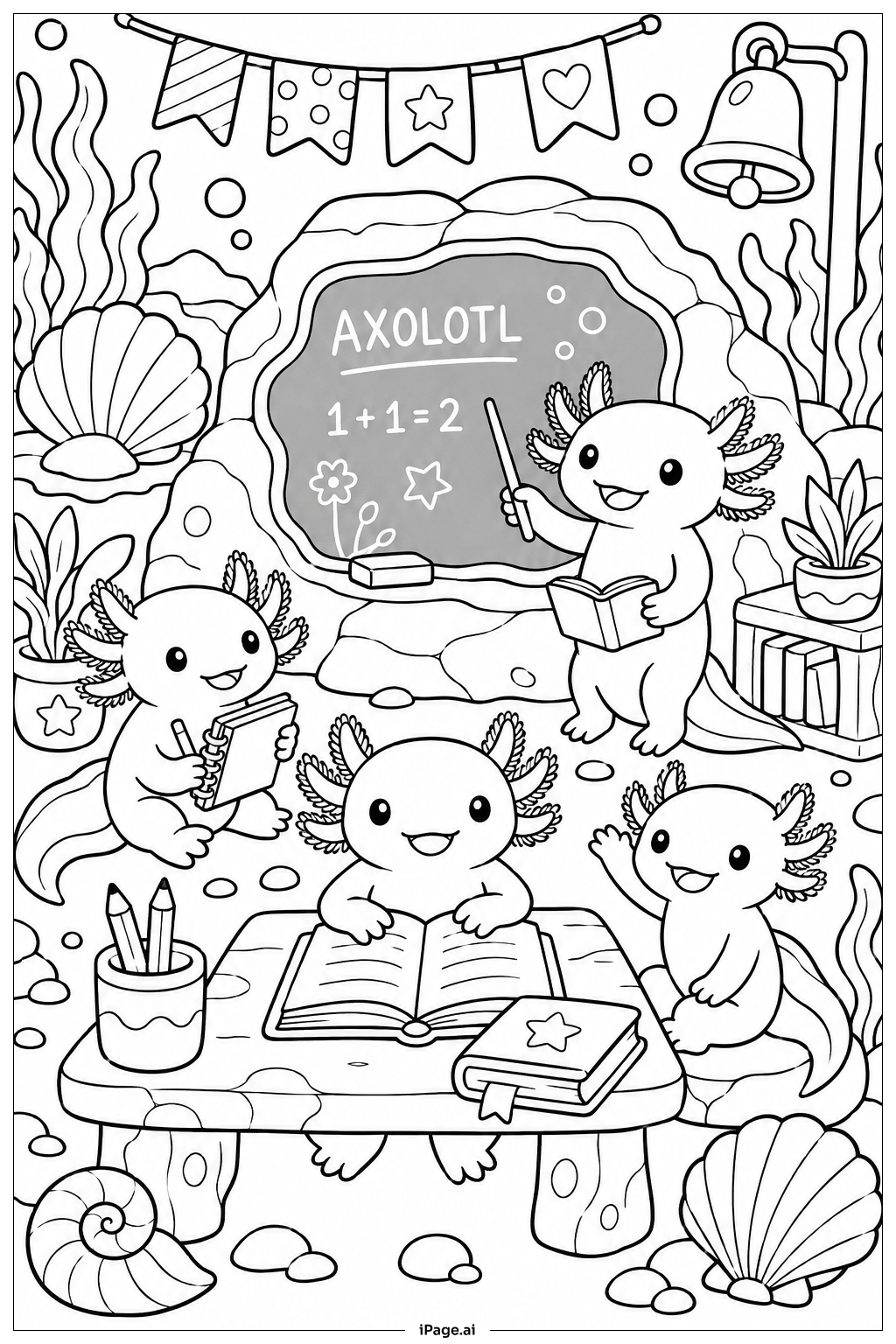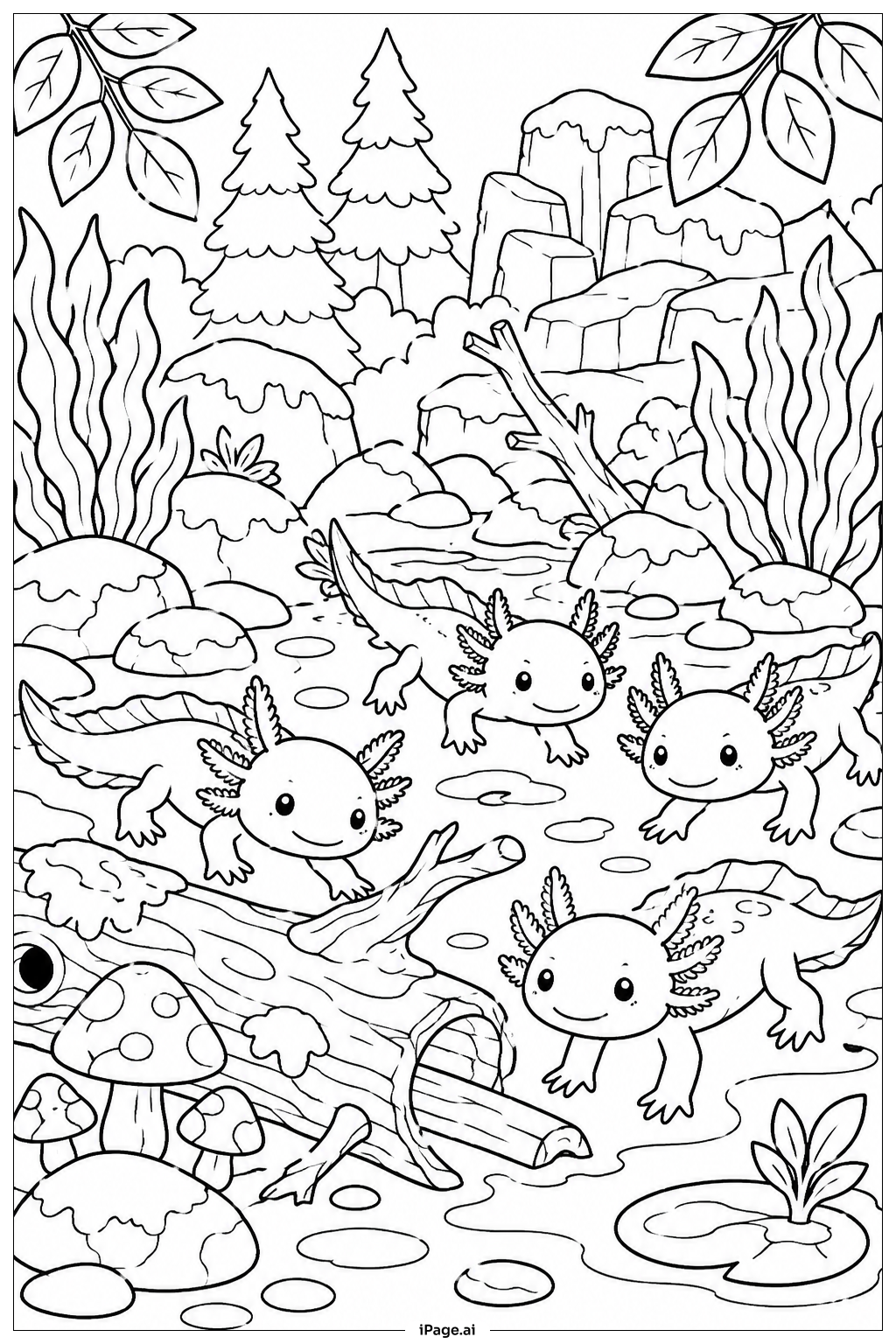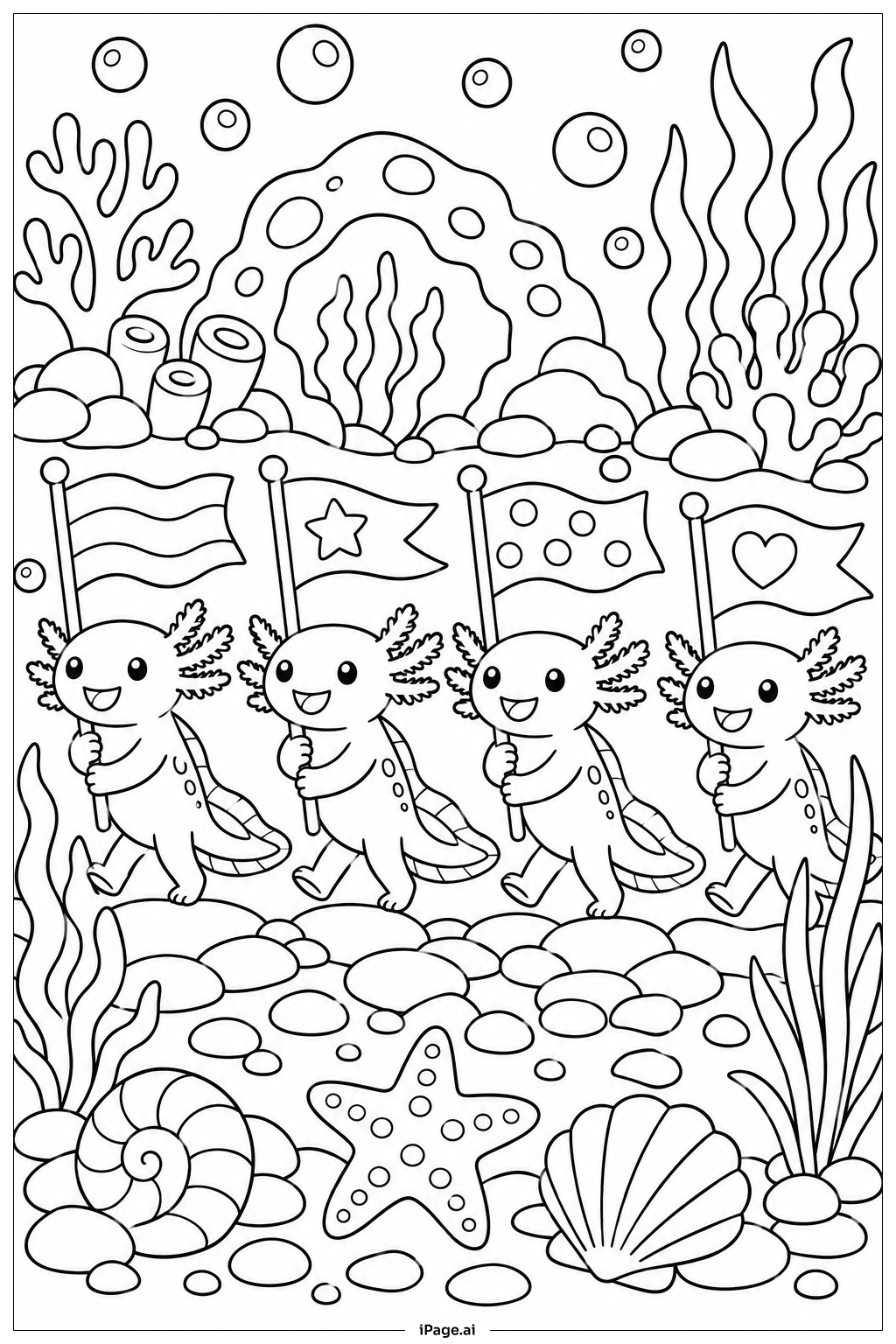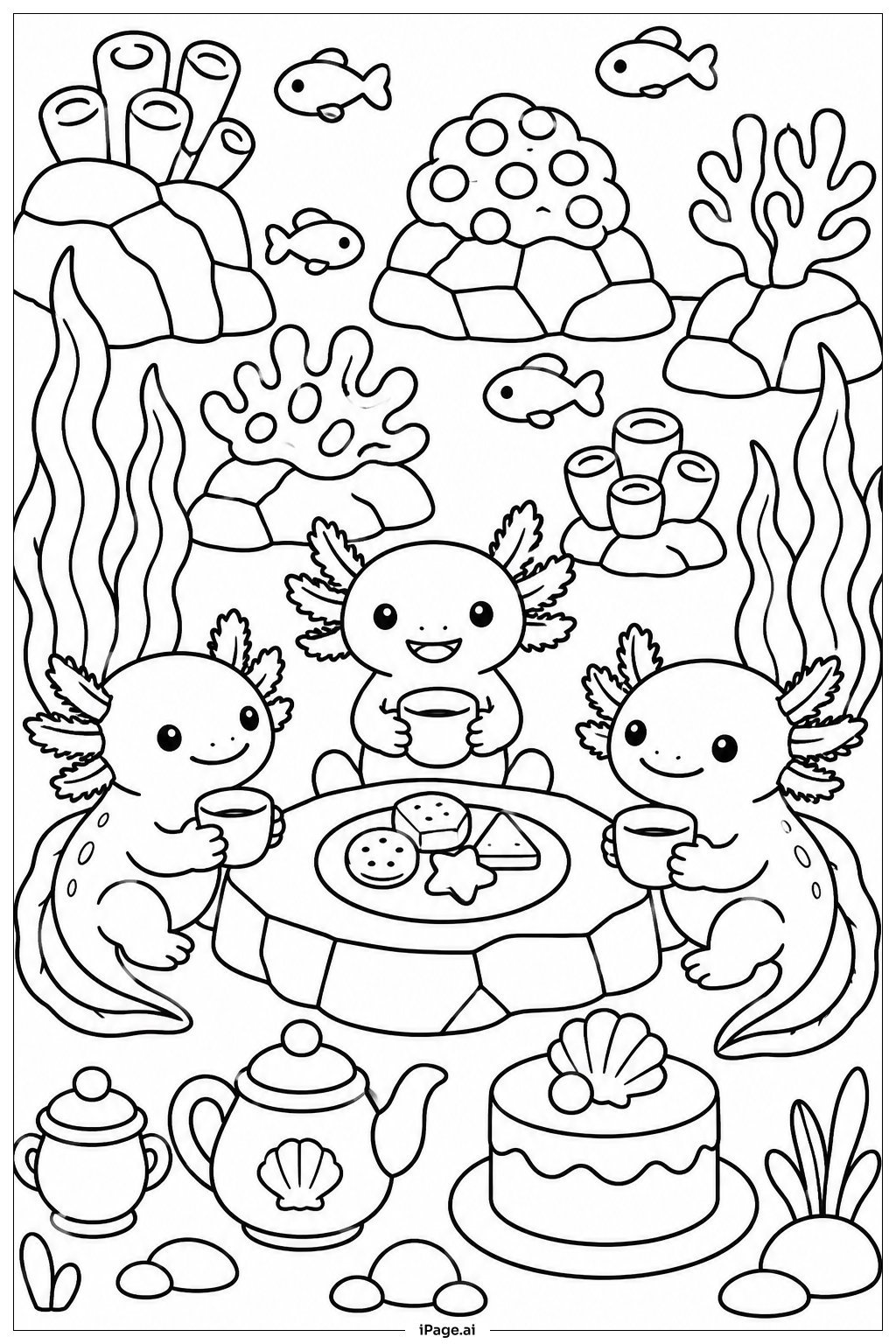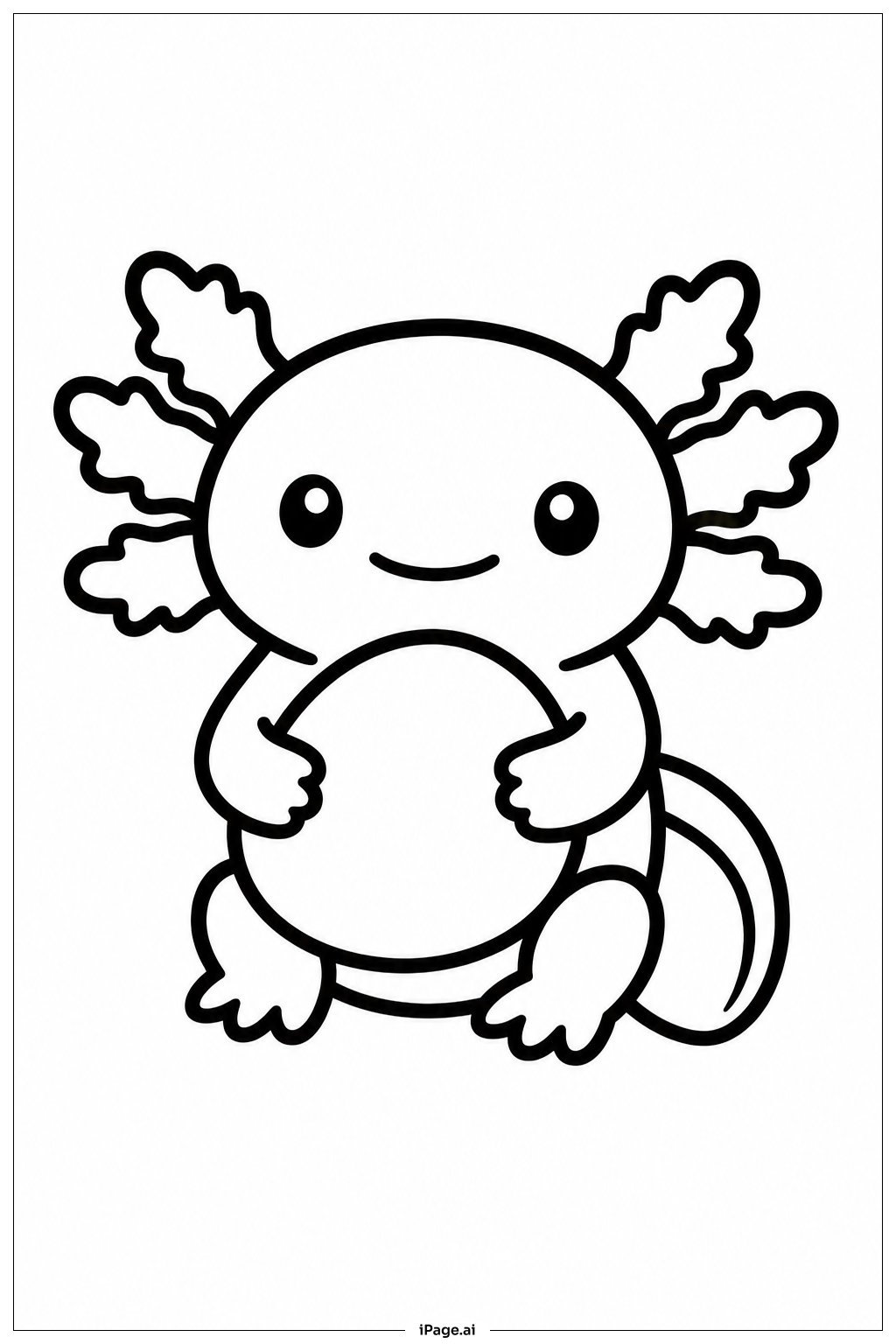
Coloring tips: How to color Axolotl Holding Pebble coloring page well?
For this Axolotl Holding Pebble image, use soft pastel colors to highlight the Axolotl’s gentle nature. Pale pinks, peach, or light lavender work well for its smooth skin and feathery gills. You can make the pebble a contrasting color like soft gray or light brown to make it stand out. Try blending shades gently to capture the natural light reflecting on the Axolotl’s body and the smooth surface of the pebble. For the background, calm water tones such as light blue or turquoise create a peaceful underwater feeling. Adding touches of green around the Axolotl can suggest plants or moss nearby. Encourage mixing bright and soft colors to make this scene inviting and full of life.
Coloring challenges: Which parts are difficult to color and need attention for Axolotl Holding Pebble coloring page?
• Fine Details: The Axolotl’s feathery gills have many thin, delicate strands that require careful coloring to stay inside the lines and give a textured look.
• Smooth Skin Shading: Capturing the smooth, moist texture of the Axolotl’s skin can be challenging because it needs blending of colors without harsh edges.
• Contrast Balance: Coloring the small pebble so it stands out without overpowering the Axolotl involves choosing the right contrast and shade.
• Limited Large Areas: Most of the image consists of smaller parts like limbs, gills, and the pebble, which demand patience and precise strokes.
• Expression Emphasis: Getting the Axolotl’s friendly expression right means careful coloring around the eyes and mouth to keep them expressive and clear.
Benefits of coloring books: Advantages of drawing Axolotl Holding Pebble coloring page
Coloring this Axolotl Holding Pebble page helps develop fine motor skills due to the need for precise control around small details like the gills and pebble. It encourages creativity by letting children choose colors that bring the amphibian to life while experimenting with shading and blending. Focusing on the friendly face promotes attention to detail and emotional connection, enhancing observation skills. This activity also introduces young artists to nature and unique animals, sparking curiosity about wildlife. Overall, it offers a calming, enjoyable experience that boosts concentration and artistic confidence.