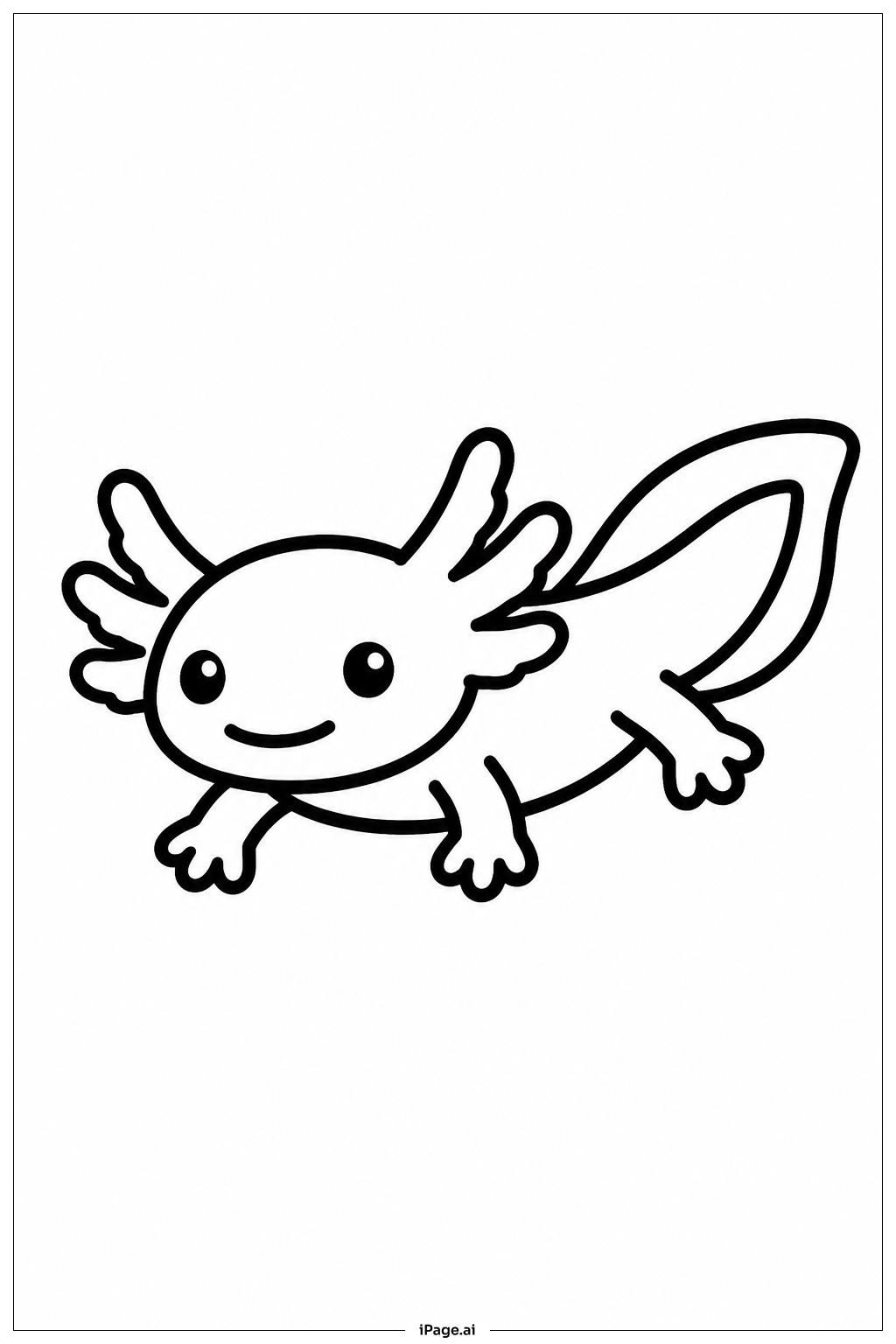
Coloring tips: How to color Axolotl Floating coloring page well?
When coloring this Axolotl Floating image, you can use soft pastel colors like pale pinks, light oranges, or gentle corals for the body to reflect the real axolotl’s delicate skin. Try using light green or blue shades for the water background to create a calming and fresh underwater feeling. The feathery gills offer a fun chance to blend different shades, such as pinks with hints of purple or red, to show their texture. For the bubbles, soft blues or whites will help them appear shiny and light. Encourage children to experiment with blending colors gently to show the water’s flow and the axolotl’s smooth body. Adding little highlights with white crayons or light colors helps make the image look lively.
Coloring challenges: Which parts are difficult to color and need attention for Axolotl Floating coloring page?
• Fine Details: The delicate external gills of the Axolotl have many thin branches, which can be difficult to color without going outside the lines. Careful and steady coloring is needed here. • Smooth Blending: Achieving a soft, smooth look for the Axolotl’s skin and water requires blending colors softly, which can be challenging for younger children or beginners. • Overlapping Elements: The bubbles and water currents overlap parts of the Axolotl’s body, requiring attention to keep colors separate for each element without mixing them. • Small Limbs: Coloring the tiny fingers and toes may be tricky due to their small size and need for precision. • Water Effects: Creating the effect of floating and flowing water behind and around the Axolotl needs understanding of subtle shading to show depth and movement without making the picture look flat.
Benefits of coloring books: Advantages of drawing Axolotl Floating coloring page
Coloring this image of Axolotl Floating helps improve hand-eye coordination and fine motor skills, especially when working on small details like the gills and tiny limbs. It encourages creativity by letting children explore blending colors to recreate the underwater environment. Focusing on smooth coloring and shading techniques builds patience and concentration. The aquatic theme introduces children to unique animals, broadening their knowledge about nature and encouraging curiosity. Coloring this calm, floating creature can also be relaxing and soothing, promoting mindfulness and reducing stress for children of all ages.