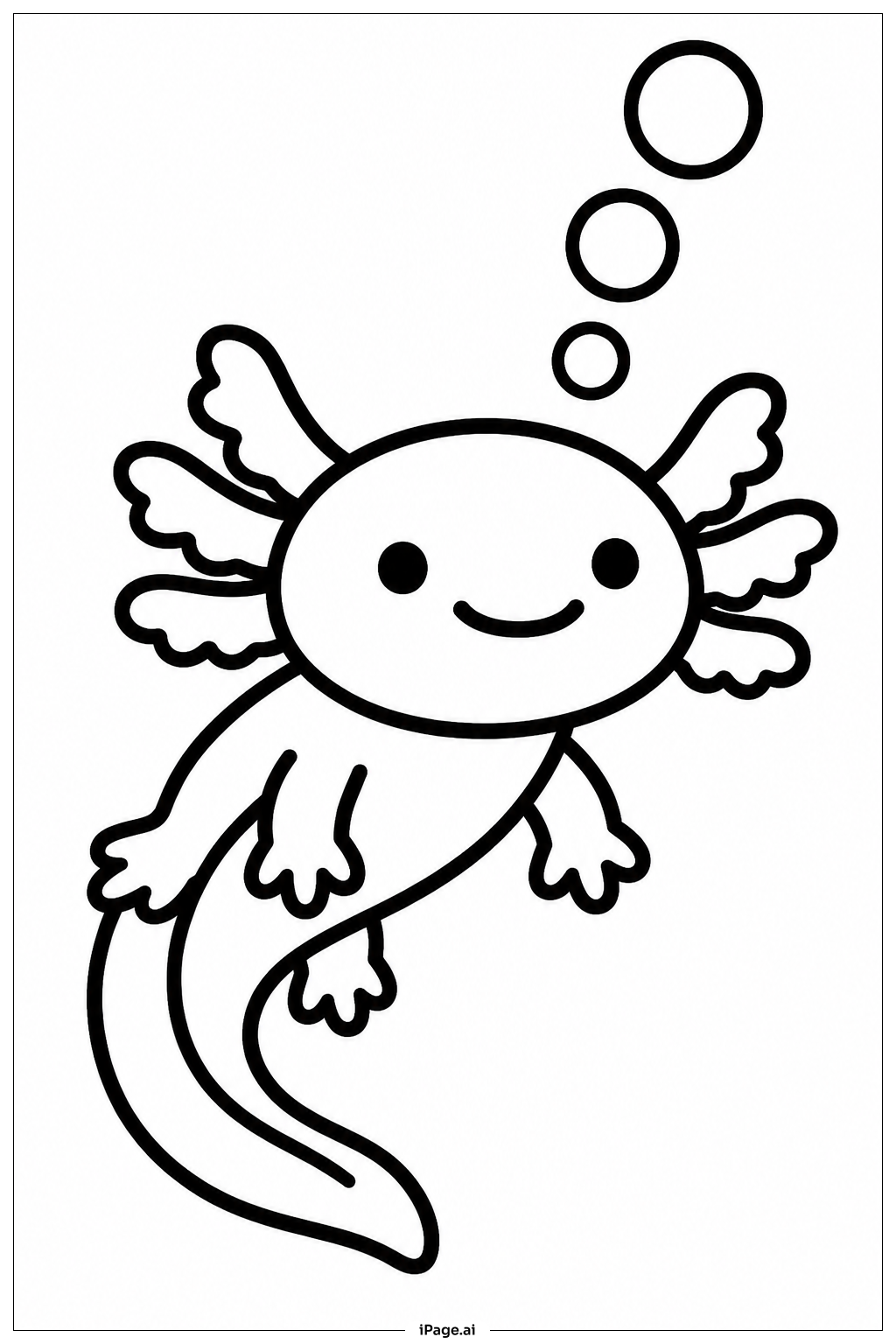
Coloring tips: How to color Axolotl Blowing Bubbles coloring page well?
For this Axolotl Blowing Bubbles image, try using soft and bright colors to match the cheerful mood. The Axolotl’s body can be colored in light pink, peach, or pale orange shades to capture its natural appearance. The gills are a lovely opportunity to add detail, using reds, bright pinks, or even purples. Use light blues or turquoise for the water background to create a fresh underwater feel. Color the bubbles with soft blues and whites to make them look shiny and transparent. Don’t forget to add some green hues for the underwater plants to give a lively touch. Feel free to experiment with gentle gradients to highlight the smooth textures of the Axolotl’s skin and the water around it.
Coloring challenges: Which parts are difficult to color and need attention for Axolotl Blowing Bubbles coloring page?
• Fine gill details: The Axolotl’s external gills have many small branches that require careful coloring to stay inside the lines and keep their feathery look.
• Bubble shading: Making the bubbles look round and shiny needs subtle shading with light colors, which can be tricky for younger artists.
• Blending skin tones: The Axolotl’s smooth skin may need gradual color blending from light to slightly darker shades to give a natural and three-dimensional effect.
• Underwater environment: Coloring water with ripples and reflections needs attention to avoid making the background too busy or overwhelming the main Axolotl figure.
• Small plants and details: The little leaves and underwater plants require neatness and patience since they are small but add to the overall scene’s realism.
Benefits of coloring books: Advantages of drawing Axolotl Blowing Bubbles coloring page
Coloring this Axolotl Blowing Bubbles image helps children develop fine motor skills by practicing careful coloring of small, detailed areas like the gills and bubbles. It encourages creativity in choosing colors and blending techniques to show the underwater setting. This picture also promotes patience and focus as children work on the delicate parts of the image. Furthermore, coloring an unusual and fascinating animal like the Axolotl can spark curiosity about nature and biology, inspiring learning about aquatic life. Overall, it is a fun and educational exercise suitable for both beginners and more experienced young colorists.