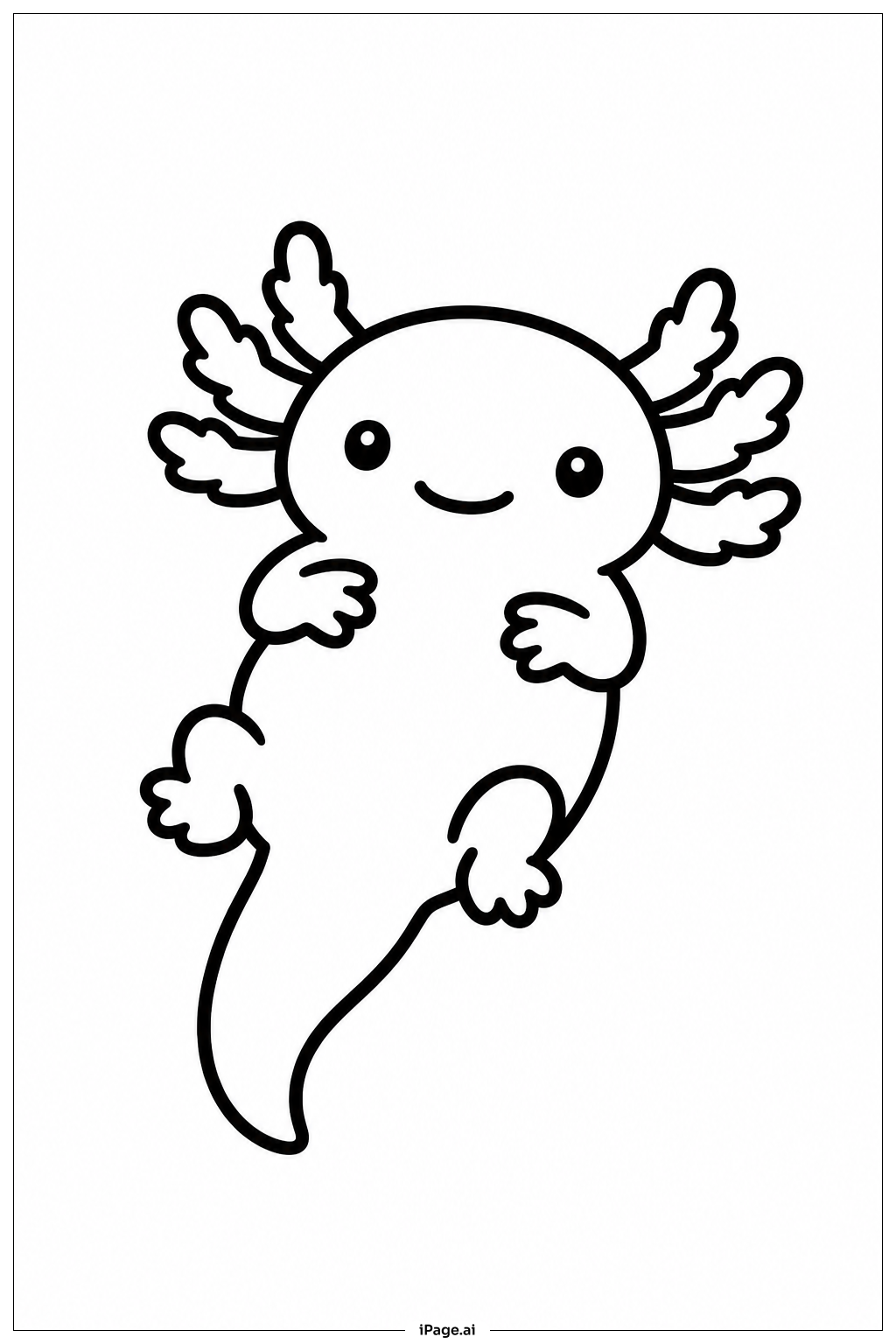
Coloring tips: How to color Axolotl Belly Up coloring page well?
Start with the body of the axolotl. Real axolotls are often pale pink or soft peach, but feel free to use any color you love — light purple, sky blue, or even golden yellow look fantastic. Use a slightly darker shade of the same color to add gentle shading along the edges of the belly and the sides of the body. This gives the axolotl a soft, rounded look.
For the feathery gill plumes, try a brighter or deeper version of the body color, like hot pink if the body is light pink. Use light, short strokes to follow the direction of each gill branch so they look fluffy and delicate.
Color the eyes with a warm amber, golden yellow, or dark brown. Leave a tiny white dot in each eye to make them look shiny and alive.
For the water and bubbles around the axolotl, soft blues and aquas work beautifully. Use lighter shades toward the center and slightly deeper tones at the edges to suggest depth. Keep the bubbles mostly white or very pale blue with a thin outline to make them pop.
Coloring challenges: Which parts are difficult to color and need attention for Axolotl Belly Up coloring page?
• Feathery Gill Plumes: The gill plumes are the most intricate part of this image. They are made up of many fine, branching strands that fan outward. Coloring each individual strand without accidentally blending into the neighboring ones requires a sharp pencil or a fine-tipped marker. Take your time working from the base of each plume outward, and consider leaving thin gaps of white between strands to keep them visually separated.
• Smooth Belly Shading: The axolotl's exposed underbelly is a large, curved surface. To make it look soft and three-dimensional rather than flat, you need to apply gradual shading. The center of the belly should be lighter, while the edges should be slightly darker. Blending colored pencils or layering watercolor washes slowly is key here. Rushing this area can result in harsh lines that break the gentle, rounded illusion.
• Small Dangling Legs: The four little legs are tiny and close to the body, making them tricky to color neatly without going outside the lines. Use a very fine tool and work slowly. Try a slightly different shade than the main body to help the legs stand out from the belly area.
• Water and Bubbles: Coloring the water background requires careful control so it does not overpower the axolotl. Bubbles in particular need a very light touch — too much color and they disappear. Consider outlining bubbles lightly and leaving the inside mostly uncolored, using just a faint tint along one edge to suggest reflection.
• Facial Expression Details: The eyes and smile are small but carry a lot of charm. Use a steady hand and a fine-tipped tool to stay within the tiny facial features without smudging or bleeding into the surrounding skin area.
Benefits of coloring books: Advantages of drawing Axolotl Belly Up coloring page
Coloring this Axolotl Belly Up page offers a wonderful mix of fun and learning for kids and beginners alike.
First, it builds fine motor skills. Carefully coloring the delicate gill plumes and tiny legs helps young hands develop better control and precision — skills that carry over into writing and drawing.
Second, it encourages creativity. Axolotls can be colored in so many ways. Kids are free to invent their own fantasy axolotl in rainbow hues, sparkling purples, or ocean blues. There are no wrong choices, which builds confidence and imaginative thinking.
Third, it teaches patience. The detailed gill feathers and smooth belly shading require slow, thoughtful work. Practicing patience through art is a gentle and enjoyable way to develop focus and persistence.
Fourth, it sparks curiosity about nature. Axolotls are real, fascinating creatures native to Mexico. After coloring one, kids often want to learn more about where axolotls live, what they eat, and why they are so unique among amphibians.
Finally, it is simply calming and joyful. The playful belly-up pose of this axolotl is naturally fun and lighthearted. Spending time with a cheerful image like this one reduces stress and brings a sense of playful happiness to the coloring experience.