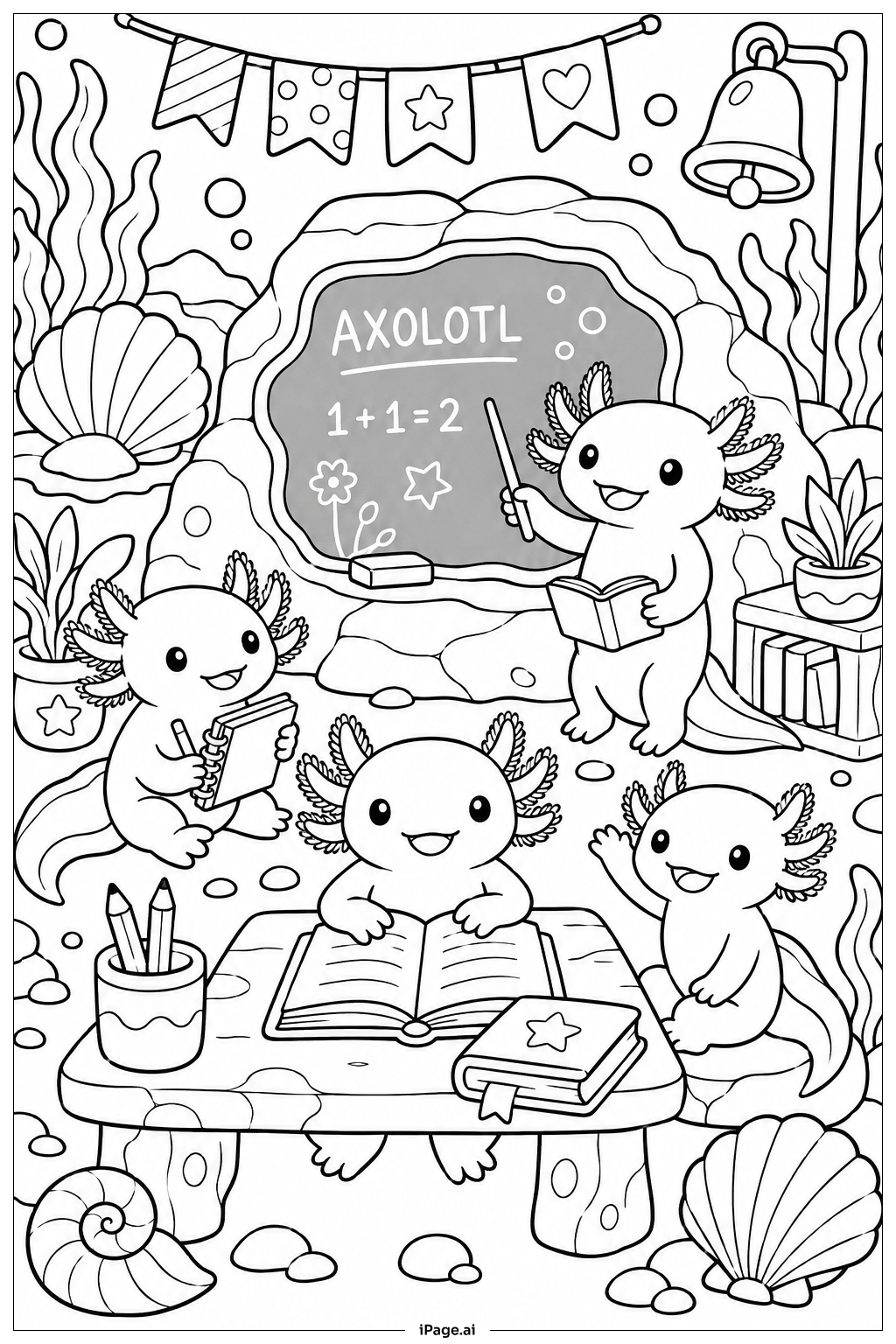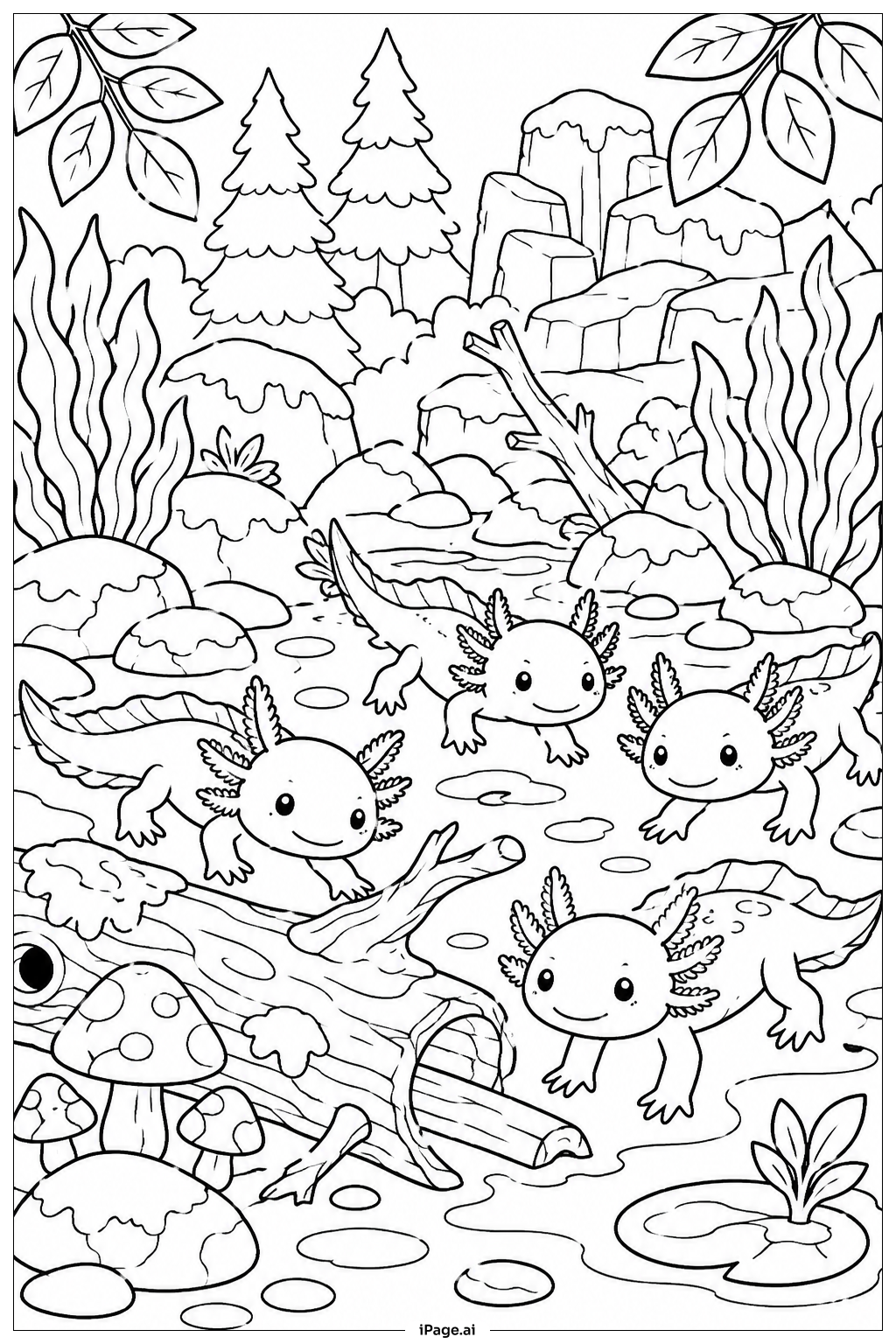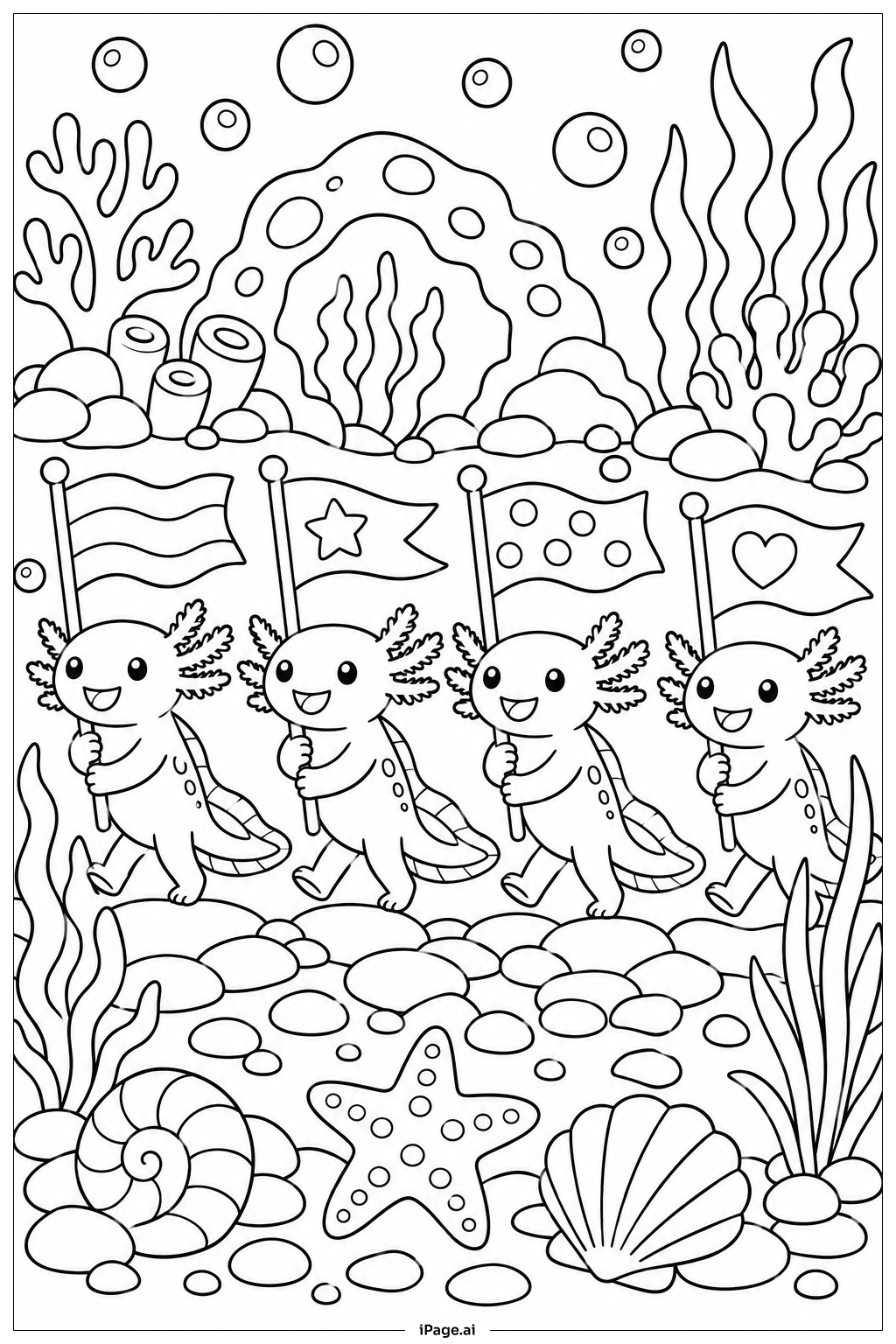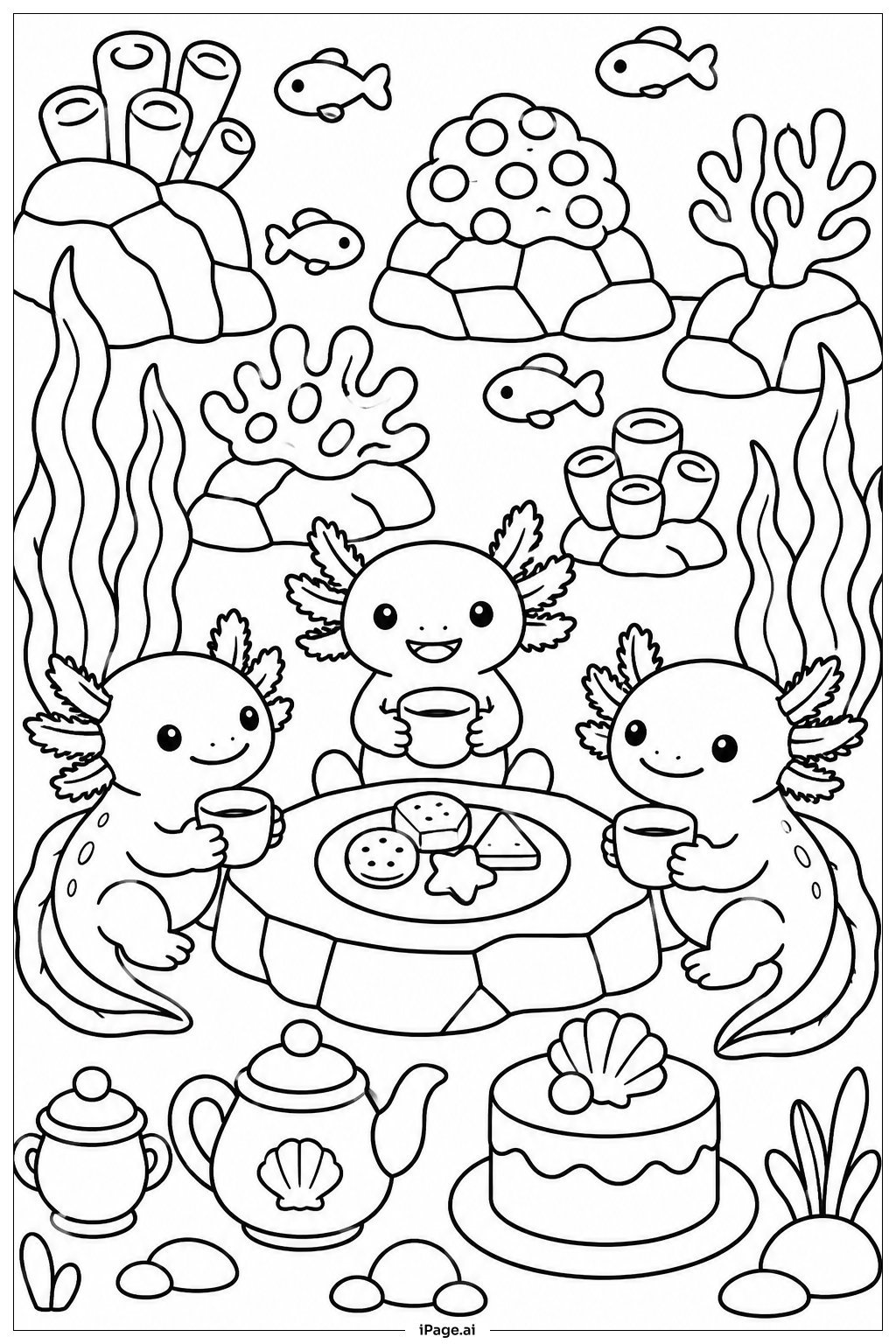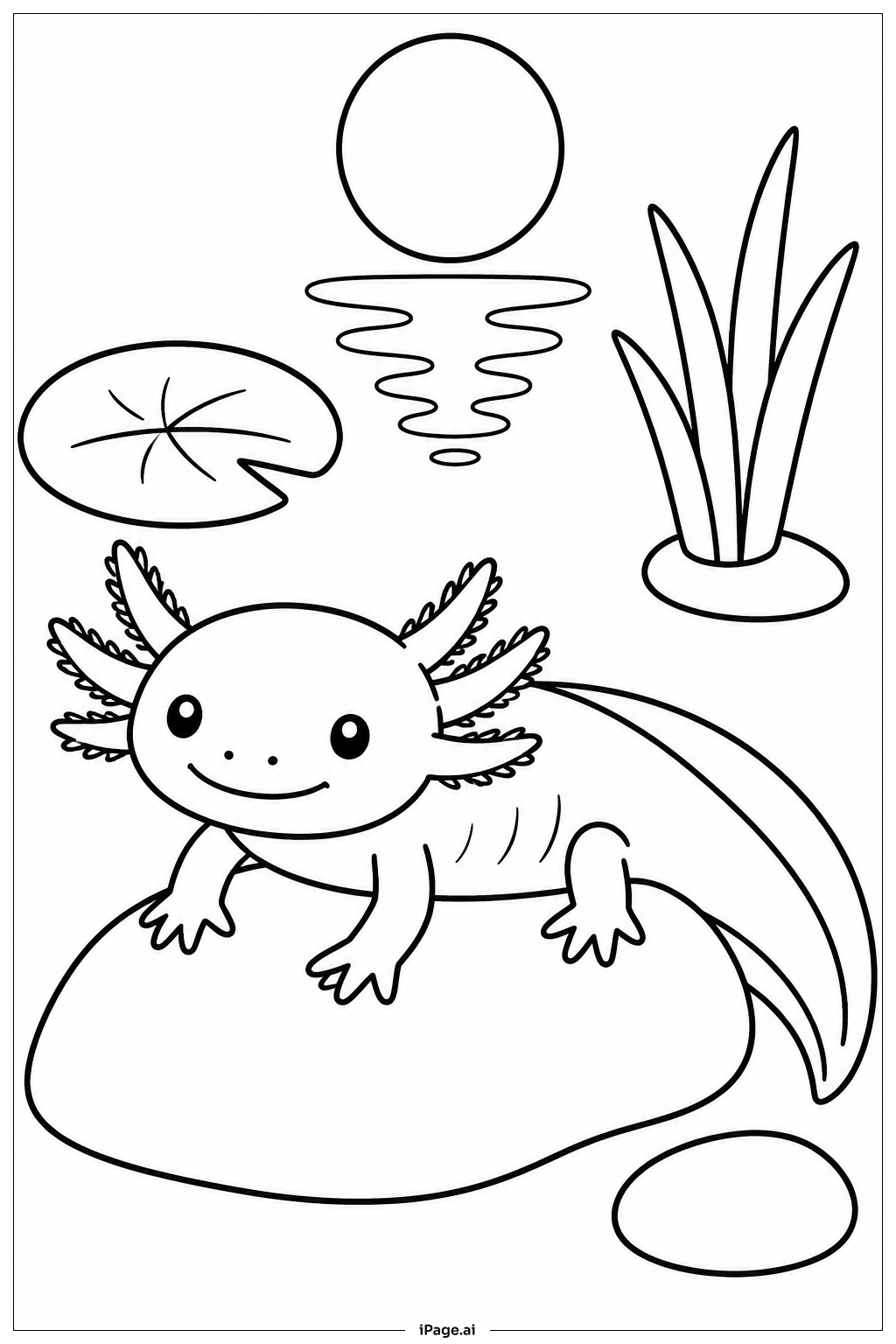
Coloring tips: How to color Axolotl At Sunrise coloring page well?
Start with the axolotl's body using soft pink or light peach tones, which reflect its natural color. Add a slightly deeper pink or rose shade along the edges to give it a rounded, three-dimensional look. For the feathery gill plumes, use a bright coral or magenta to make them pop. Color the eyes dark brown or black with a tiny white dot for a shiny effect. Use warm golden yellow and soft orange for the rising sun, blending outward into pale yellow and cream for the sky. The clouds can be light lavender or soft pink to match the sunrise mood. Paint the water in gentle shades of blue and teal, with lighter streaks to show ripples and reflections. The lily pads look great in medium and dark green, with a hint of yellow-green near the edges. For the distant hills, try muted olive green or sage. Keep the overall palette warm and soft to capture the peaceful feeling of an early morning sunrise scene.
Coloring challenges: Which parts are difficult to color and need attention for Axolotl At Sunrise coloring page?
• Axolotl Body Shading: The axolotl's smooth, rounded body needs careful blending to look soft and three-dimensional. Coloring it with a flat single tone can make it look stiff. Try layering a light base color first, then gently adding a slightly darker shade along the lower edges and under the gill plumes to create depth and a sense of volume.
• Feathery Gill Plumes: The gill plumes are made up of many thin, overlapping branching strands. Coloring each strand individually without smudging nearby areas takes a steady hand and a fine-tipped tool. Keeping the colors vibrant while still showing the delicate texture of each plume is one of the trickiest parts of this image.
• Sunrise Sky Gradient: The sky behind the scene needs a smooth gradient that blends from deep warm orange near the sun outward to soft pink, then pale lavender or cream higher up. Achieving a natural-looking blend without harsh lines requires patience and a light touch, especially with colored pencils or crayons.
• Water Ripple Details: The water surface has small curved ripple lines spreading outward. Coloring the water while keeping those ripple details visible means working carefully around each line. Using slightly different shades of blue or teal for alternating sections can help the ripples stand out without looking too busy.
• Sun Rays and Background Balance: The sun rays fan outward across the sky and can easily become too bold or too faint. Keeping the rays light and airy while still making them visible against the colored sky background requires a gentle hand and good color contrast planning before you begin.
Benefits of coloring books: Advantages of drawing Axolotl At Sunrise coloring page
Coloring this Axolotl At Sunrise page brings a wide range of fun and helpful benefits for kids and anyone who picks up a crayon or colored pencil. Here is what makes this page so special to color:
Working on the axolotl's body, gill plumes, and water ripples helps children practice fine motor skills and hand control, which supports better writing and everyday coordination.
Choosing colors for the sunrise sky, glowing sun, and calm water encourages creative thinking. Kids get to make their own color choices and feel proud of the results.
The peaceful water and morning sky scene creates a calming, focused activity. Sitting quietly and coloring is a great way to relax and reduce stress for both children and Adults.
Learning about axolotls through coloring sparks curiosity about real animals and nature. Kids can discover that axolotls are real aquatic creatures with amazing features like their feathery gills.
Completing the full scene, from the glowing sunrise to the lily pads and rippling water, gives children a strong sense of accomplishment. Finishing a detailed page builds confidence and encourages them to keep trying new creative challenges.