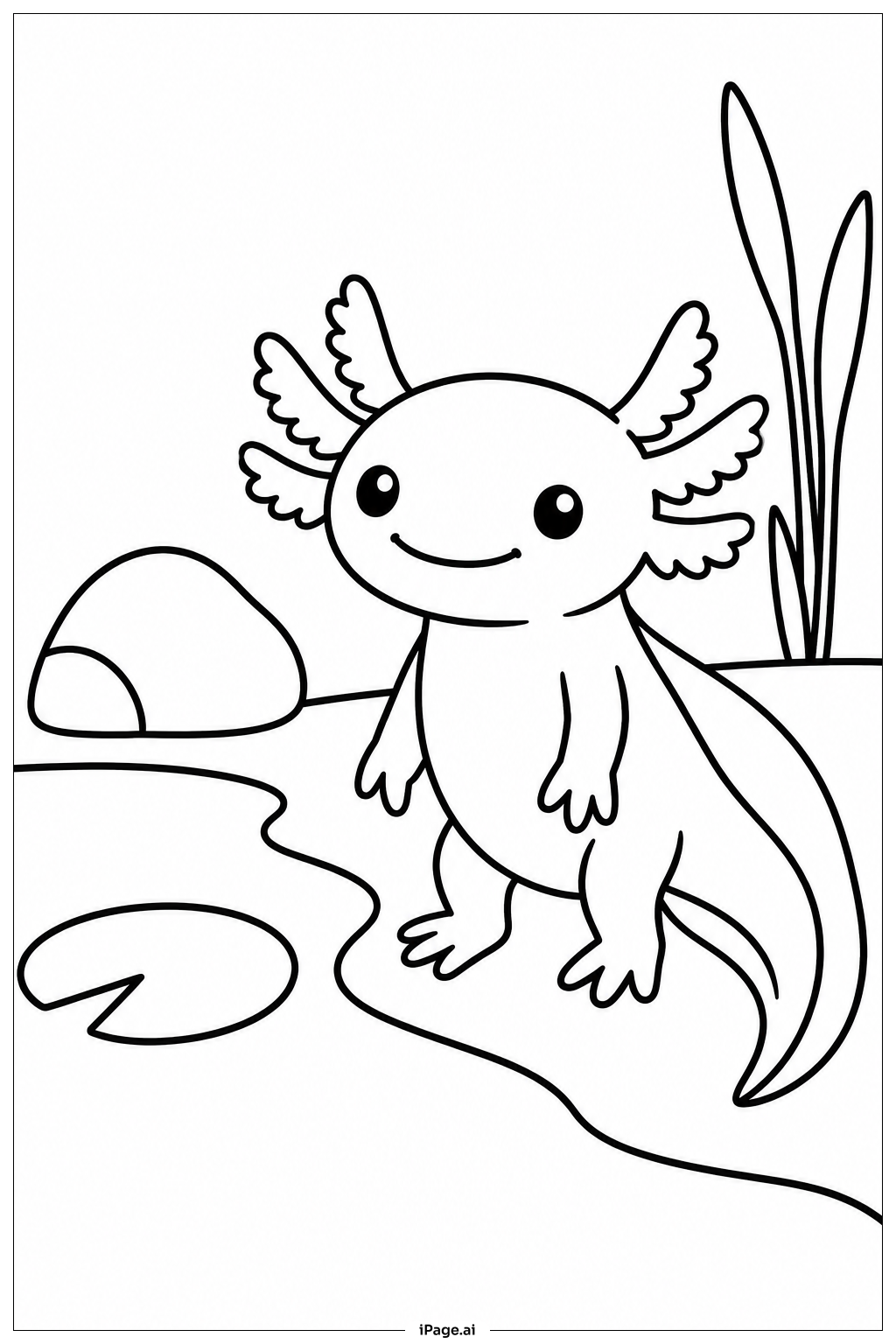
Coloring tips: How to color Axolotl At Lake Edge coloring page well?
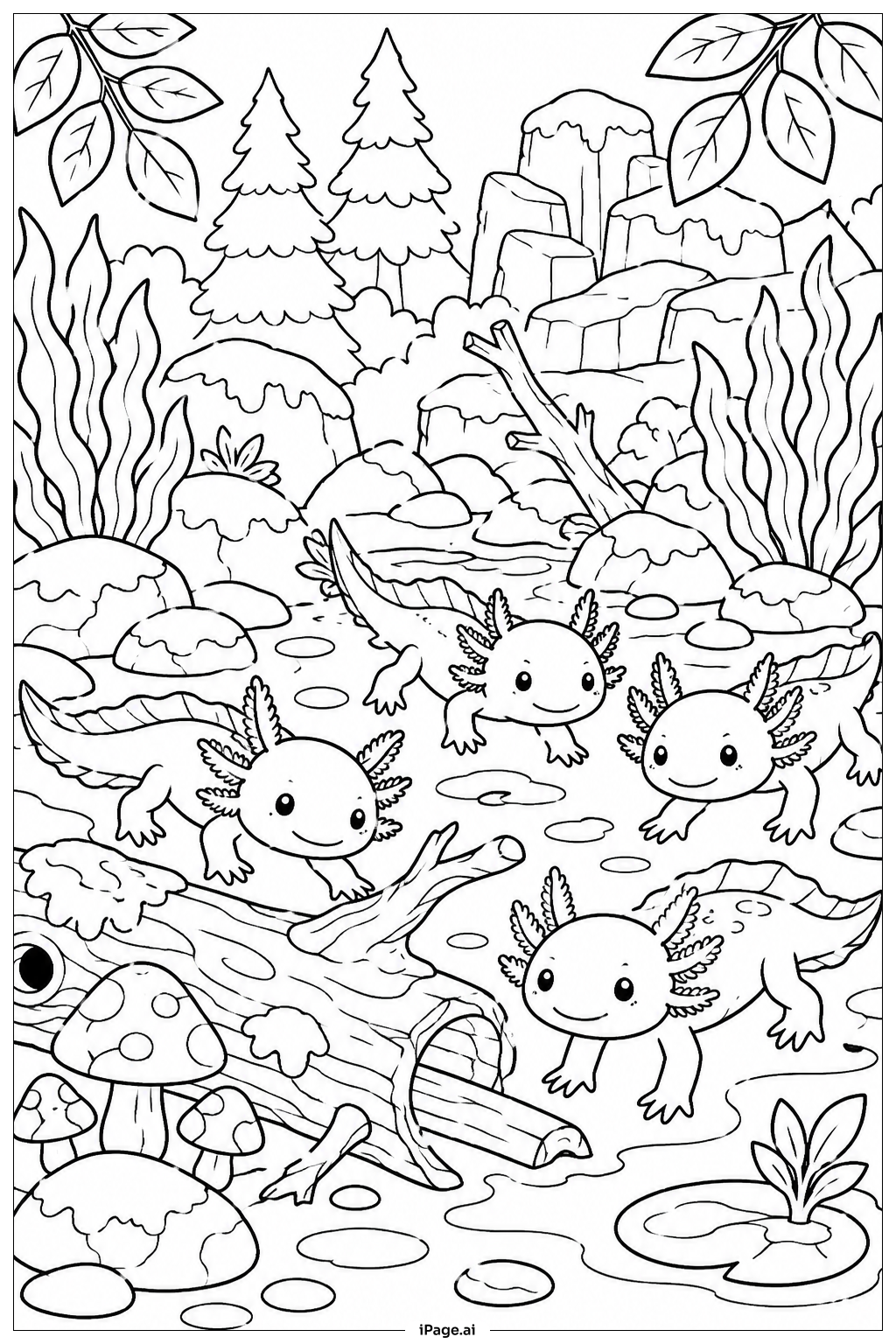
For the axolotl itself, try soft pink or peachy tones for the body, as these are common natural colors. The external gills can be colored in darker pink or red shades to create contrast. Use light blue or turquoise for the water to give it a fresh, clean appearance. Add darker blue or green in the ripples to show depth and movement. The cattails and aquatic plants look beautiful in various shades of green, from light lime to deep forest green. Browns and grays work perfectly for the rocks and pebbles along the shoreline. Consider using light yellow or beige for the sandy areas. You can add highlights with white or very light colors to make the water sparkle. For a magical touch, try using purple or lavender accents on the gills. Blend colors gently to create smooth transitions, especially on the axolotl's body.
Coloring challenges: Which parts are difficult to color and need attention for Axolotl At Lake Edge coloring page?
• Gill Details: The axolotl's external gills are the most intricate part of this coloring page, featuring many thin, feathery branches that extend outward. These delicate fronds require careful coloring to maintain their individual shapes without bleeding colors together. Young children may find it challenging to color within these small, detailed areas. Using fine-tipped coloring tools helps achieve better results in these sections.
• Water Ripples and Texture: Creating realistic water effects presents a unique challenge. The ripples need gradient shading to appear three-dimensional and flowing. Coloring water convincingly requires understanding how to layer light and dark blues or greens to show movement and depth. Children need to practice blending techniques to avoid harsh lines between color transitions in the water areas.
• Rock and Pebble Variations: The shoreline contains multiple rocks and pebbles of different sizes, each requiring individual attention. Creating variety in the stones while maintaining a cohesive color scheme can be difficult. Adding shadows and highlights to make the rocks appear round and three-dimensional requires some skill in understanding light sources.
• Plant and Cattail Layers: The vegetation includes overlapping leaves and cattails that create depth in the scene. Distinguishing between foreground and background plants through color choices and shading intensity requires planning. Children may struggle with deciding which plants should be darker or lighter to create a sense of distance and natural layering in the lakeside environment.
Benefits of coloring books: Advantages of drawing Axolotl At Lake Edge coloring page
Coloring this axolotl scene offers wonderful developmental benefits for children. The intricate gill details help improve fine motor skills and hand-eye coordination as kids carefully color within small spaces. This practice strengthens the small muscles in fingers and hands, preparing them for writing tasks. The page also teaches children about unique animals they might not encounter often, sparking curiosity about nature and aquatic life. Working on the water effects and natural elements introduces basic concepts about habitats and ecosystems. The varying levels of detail allow children to practice focus and concentration for extended periods. Completing this coloring page builds confidence and provides a sense of accomplishment. The calming lakeside scene can have a relaxing effect, helping children manage stress and emotions. Color selection encourages creative decision-making and self-expression, as there is no single correct way to complete the image.