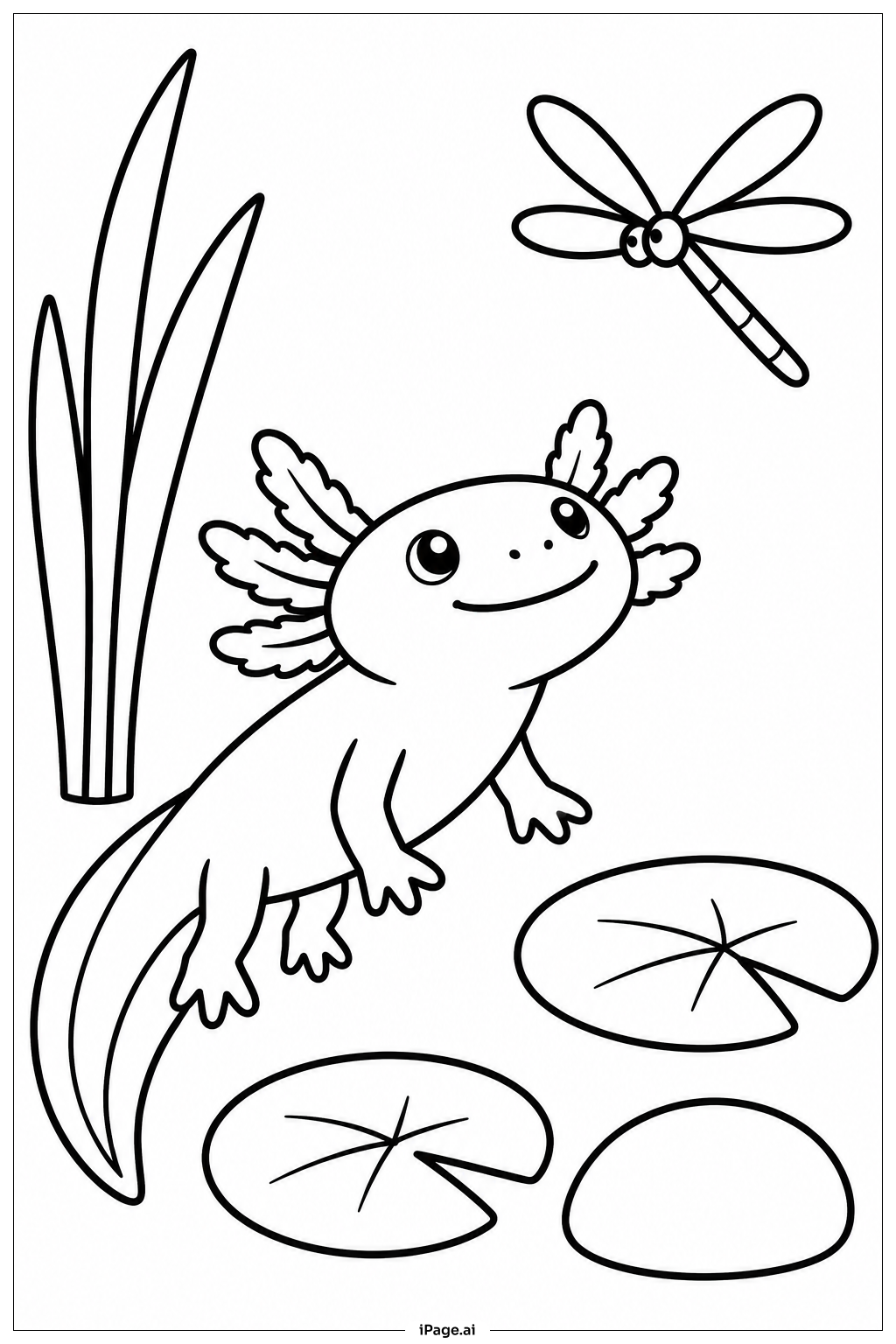
Coloring tips: How to color Axolotl And Dragonfly coloring page well?
For the axolotl, try soft pink or peachy tones for the body, with darker pink or red for the feathery gills. You can also experiment with white, golden, or even lavender shades, as axolotls come in many color variations. The dragonfly's body can be bright blue, green, or metallic bronze, while the wings should remain light with subtle hints of iridescent colors like pale blue, purple, or yellow along the edges. Color the lily pads in various shades of green, from light lime to deep forest green, and add yellow centers to the water lilies with white or pink petals. Use light blue for the water with darker blue for shadows and ripples to create depth and movement in the aquatic scene.
Coloring challenges: Which parts are difficult to color and need attention for Axolotl And Dragonfly coloring page?
• Gill Details: The axolotl's feathery external gills require careful attention with their branching, frilly structures. These delicate filaments need light, precise strokes to create texture without over-coloring. Young artists may find it challenging to color each tiny branch while maintaining the fluffy, feathery appearance that makes these gills so distinctive.
• Dragonfly Wings: The transparent, membranous wings present a unique challenge as they should appear delicate and see-through. Coloring them requires a light touch with subtle shading along the veins and edges. Children must learn to balance adding just enough color to define the wing structure while keeping them looking translucent, which requires restraint and gentle pressure.
• Water Effects: Creating realistic water ripples and reflections demands understanding of how light interacts with water surfaces. The concentric circles and flowing patterns need gradient shading from light to dark to show depth and movement. Blending different shades of blue smoothly can be difficult for younger colorists.
• Lily Pad Textures: The lily pads feature intricate vein patterns radiating from the center that require steady hand control. Maintaining consistent green tones while adding darker lines for veins and highlighting edges to show dimension tests fine motor skills and color blending abilities.
• Small Details: Tiny elements like air bubbles, the dragonfly's segmented body, and the axolotl's tiny toes require precision coloring in confined spaces, which can be frustrating for children still developing hand-eye coordination.
Benefits of coloring books: Advantages of drawing Axolotl And Dragonfly coloring page
Coloring this axolotl and dragonfly scene offers wonderful educational benefits. Children learn about unique aquatic creatures, sparking curiosity about amphibians and insects. The image encourages fine motor skill development through detailed work on gills, wings, and lily pad patterns. Young artists practice color mixing and blending while creating water effects and transparent wings, building their understanding of light and texture. The peaceful nature scene promotes relaxation and mindfulness, helping children focus and reduce stress. This coloring page also develops patience and attention to detail as they work through intricate elements. Additionally, it fosters creativity by allowing experimentation with the axolotl's many possible color variations, from pink to golden to purple, teaching that nature offers diverse and surprising beauty.