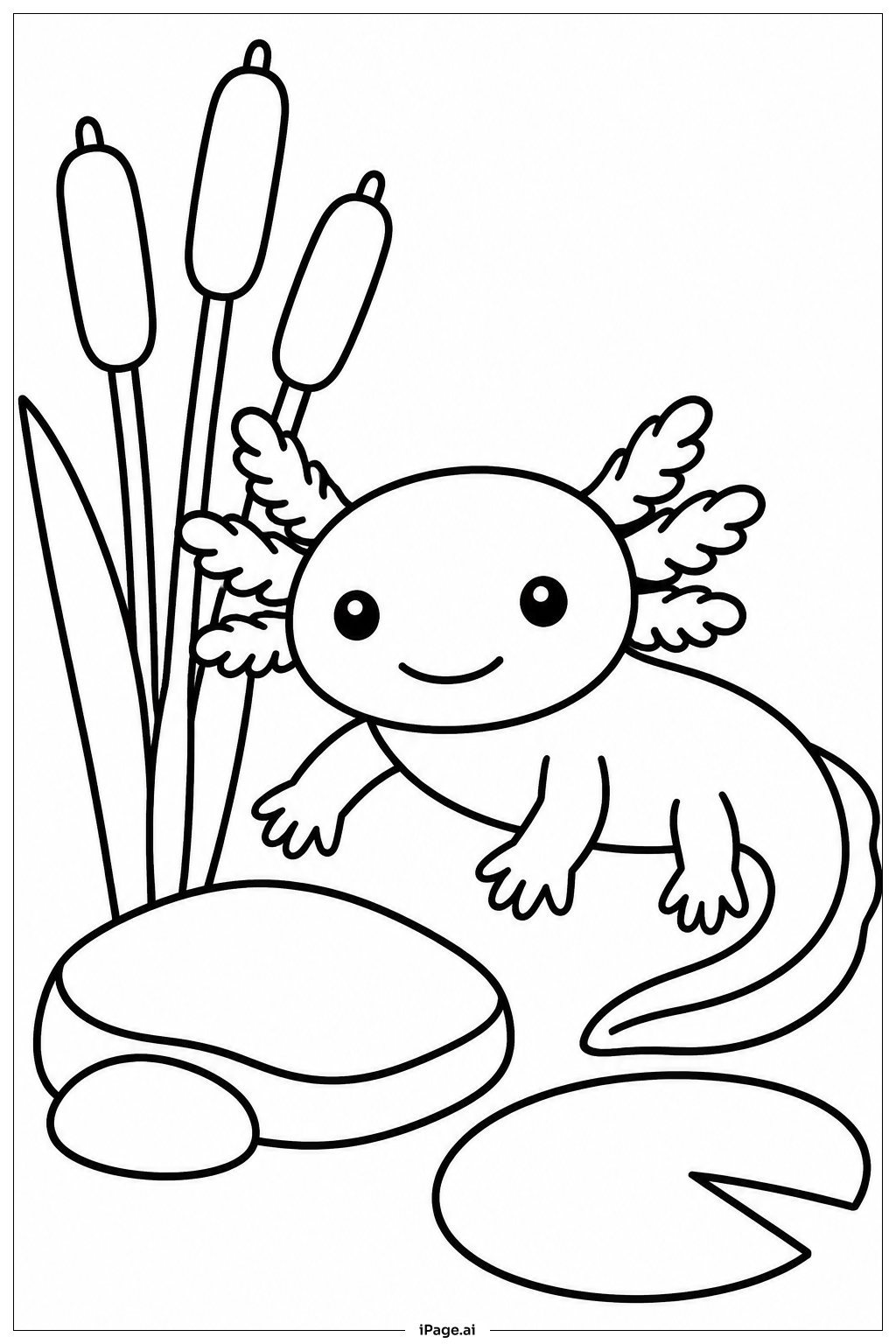
Coloring tips: How to color Axolotl Among Reeds coloring page well?
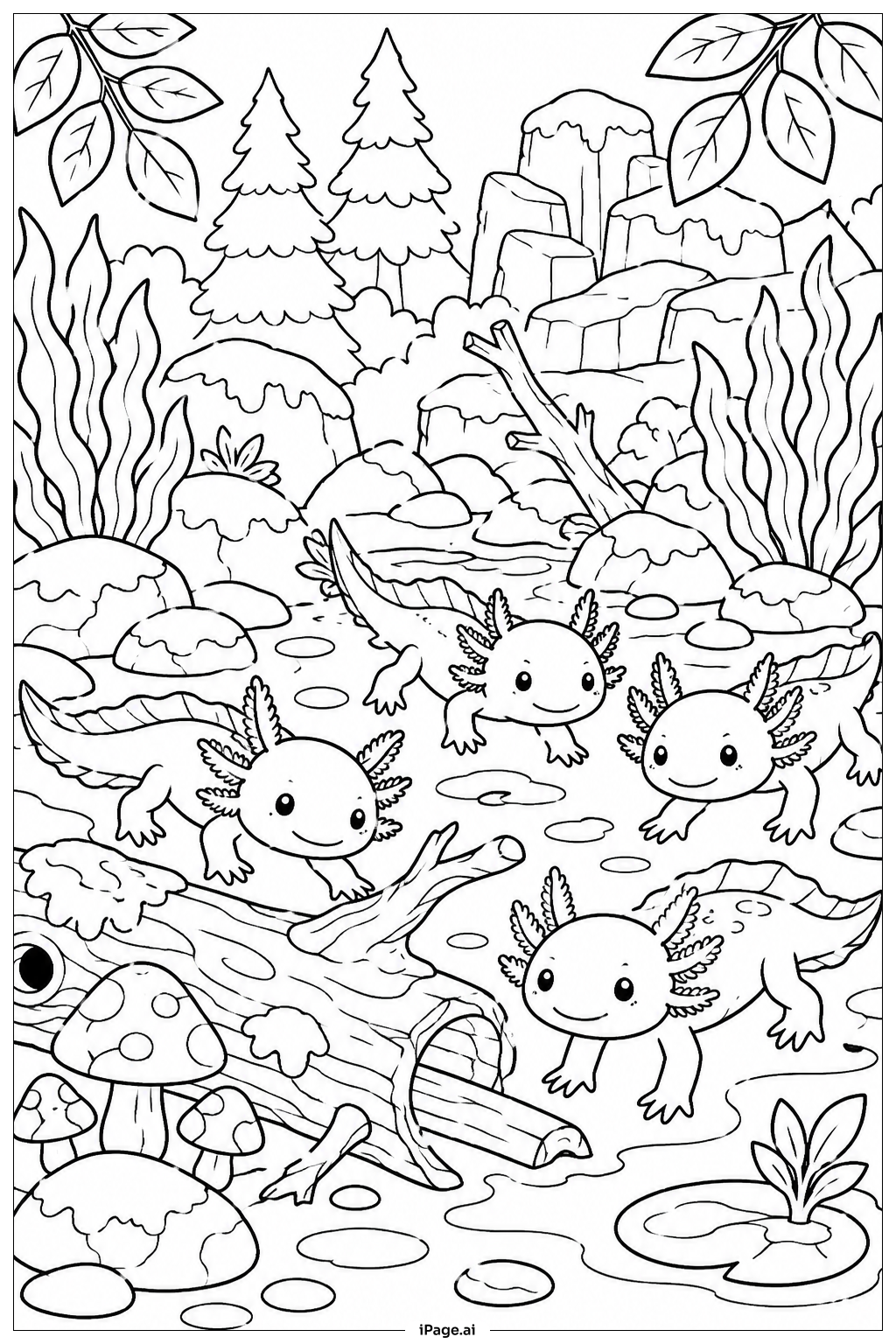
Try using soft greens for the reeds to show their fresh, lively look. You can choose different shades of green to make the plants more interesting, like light green for new leaves and darker tones for the older parts. For the Axolotl, try pale pink, soft peach, or light cream colors to reflect its unique underwater skin. The gills are great for a touch of bright colors like coral or orange to make them pop. Don’t forget to color the water areas with light blue or turquoise, blending gently to create a calm effect. Using gentle gradients and soft strokes will help bring this peaceful scene to life. Feel free to add small touches of brown or yellow in the reeds for variety and realism.
Coloring challenges: Which parts are difficult to color and need attention for Axolotl Among Reeds coloring page?
• Fine Details: The Axolotl’s feathery gills have many tiny branches that need careful coloring to avoid blending colors together. Staying inside these thin lines can be tricky for young colorers.
• Layered Reeds: The overlapping reeds and leaves create complex areas where it can be hard to decide which parts come first and how to shade them properly.
• Smooth Shading: The Axolotl’s smooth body benefits from gentle color blending to show its soft texture, which can be challenging for beginners.
• Small Spaces: Some parts of the image, like the small leaves and hidden stems behind the Axolotl, require precision to color clearly without smudging.
• Consistency: Keeping consistent colors for the reeds and water to convey depth and avoid a flat appearance takes care and attention over different areas of the page.
Benefits of coloring books: Advantages of drawing Axolotl Among Reeds coloring page
Coloring this image helps improve fine motor skills, especially by focusing on the Axolotl’s delicate gills and the narrow reed stalks. It encourages attention to detail and patience while coloring inside the small and intricate parts of the picture. Choosing and blending colors for the natural scene supports creativity and understanding of how colors work together in nature. This calming pond scene also promotes mindfulness as children imagine the quiet, gentle world of the Axolotl. Working on such an image can boost confidence in handling more complex coloring pages and inspire curiosity about wildlife and aquatic habitats.