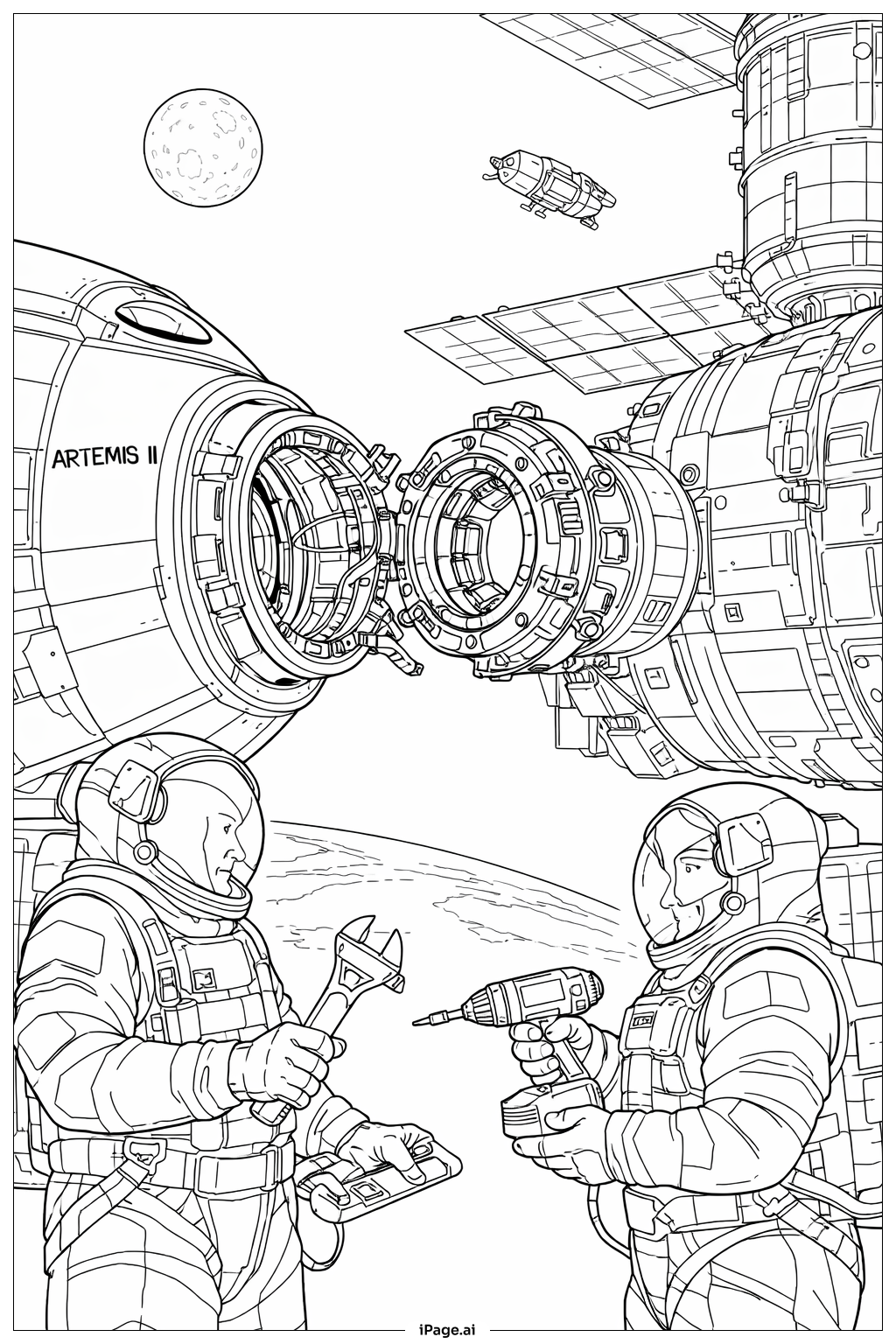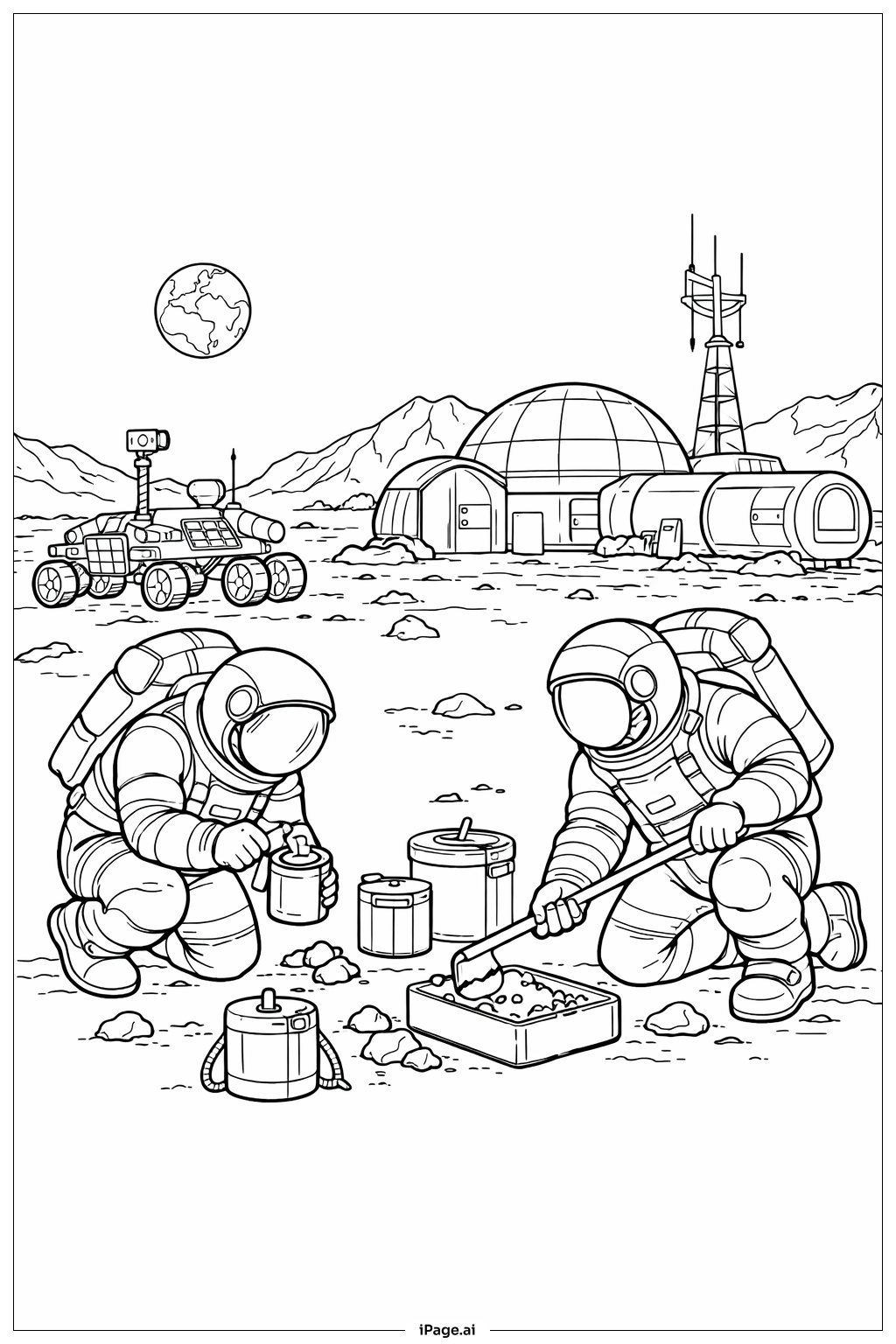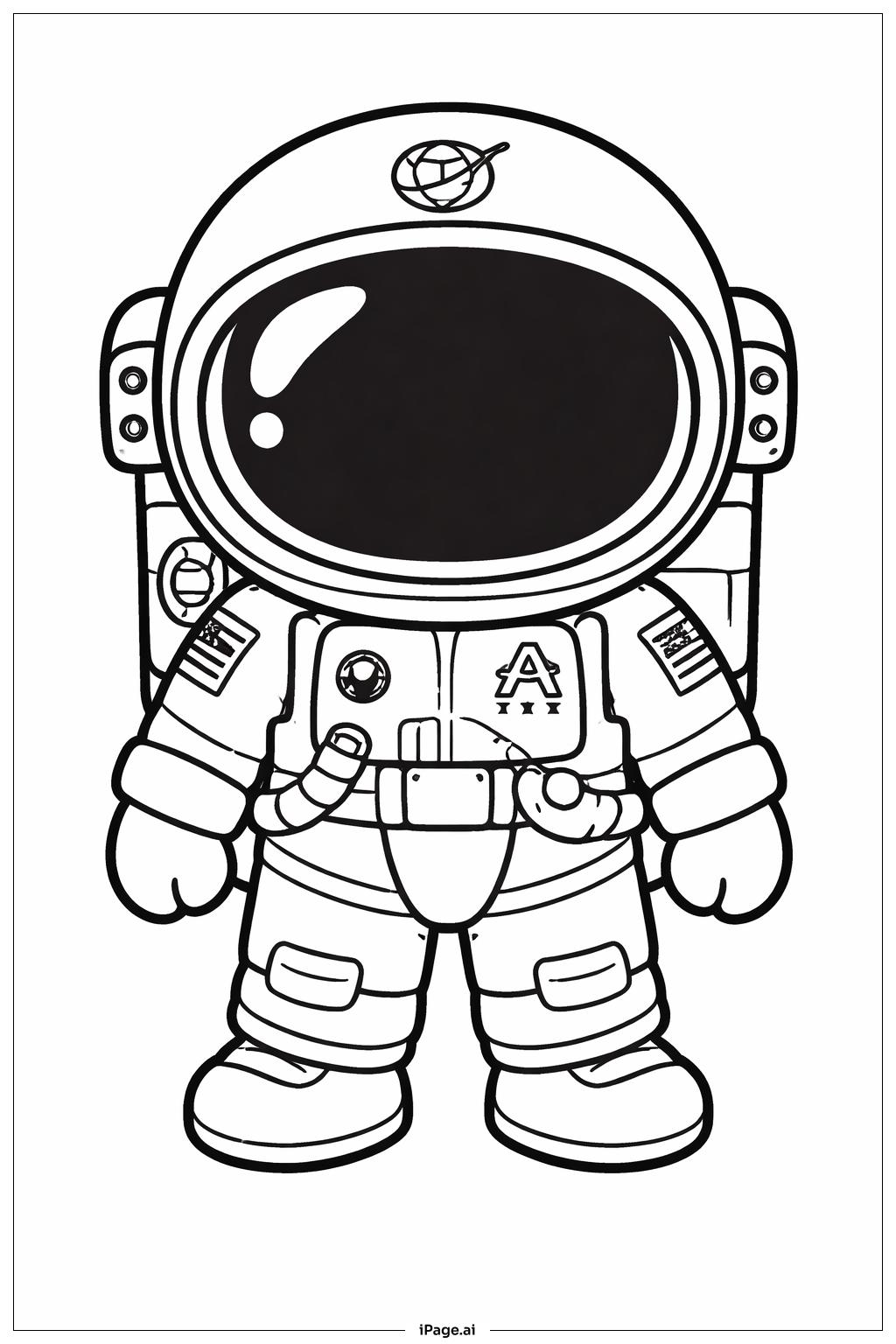
Coloring tips: How to color Artemis II Tiny Astronaut coloring page well?
For the spacesuit, try classic white or silver-gray as the main color, with orange, blue, or red accents on the chest pack and suit details to match real NASA designs. The helmet visor can be colored with light blue or translucent purple to show the astronaut's face peeking through. Use soft pink or peach tones for the skin. Add metallic gold or silver to buckles and connectors for authentic space gear details. For the background, use deep navy blue or black for space, and color the stars with bright yellow, white, or even rainbow colors to make them sparkle. You can add gradient effects to create depth in space. Consider using gel pens or metallic markers to make stars and suit details shine.
Coloring challenges: Which parts are difficult to color and need attention for Artemis II Tiny Astronaut coloring page?
• Spacesuit Details: The astronaut's suit contains many small technical components including chest controls, tubes, buckles, and seams that require careful attention. Young children may find it challenging to color within these tiny spaces without going over the lines. Using fine-tipped markers or sharp colored pencils can help achieve precision in these intricate areas.
• Helmet Transparency Effect: Creating the illusion of a transparent helmet visor while still showing the astronaut's face underneath requires thoughtful color choices. Balancing light colors for the visor with visible facial features can be tricky. Children need to decide whether to leave the visor area lighter or use subtle shading techniques.
• Star Placement and Variety: The scattered stars throughout the background offer opportunities for creativity but also require decisions about color variety and consistency. Younger colorists might struggle with keeping stars uniform in size and color, or alternatively, creating an intentional varied pattern. Each star is small and requires steady hand control.
• Shading and Dimension: To make the astronaut appear three-dimensional and the suit look realistic, some shading technique is beneficial. Understanding where shadows fall on rounded surfaces like the helmet and suit folds presents a challenge for beginners. This requires understanding of light sources and depth perception.
Benefits of coloring books: Advantages of drawing Artemis II Tiny Astronaut coloring page
Coloring this Artemis II Tiny Astronaut page helps children develop fine motor skills through detailed spacesuit components. It encourages interest in space exploration, science, and the exciting Artemis II mission to the Moon. Kids learn about astronaut equipment while exercising creativity in color choices. The combination of technical details and cute character design appeals to various age groups and skill levels. This page promotes focus and patience as children work through intricate suit details. It also provides opportunities to practice color mixing and shading techniques. The space theme sparks imagination about careers in STEM fields and inspires dreams of space travel. Completing this page builds confidence and provides a sense of accomplishment that can be proudly displayed.