Coloring tips: How to color Artemis II Lunar Sunset coloring page well?
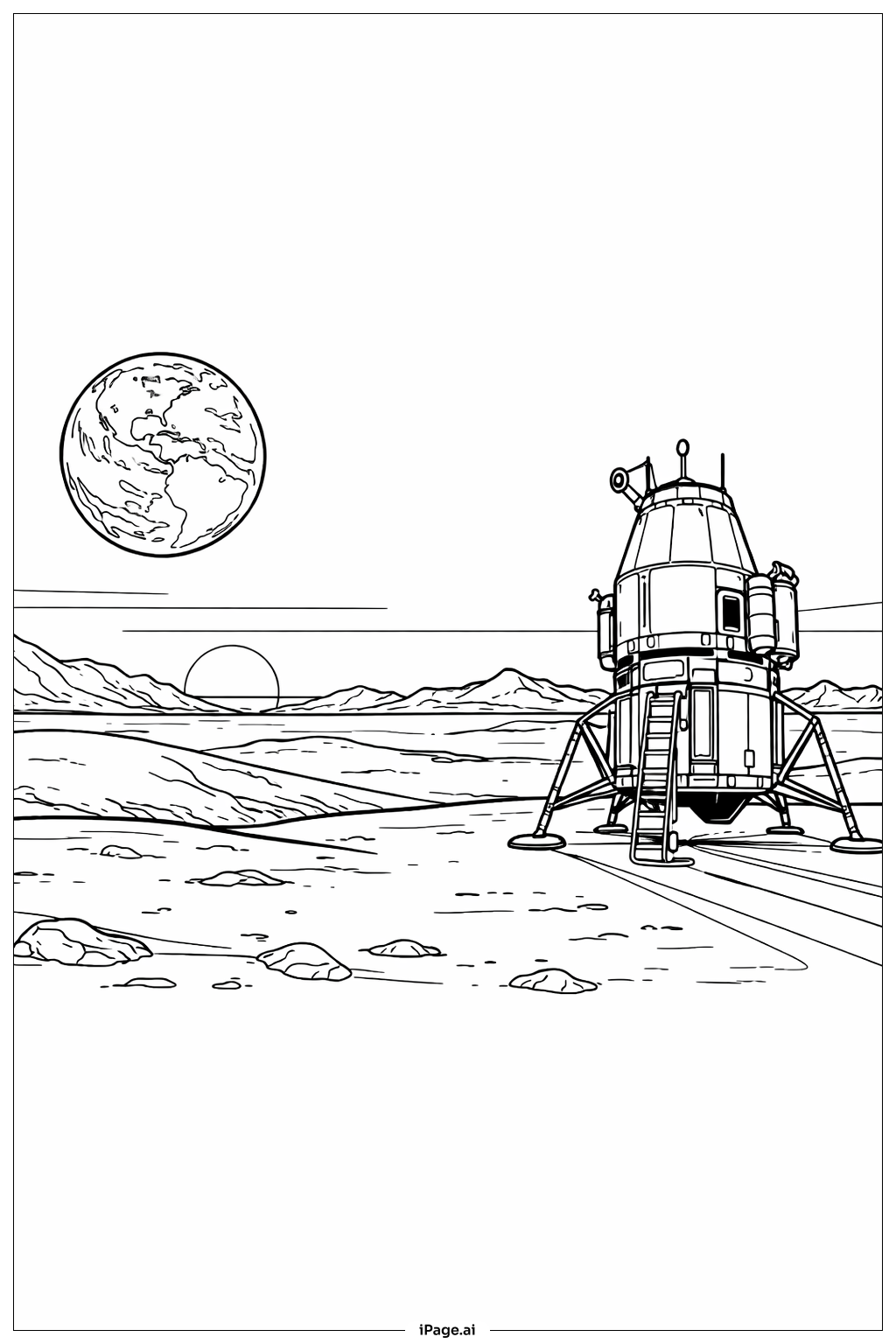
Use gray and white shades for the Moon's surface to show its rocky and dusty terrain. The Artemis II lander can be colored in silver, white, or light gray to represent its metal parts. For the sunset, use warm colors like orange, red, and yellow near the horizon to show the glow of the setting sun. The Earth in the sky can be colored blue and green with white clouds to make it stand out. For the mountains in the background, try using darker grays or browns to create depth. Adding shadows with darker shades will make the scene look more realistic.
Coloring challenges: Which parts are difficult to color and need attention for Artemis II Lunar Sunset coloring page?
1. Small detailed parts of the Artemis II lander may be tricky to color because they need precision. 2. The rocky surface has many small rocks and uneven textures which need careful coloring to look natural. 3. The sunset colors blend into each other, which can be hard to do smoothly. 4. Showing the Earth with its continents and clouds clearly requires attention to detail. 5. Coloring shadows and highlights on the lander and ground can be challenging to make the picture pop.
Benefits of coloring books: Advantages of drawing Artemis II Lunar Sunset coloring page
Coloring this page helps improve hand-eye coordination and fine motor skills by working on small details. It encourages creativity by choosing colors for the Moon, sunset, and spacecraft. Learning about space and the Artemis II mission sparks curiosity and interest in science. Coloring different textures like rocks and metal teaches observation and focus. It also provides a relaxing activity that boosts patience and concentration while having fun.