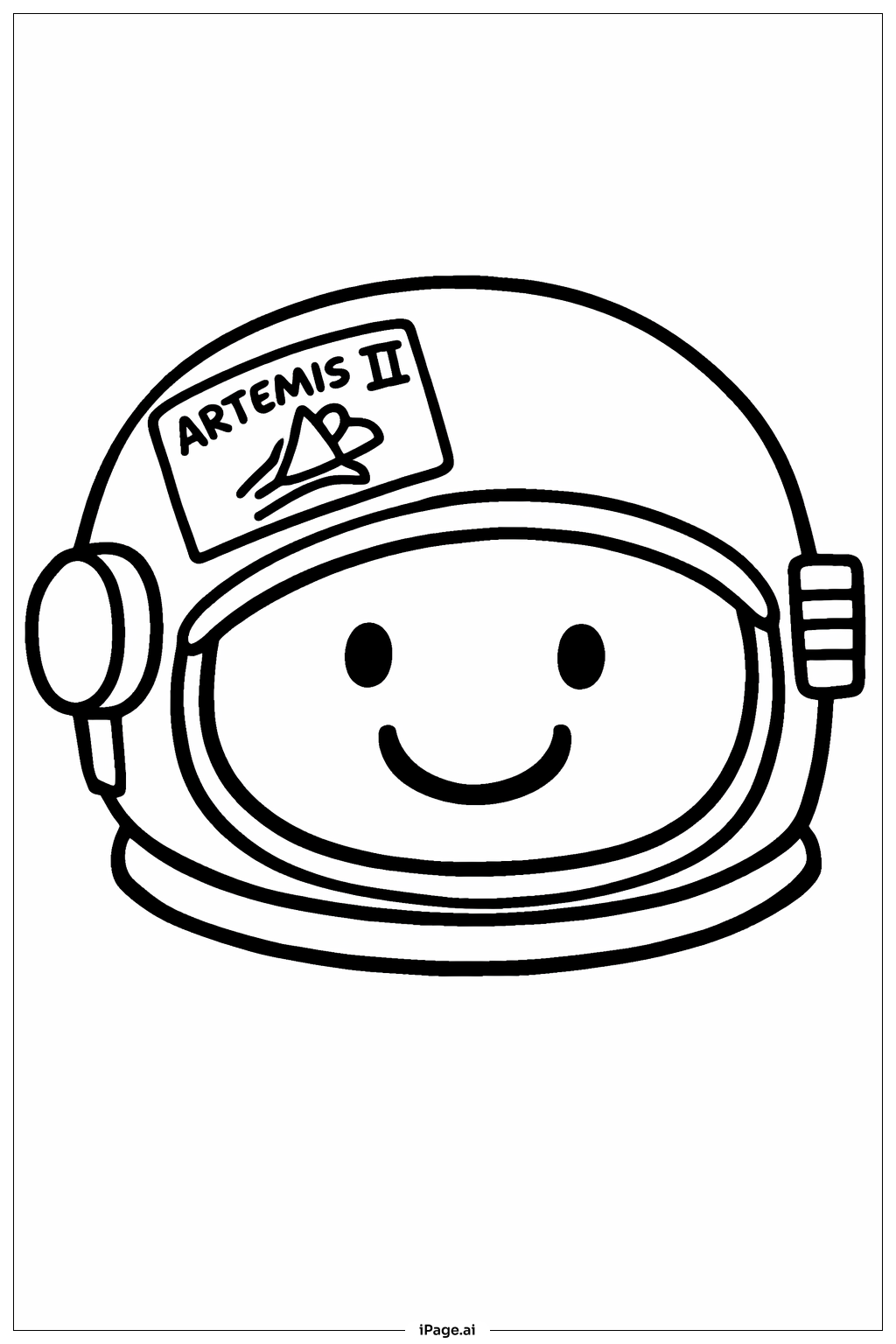
Coloring tips: How to color Artemis II Space Helmet Face coloring page well?
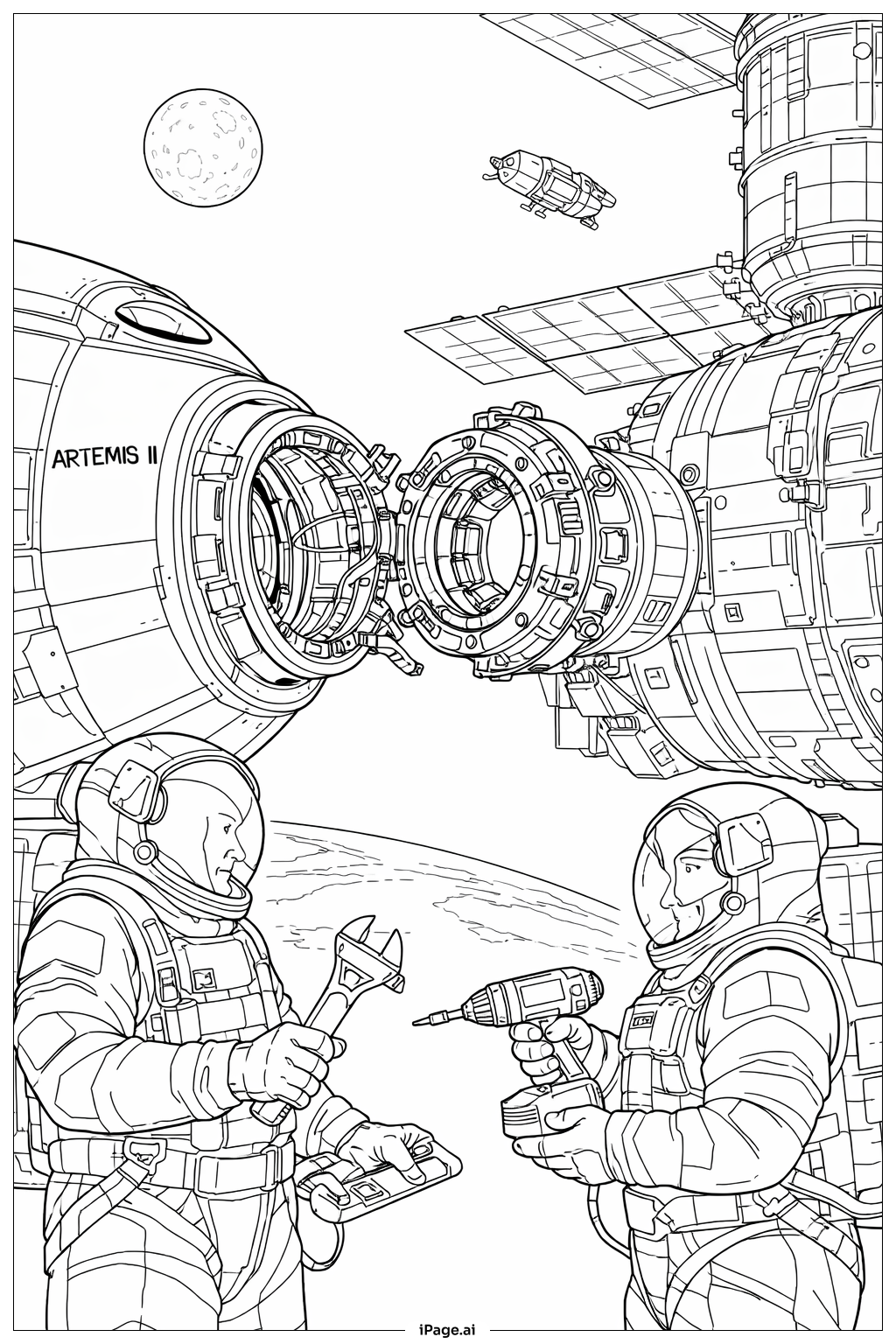
Use bright colors for the helmet to make it stand out, like white, silver, or light gray. The 'Artemis II' patch can be colored with bold colors such as red, blue, or green to highlight the mission name. For the face inside the helmet, use soft skin tones or any fun color you like. Add shading around the helmet's edges to give it a 3D look. Don't forget to color the small details like the communication devices on the sides with metallic colors like gray or silver. Keep your strokes neat, especially inside the smaller areas.
Coloring challenges: Which parts are difficult to color and need attention for Artemis II Space Helmet Face coloring page?
1. Coloring inside the small communication devices on the sides requires patience and careful control to avoid coloring outside the lines.
2. Shading the curved parts of the helmet to create a three-dimensional effect can be tricky for beginners.
3. Balancing bright and soft colors without making the face or helmet look too busy is a challenge.
4. Coloring the 'Artemis II' patch with small letters neatly demands attention to detail.
5. Avoiding color bleeding while filling small areas like the eyes and smile needs careful coloring tools or techniques.
Benefits of coloring books: Advantages of drawing Artemis II Space Helmet Face coloring page
Coloring this space helmet helps improve fine motor skills by practicing staying within lines and handling small areas. It encourages creativity as children choose colors and shading styles. The astronaut theme sparks interest in space exploration and science. Coloring boosts concentration and patience, and completing the page gives a sense of achievement. It's also a fun way to learn about space missions like Artemis II while enjoying art.