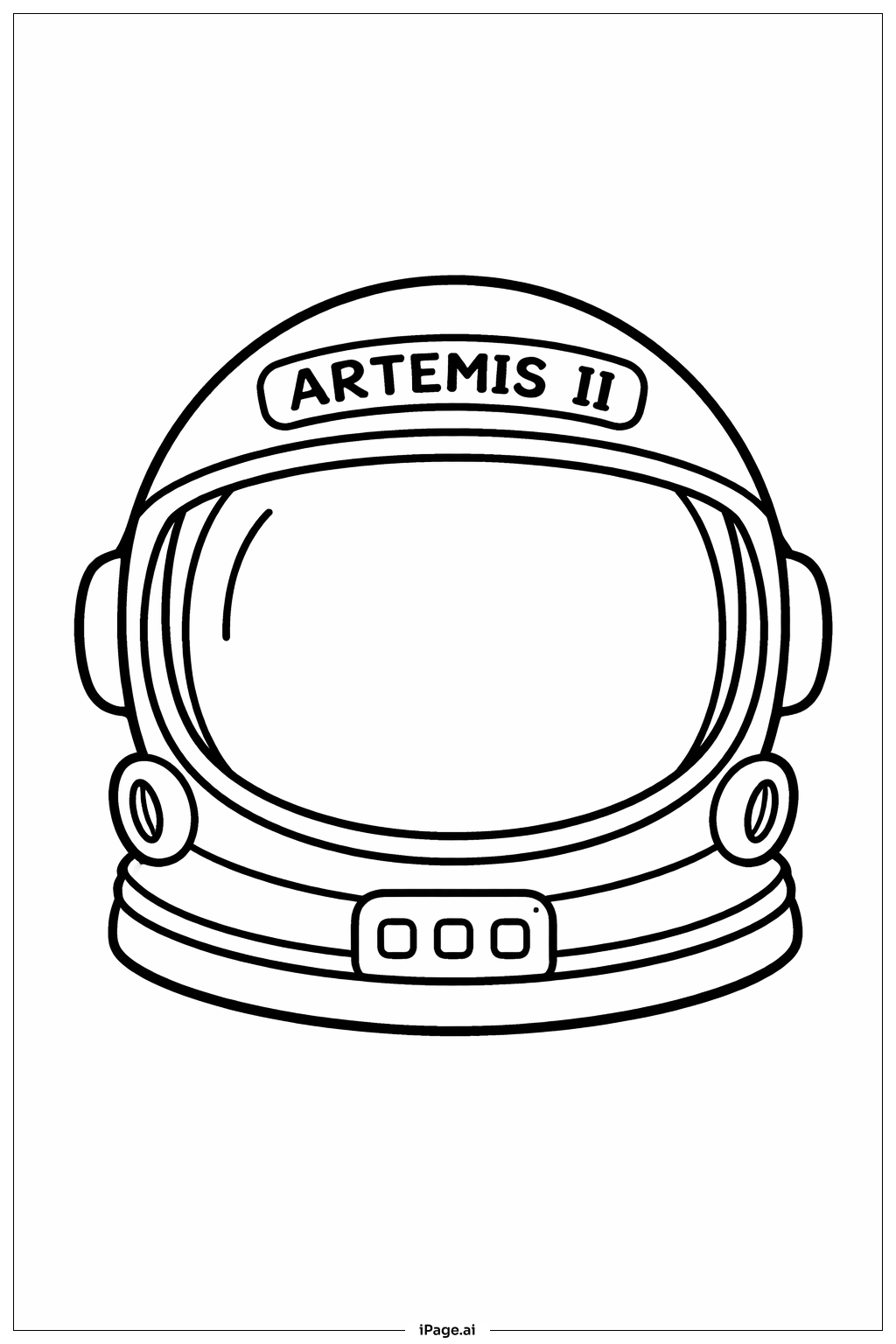
Coloring tips: How to color Artemis II Space Helmet coloring page well?
Use silver or gray colors for the main part of the helmet to give it a metallic look. You can color the visor with shades of light blue or gray to show reflection. The small details like buttons and padding can be colored in darker gray or black for contrast. You may also add bright colors like red or yellow on some parts to make the helmet look exciting. Try to use light and dark shades to show depth. Remember to stay inside the lines and have fun!
Coloring challenges: Which parts are difficult to color and need attention for Artemis II Space Helmet coloring page?
1. The large visor area may be tricky to color because it should look shiny and reflective, not flat. 2. Coloring the small buttons and details needs careful attention to avoid coloring outside the lines. 3. Showing the metallic texture on the helmet means using different shades of gray and silver, which can be hard for young children. 4. Balancing colors so that the helmet looks realistic but still bright and fun can take practice. 5. Coloring the letters 'ARTEMIS II' clearly without mixing colors is important for a neat look.
Benefits of coloring books: Advantages of drawing Artemis II Space Helmet coloring page
Coloring this helmet helps improve hand-eye coordination and fine motor skills. It also teaches children about space exploration and the gear astronauts use. Working on shading and color contrast encourages creativity and attention to detail. Coloring within boundaries boosts focus and patience. Plus, learning about the Artemis II mission through fun activities makes education exciting and engaging.