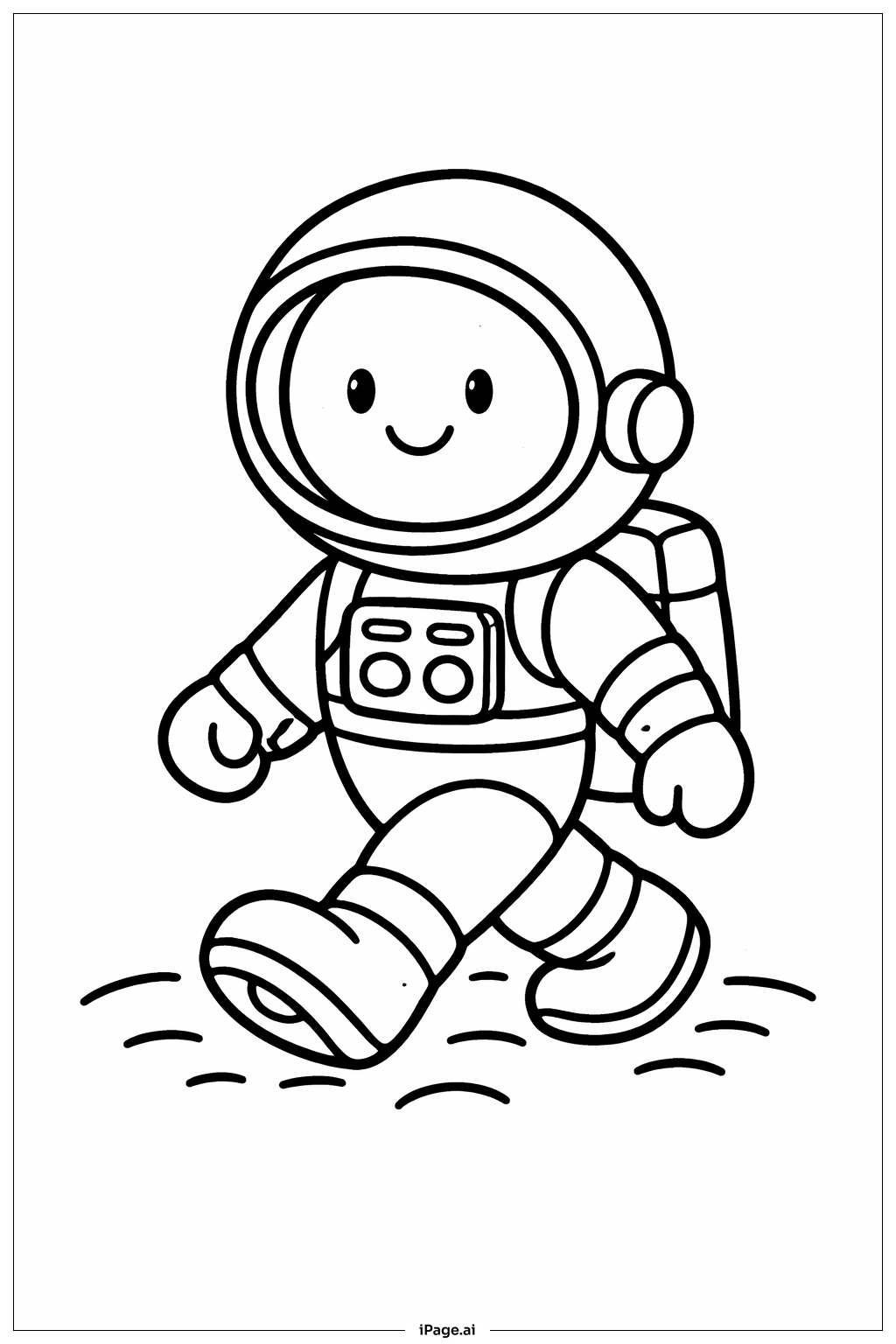
Coloring tips: How to color Artemis II Smiling Moonwalk coloring page well?
Start with the astronaut's spacesuit using white, silver, or light gray as the base color. Add blue or orange accents for the mission patches and suit details. Color the visor with light blue or reflective silver tones. For the lunar surface, use various shades of gray, tan, and beige to create texture and depth in the craters. Make the Earth a vibrant blue and green with white clouds. Color the sky deep black or dark blue, then add bright yellow stars. Use red, white, and blue for the American flag. Consider adding subtle purple or pink tones to the distant planets. You can make the astronaut's smile visible with a soft skin tone behind the visor. Layer different shades to create shadows and dimension throughout the scene.
Coloring challenges: Which parts are difficult to color and need attention for Artemis II Smiling Moonwalk coloring page?
• Spacesuit Details: The astronaut's suit contains many small technical elements including chest controls, tubes, patches, and seams that require careful coloring within tight spaces. Young colorists may find it challenging to keep colors within these intricate boundaries while maintaining the suit's realistic appearance.
• Helmet Visor Reflection: Creating the illusion of a reflective, see-through visor presents a unique challenge. Colorists must balance showing the astronaut's smiling face while suggesting the glass-like quality of the helmet, which may require layering light blues, silvers, or leaving strategic white spaces.
• Lunar Surface Texture: The moon's cratered landscape needs varied shading to appear three-dimensional rather than flat. Creating depth through different gray tones in the craters, hills, and shadows requires patience and blending skills that may be difficult for beginners.
• Star Field and Space Background: Coloring a realistic night sky with numerous small stars demands precision and patience. Each tiny star needs individual attention, and the dark background must be colored evenly without obscuring the stars or creating streaks.
• Earth Details: The small Earth in the background contains continents, oceans, and cloud formations that require fine motor control and color planning to distinguish these elements clearly at a reduced scale.
Benefits of coloring books: Advantages of drawing Artemis II Smiling Moonwalk coloring page
Coloring this Artemis II moonwalk scene helps children develop fine motor skills through the detailed spacesuit components and small stars. It encourages learning about space exploration, astronomy, and the historic Artemis II mission. The image promotes focus and concentration while working on intricate areas like the suit controls and lunar craters. Children practice color recognition and mixing when creating realistic space colors and Earth tones. The scene sparks curiosity about science, technology, and careers in space exploration. It builds patience and perseverance when completing complex sections. The astronaut's happy expression promotes positive associations with learning and discovery. This coloring page also offers opportunities for family discussions about space travel, the moon, and human achievement in exploration.