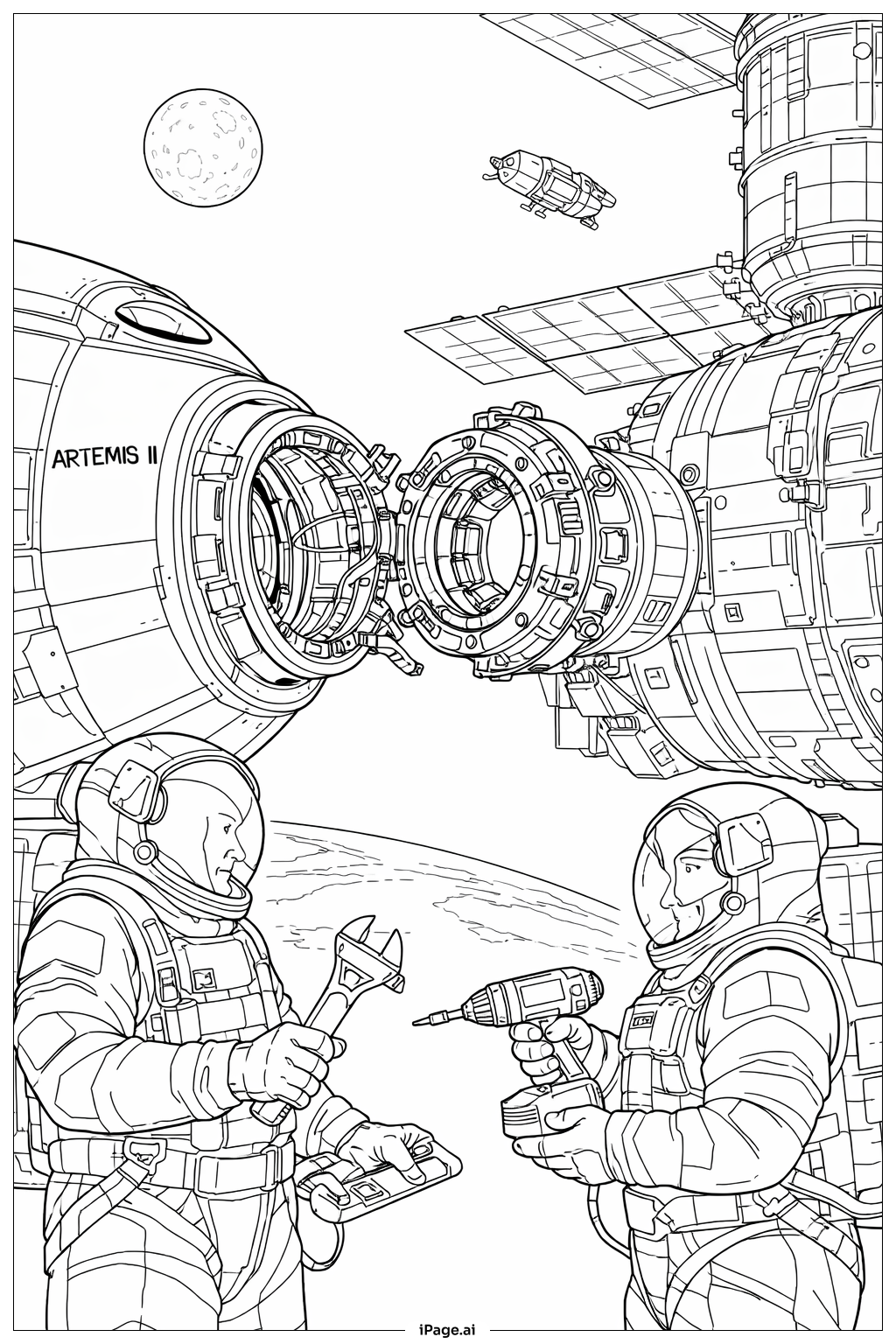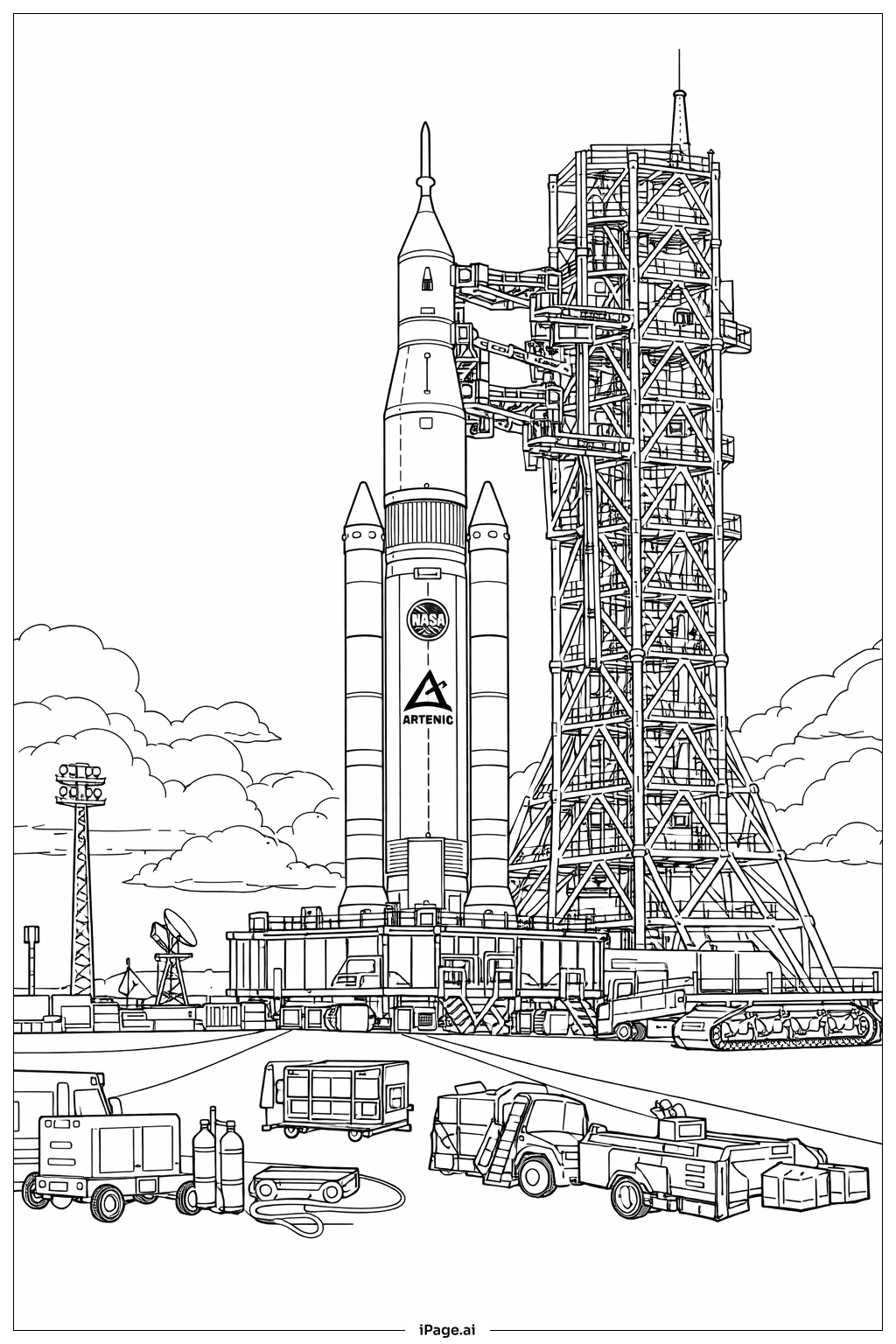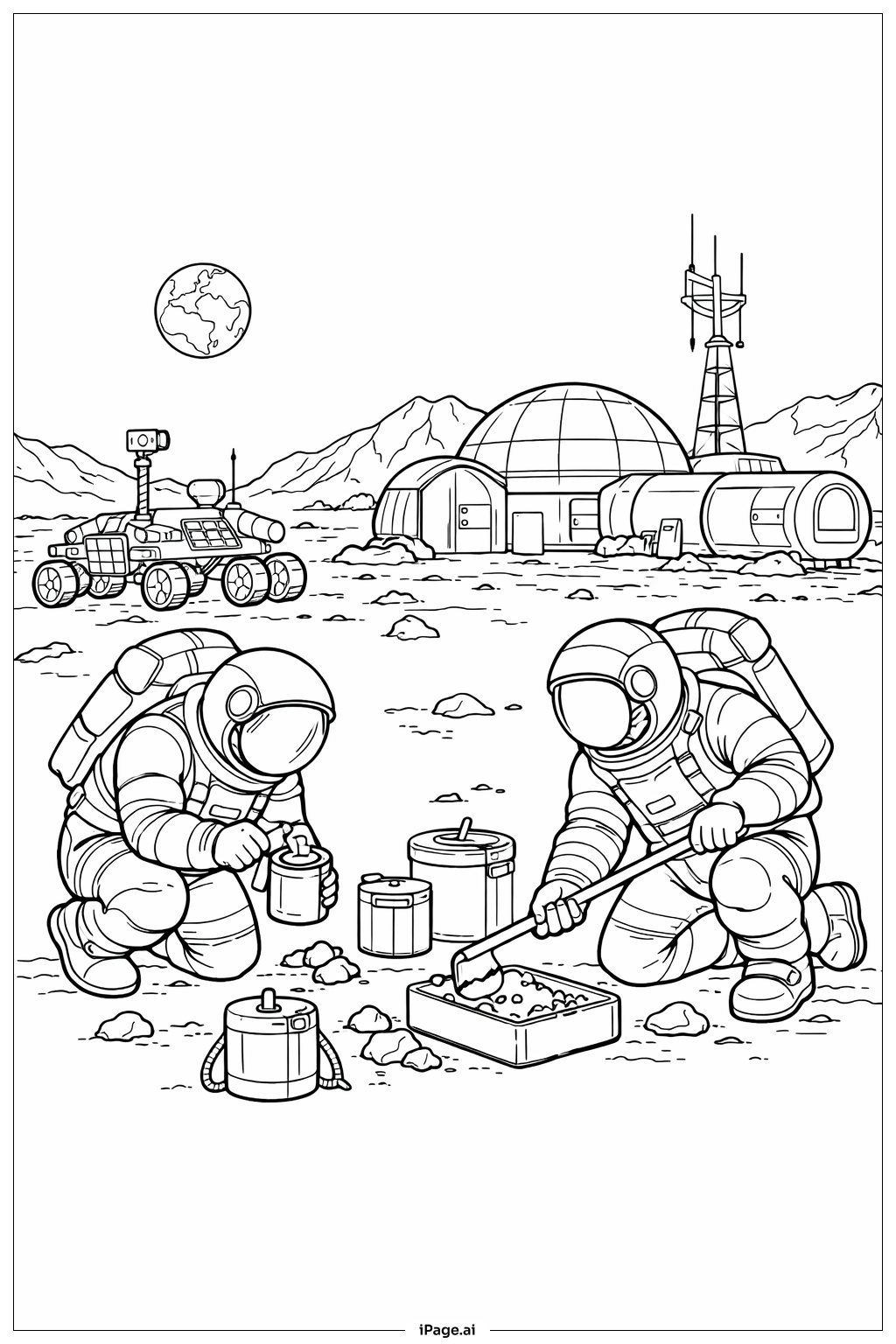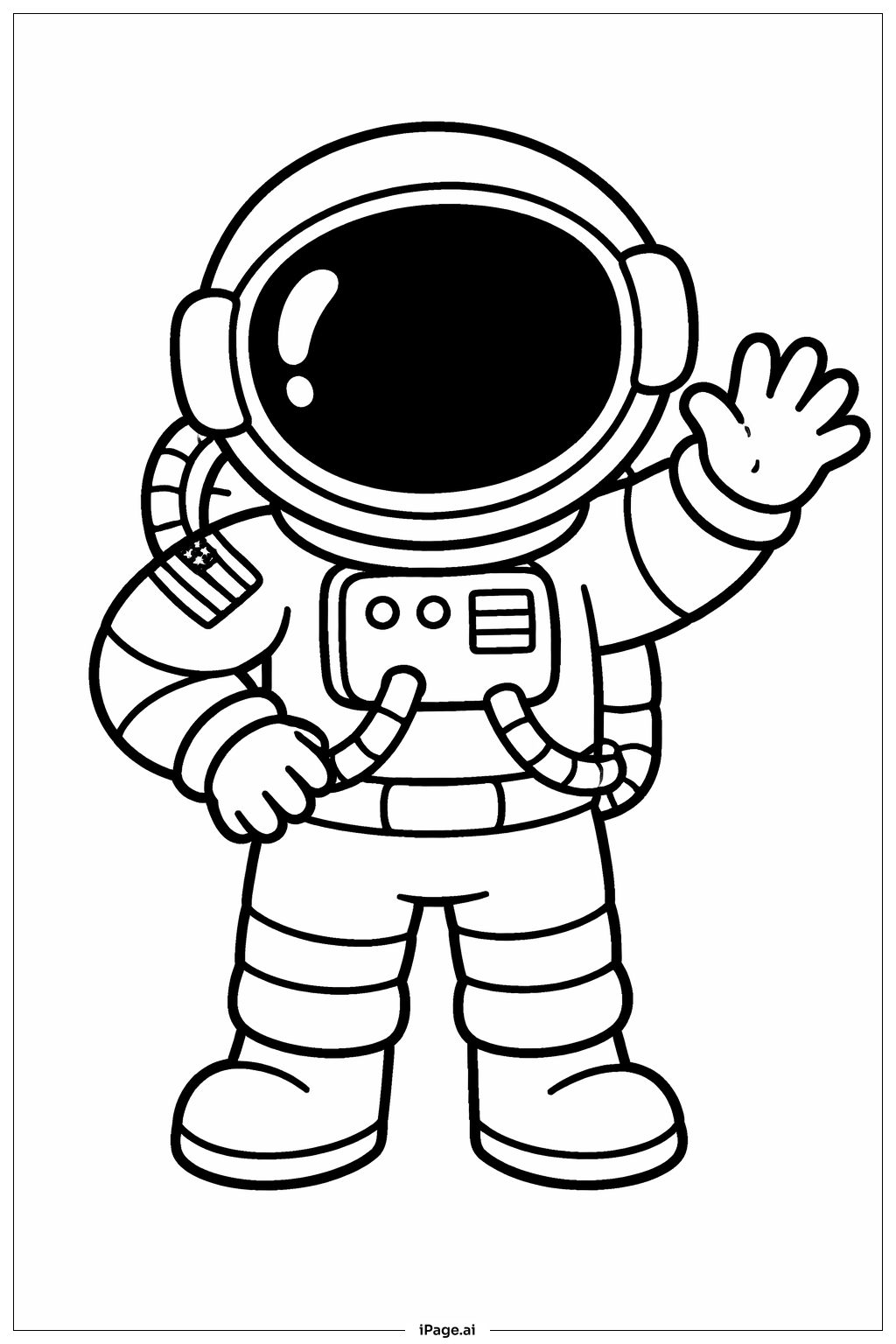
Coloring tips: How to color Artemis II Smiling Astronaut coloring page well?
Start with the astronaut's face using peach or tan tones for a warm, friendly look. Color the space suit in classic white or silver-gray, adding subtle shading to show depth and dimension. Use bright colors for the mission patches - red, blue, and gold work well for official emblems. The helmet visor can be colored with light blue or purple to suggest reflection and depth. Add metallic silver or gray to tubes and connectors for a realistic tech appearance. Consider using orange or red accents on safety equipment and communication devices. The background can be dark blue or black with white stars, or keep it simple to focus on the astronaut. Use colored pencils for fine details and markers for larger areas.
Coloring challenges: Which parts are difficult to color and need attention for Artemis II Smiling Astronaut coloring page?
• Helmet Visor Reflections: The curved visor requires careful color blending to create a realistic transparent and reflective effect. Young colorists may find it challenging to show both the astronaut's face behind the visor and the light reflections on its surface. Using lighter pressure and layering colors can help achieve this effect without making it too dark or opaque.
• Space Suit Technical Details: The suit contains numerous small components including tubes, connectors, panels, and seams that require precision coloring. Children must stay within very small spaces and decide which parts should be different colors. This demands strong fine motor control and patience, especially around the chest pack and life support systems.
• Mission Patches and Emblems: The patches contain intricate designs with multiple colors, text, and small symbols. These tiny areas need careful attention to avoid colors bleeding into each other. Younger children might struggle with the detailed patterns and maintaining color boundaries within these small circular or shield-shaped areas.
• Creating Depth and Dimension: Making the space suit look three-dimensional rather than flat requires understanding of light and shadow. Colorists need to add darker shades in creases and folds, and lighter tones on raised surfaces. This concept of shading can be difficult for beginners who tend to use single, flat colors throughout.
Benefits of coloring books: Advantages of drawing Artemis II Smiling Astronaut coloring page
Coloring this Artemis II astronaut page helps children develop fine motor skills and hand-eye coordination through detailed work on the space suit components. It encourages interest in space exploration, science, and the Artemis II mission, sparking curiosity about careers in aerospace. The technical details teach patience and focus as children carefully color small areas and intricate patterns. Working with the mission patches introduces color matching and decision-making skills. The friendly astronaut's smile creates a positive emotional connection, making space science feel accessible and exciting. This activity combines creativity with educational content, helping children learn about space suits and their functions while expressing artistic choices. It also builds confidence as they complete a complex, detailed image, and can inspire conversations about moon missions and human space exploration.