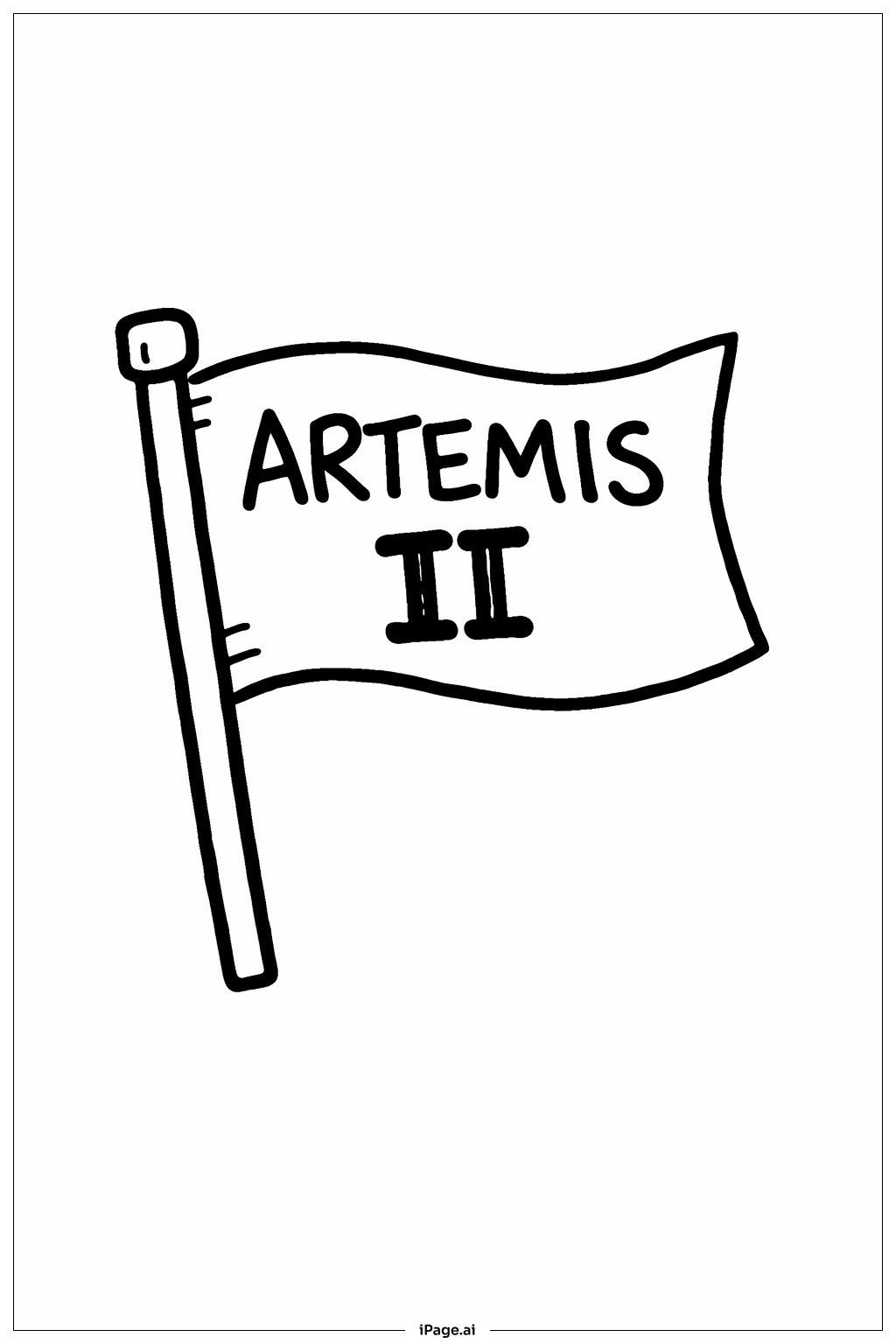
Coloring tips: How to color Artemis II Small Flag coloring page well?
Start with the background of the flag. Use deep navy blue or black to represent the vastness of space. Add small white or pale yellow dots for the stars scattered across the background. For the Moon, use soft shades of gray, white, and light silver to give it a realistic look. You can also add subtle craters using darker gray tones. Color the mission name and lettering in bold gold or bright white so it stands out clearly. Use red, white, and blue for any patriotic elements to honor the NASA and American space program heritage. For orbital lines or motion streaks, try light blue or silver. Younger colorists can keep things simple with flat colors, while older kids and teens can try blending and shading to create a glowing, cosmic effect. The goal is to make the flag feel proud, bold, and full of the energy of space exploration.
Coloring challenges: Which parts are difficult to color and need attention for Artemis II Small Flag coloring page?
• Background Consistency: Filling in the deep space background evenly can be tricky, especially for younger colorists. The large open areas require patience and steady hand movements to avoid streaks or uneven patches of color. Using colored pencils in slow, circular motions or layering marker strokes can help achieve a smooth finish.\n\n• Lettering and Text Areas: The Artemis II mission name and any other text on the flag are small and tightly spaced. Staying within the lines while coloring around the letters takes careful control. Fine-tipped markers or sharpened colored pencils work best here. Rushing this section can easily result in smudges or overflow outside the text boundaries.\n\n• Moon Surface Details: The Moon features subtle surface details like craters and texture lines. Capturing these realistically requires using multiple shades of gray and white while blending carefully. Applying too much pressure can flatten the details, so a light touch with gradual layering is the right approach.\n\n• Orbital Lines and Motion Elements: The thin curved lines representing orbits or movement paths are delicate and narrow. Coloring these without accidentally covering nearby sections demands a steady hand and a fine coloring tool. These lines often intersect with other design elements, making color selection and precision especially important.\n\n• Overall Color Harmony: Bringing all the elements together so they look balanced and cohesive is a challenge in itself. Choosing colors that complement each other across the flag requires some planning before starting. Testing color combinations on a separate sheet first can save a lot of frustration and help the final result look polished and unified.
Benefits of coloring books: Advantages of drawing Artemis II Small Flag coloring page
Coloring the Artemis II Small Flag is a wonderful activity for kids and teens who are curious about space and science. It sparks imagination and encourages young minds to dream about exploration beyond our planet. As colorists work through each section of the flag, they naturally learn about the Artemis II mission and NASA's incredible goal of sending humans back to the Moon. This makes the activity both creative and educational at the same time. The act of coloring itself helps improve focus and fine motor skills, especially when working around small details like lettering and orbital lines. Choosing and mixing colors builds decision-making and artistic confidence. For younger children, it offers a calming, screen-free activity that develops hand-eye coordination. For older kids and teens, it becomes a chance to experiment with shading, blending, and realistic space color palettes. Completing the flag also gives a real sense of pride and accomplishment. The finished artwork can be displayed as a tribute to human achievement in space exploration. Whether done solo or as a group activity in a classroom or at home, coloring this flag connects creativity with the inspiring story of the Artemis II mission.