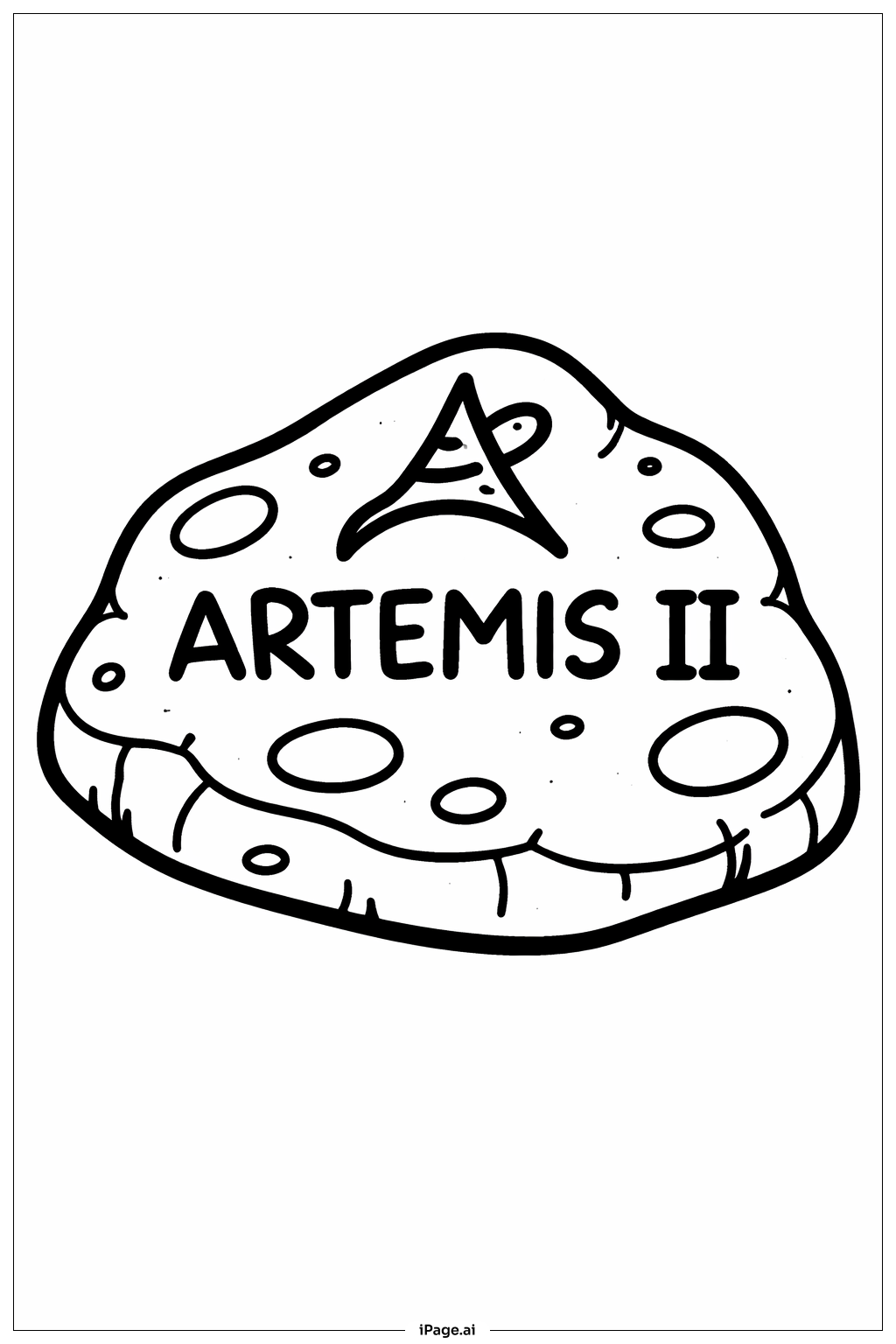
Coloring tips: How to color Artemis II Moon Rock coloring page well?
To color this moon rock, start with shades of gray to represent the natural look of lunar rocks. Use lighter grays for the main surface and darker grays to shade the craters, giving them depth. You can add touches of white or silver to highlight edges and create a rocky texture. For the 'ARTEMIS II' text and the triangular symbol, use bold colors such as navy blue, royal purple, or metallic tones to make them stand out from the rock. Use a fine-tip marker or colored pencil for the small dots and details to keep the texture realistic. Feel free to add a soft blue or black background to represent space, making your moon rock the center of attention.
Coloring challenges: Which parts are difficult to color and need attention for Artemis II Moon Rock coloring page?
1. Shading the Craters: Creating a realistic 3D effect on the craters requires careful shading with different gray tones to show depth. This can be tricky for younger kids.
2. Coloring the Text and Symbol: The bold 'ARTEMIS II' letters and the triangular symbol need precise coloring to avoid coloring outside the lines, requiring good control.
3. Small Dots and Details: The tiny dots scattered on the rock surface need careful attention to avoid smudging or overlapping colors.
4. Maintaining Contrast: Balancing the colors to keep the text and symbol distinct from the gray moon rock can be challenging.
5. Texture Representation: Trying to capture the rough, uneven texture of the moon rock with colors demands a layering technique that may be advanced for beginners.
Benefits of coloring books: Advantages of drawing Artemis II Moon Rock coloring page
Coloring this Artemis II Moon Rock helps children improve their hand-eye coordination and fine motor skills, especially when working on small details like the craters and dots. It fosters creativity by encouraging them to experiment with different shades of gray and bold colors for the text and symbols. This activity also promotes focus and patience, as coloring the intricate parts requires care. Additionally, it sparks an interest in space exploration and science, making learning fun. Overall, it provides a relaxing and educational way for kids to engage with art and outer space themes.