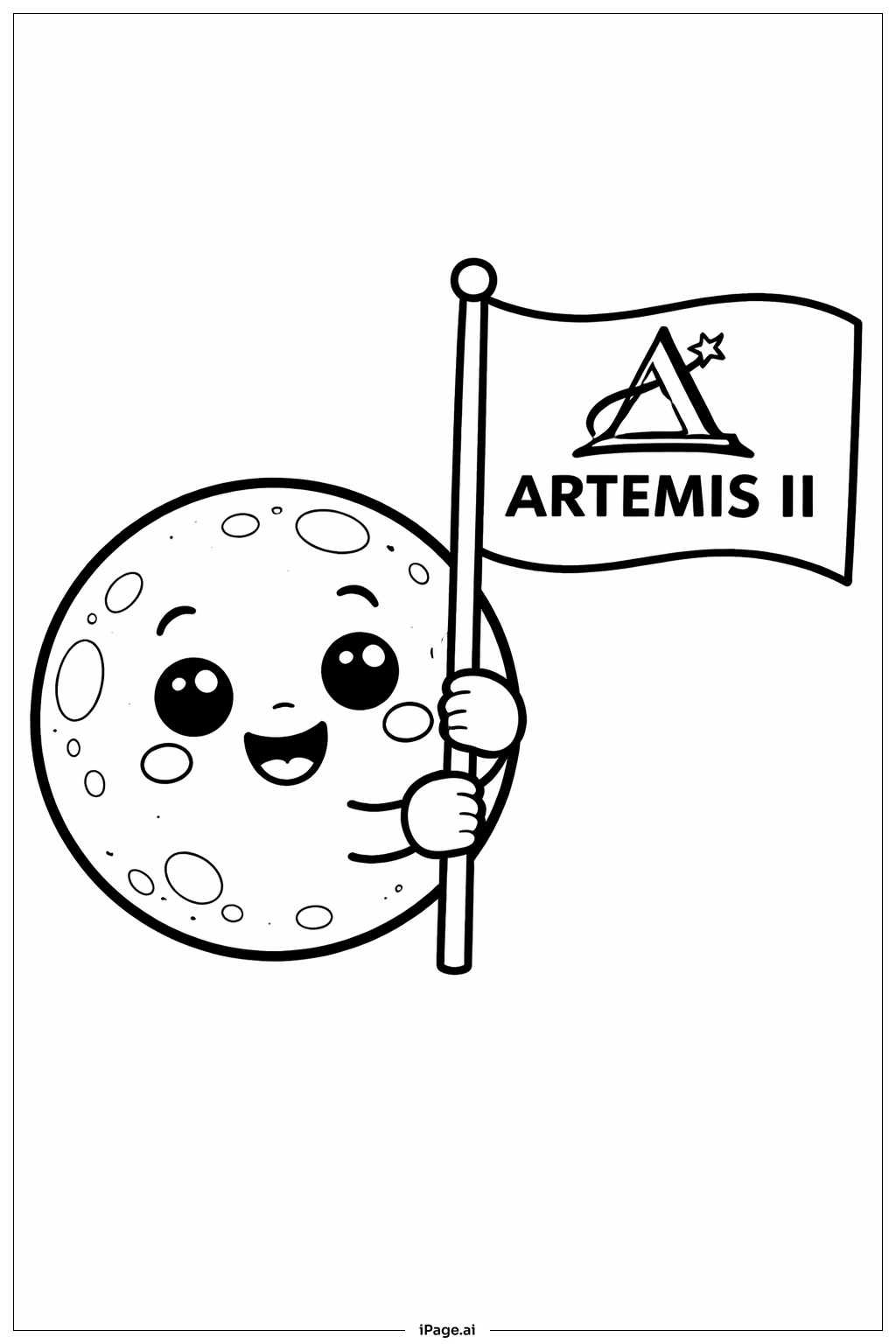
Coloring tips: How to color Artemis II Moon Friend coloring page well?
Start by coloring the moon with soft greys, light blues, or even creative colors like pale yellow or light purple to make it fun. Use darker grey or black for the craters and spots to show the moon's texture. For the eyes, use black or dark colors with a small white spot for the shine. The flag can be colored boldly with bright colors like red, blue, or green to stand out. Use different shades for the flagpole and the letter 'A' to add more detail. Keep the smile and cheeks a warm color like pink or light red to show happiness.
Coloring challenges: Which parts are difficult to color and need attention for Artemis II Moon Friend coloring page?
1. Small Details: The tiny craters and spots on the moon’s surface can be hard to color neatly and need patience. 2. Eyes and Face: The eyes need careful coloring to keep the shiny effect while filling in the dark areas. 3. Flag Lettering: Coloring inside the letters on the flag requires precision to avoid coloring outside the lines. 4. Hands Holding Flag: Small fingers around the pole need attention to give a clean coloring finish. 5. Consistent Shading: Keeping colors even on the moon and flagpole can be a bit difficult for younger kids without mixing colors outside the lines.
Benefits of coloring books: Advantages of drawing Artemis II Moon Friend coloring page
Coloring this picture helps improve hand-eye coordination and fine motor skills by practicing careful coloring in small areas. It encourages creativity as kids choose different colors for the moon and flag. This activity also introduces children to space themes and the exciting Artemis II mission, sparking interest in science and exploration. Coloring the friendly moon face promotes positive emotions and fun, making learning enjoyable. It builds focus and patience while kids work on the detailed shapes and lines.