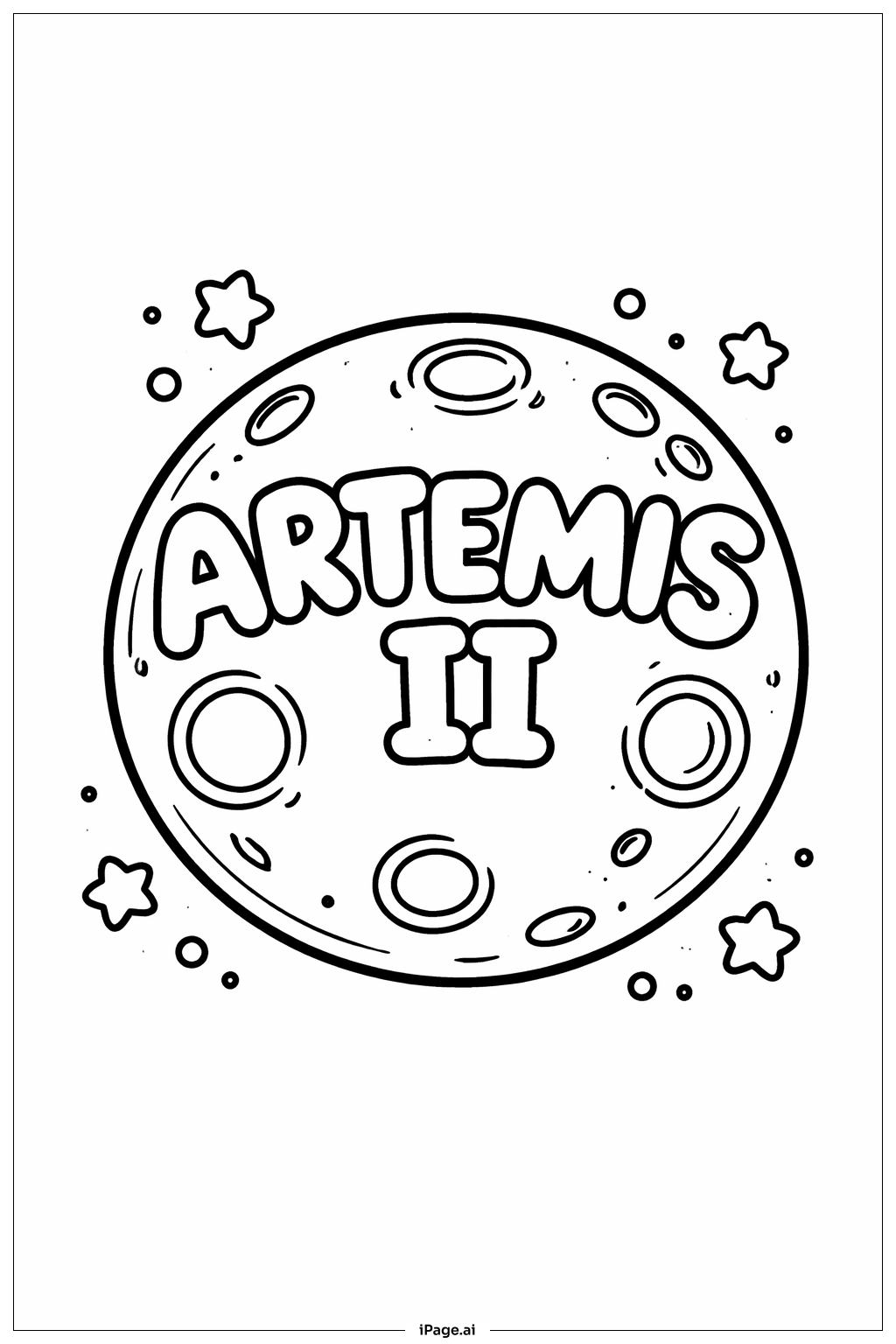
Coloring tips: How to color Artemis II Moon Bounce coloring page well?
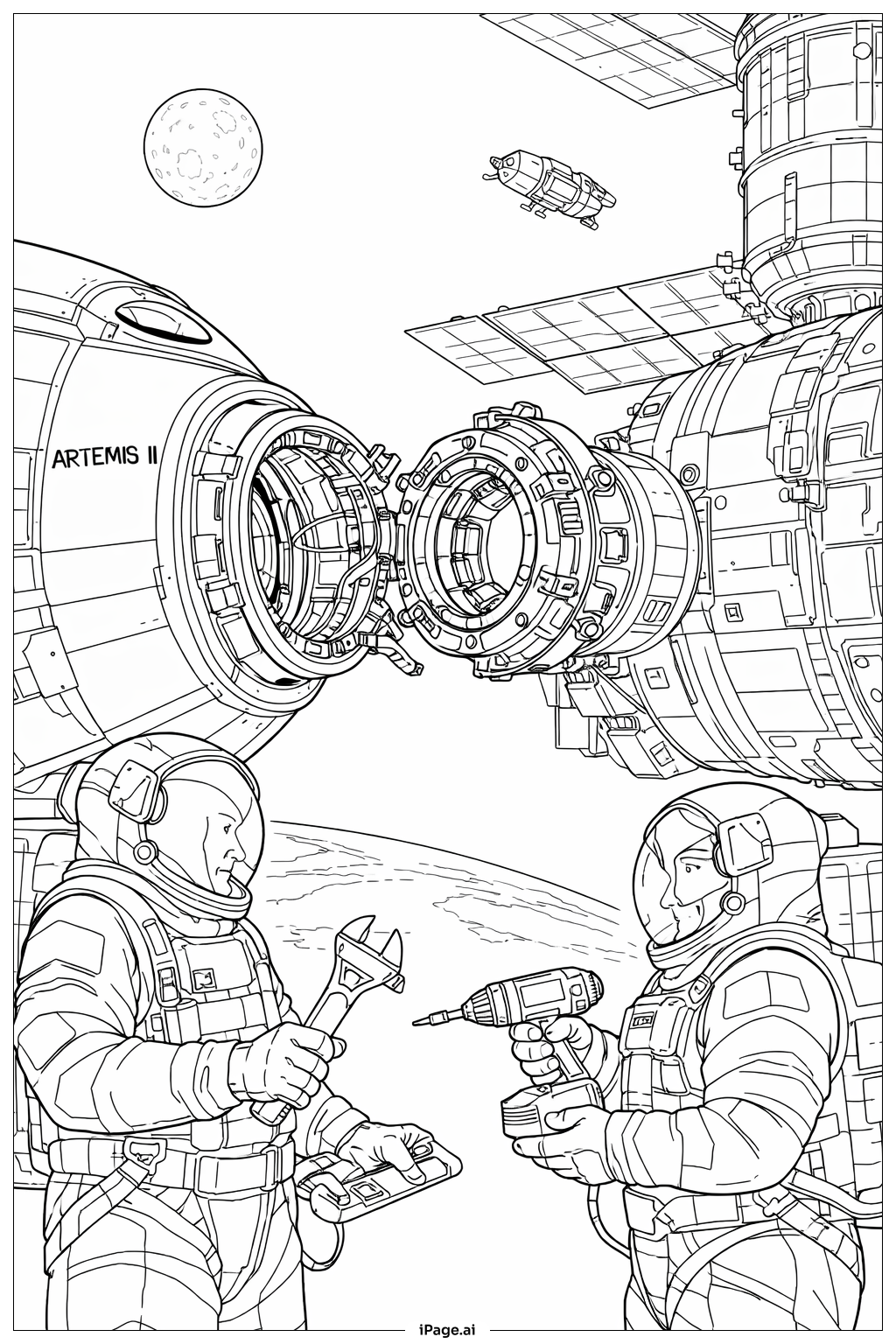
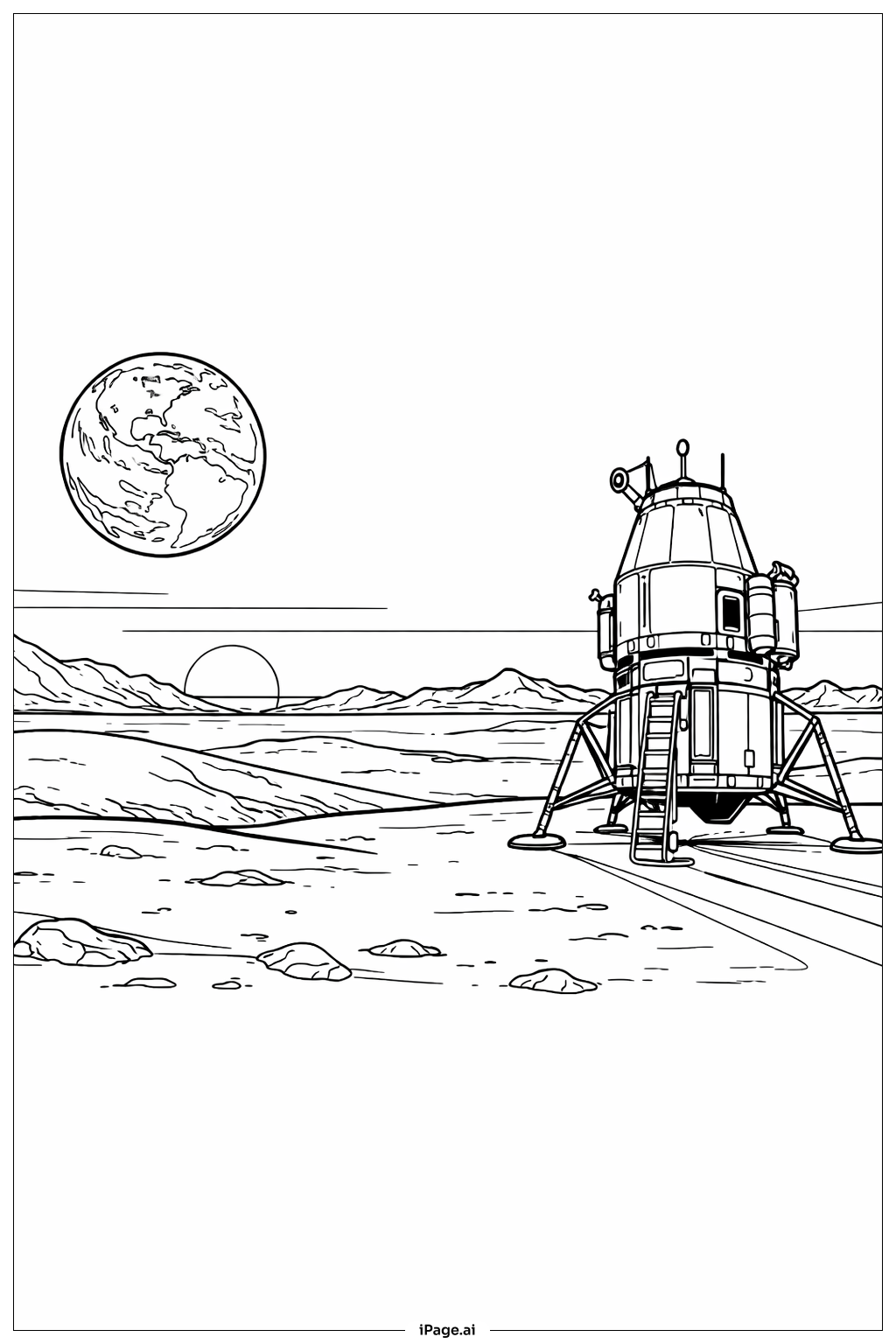
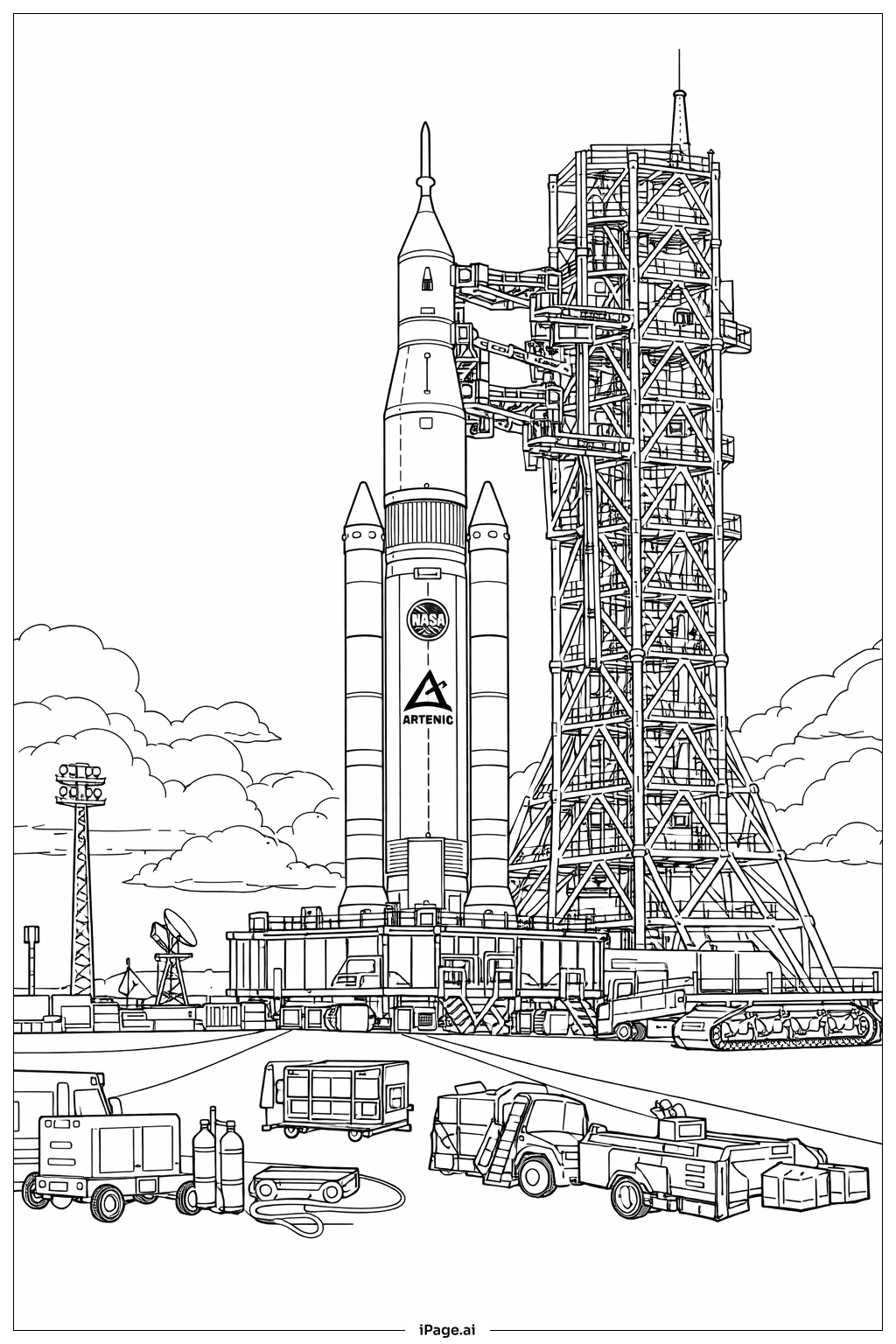
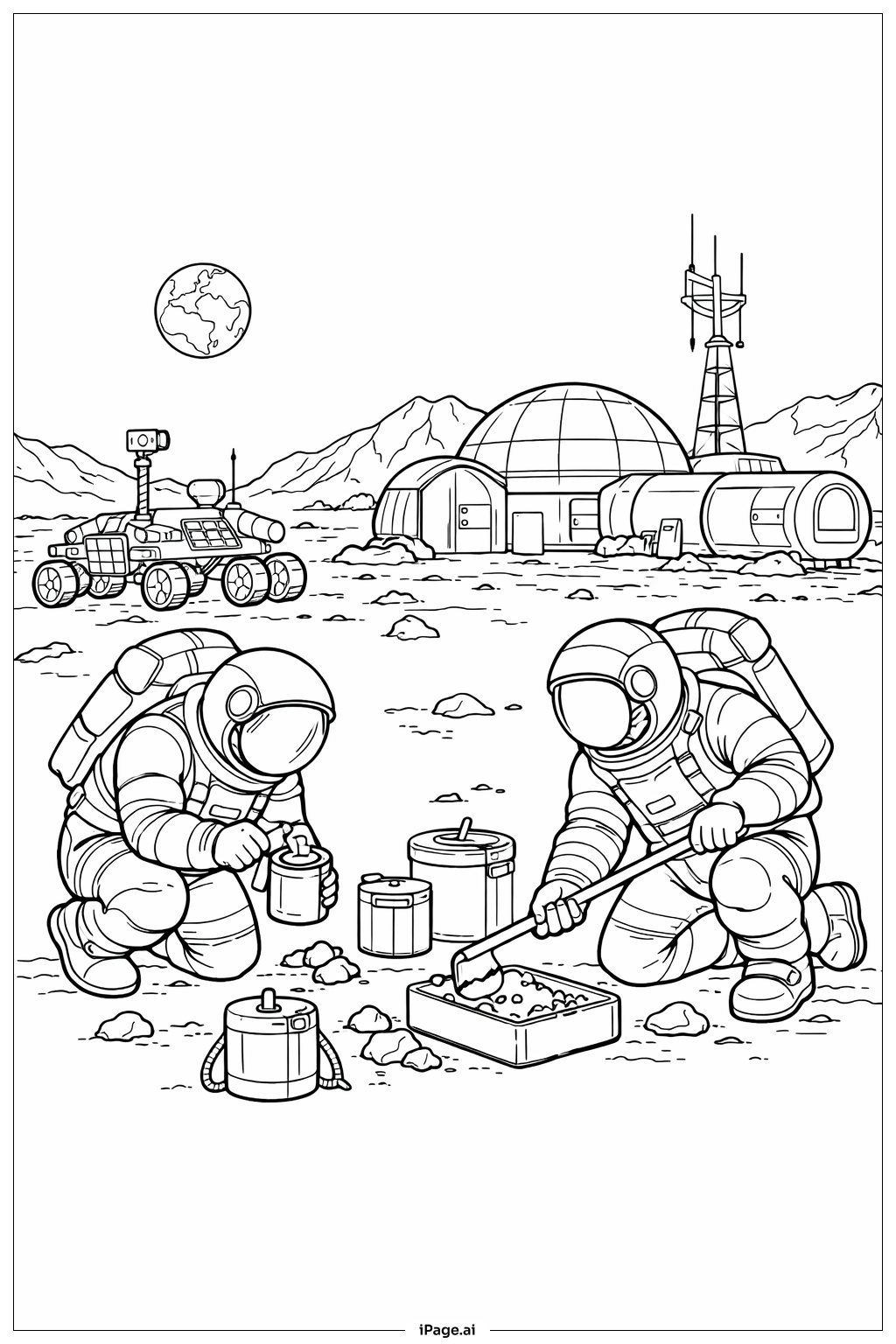
Start with the spacesuits using bright white or silver for the main body, adding gray shadows in the folds and creases. Color the visors with light blue or gold reflective tones. Use red, white, and blue for the mission patches and American flag. The moon's surface works well with various shades of gray, tan, and light brown, creating depth by using darker tones in crater shadows. Make Earth a stunning blue and green globe with white clouds swirling across it. The lunar module can be gold, silver, and black with orange or red accent panels. Fill the space background with deep black or dark blue, dotting it with white and yellow stars of different sizes to create a magical cosmos.
Coloring challenges: Which parts are difficult to color and need attention for Artemis II Moon Bounce coloring page?
• Spacesuit Details: The spacesuits contain intricate elements including textured fabric panels, multiple connection rings, hoses, control panels on the chest, and complex joint segments at elbows and knees. Each layer and component requires careful attention to maintain the technical authenticity while keeping colors distinct from one another.
• Lunar Surface Textures: The moon's terrain features varying textures from fine dust to rough rocky surfaces, crater walls with different depths, and scattered boulders of multiple sizes. Creating realistic depth and dimension through shading techniques while differentiating between sunlit areas and deep shadows presents a significant challenge for colorists.
• Earth and Space Background: Rendering Earth realistically requires blending multiple colors for oceans, continents, and cloud formations in a small circular area. The space background needs careful planning to avoid overwhelming the scene while still capturing the vastness and beauty of the cosmos with appropriately sized and distributed stars.
• Visor Reflections: The helmet visors should suggest transparency while also showing reflective qualities. Balancing these elements to hint at the astronaut's face inside while maintaining the reflective surface effect requires thoughtful color layering and light application techniques that can be challenging for younger artists.
Benefits of coloring books: Advantages of drawing Artemis II Moon Bounce coloring page
Coloring this Artemis II Moon Bounce page offers wonderful educational value by familiarizing children with real space exploration concepts and NASA missions. It encourages interest in STEM subjects, astronomy, and careers in space science. The detailed technical elements help develop fine motor skills and hand-eye coordination through precise coloring within intricate areas. The scene promotes patience and concentration as children work through complex spacesuit components and lunar landscapes. It also sparks imagination about space travel and human achievement, fostering dreams of exploration and discovery. The varying textures and surfaces provide excellent practice in understanding light, shadow, and depth perception. Additionally, this coloring activity can serve as a launching point for family discussions about science, the moon, and humanity's journey into space.