Coloring tips: How to color Artemis II Mission Patch coloring page well?
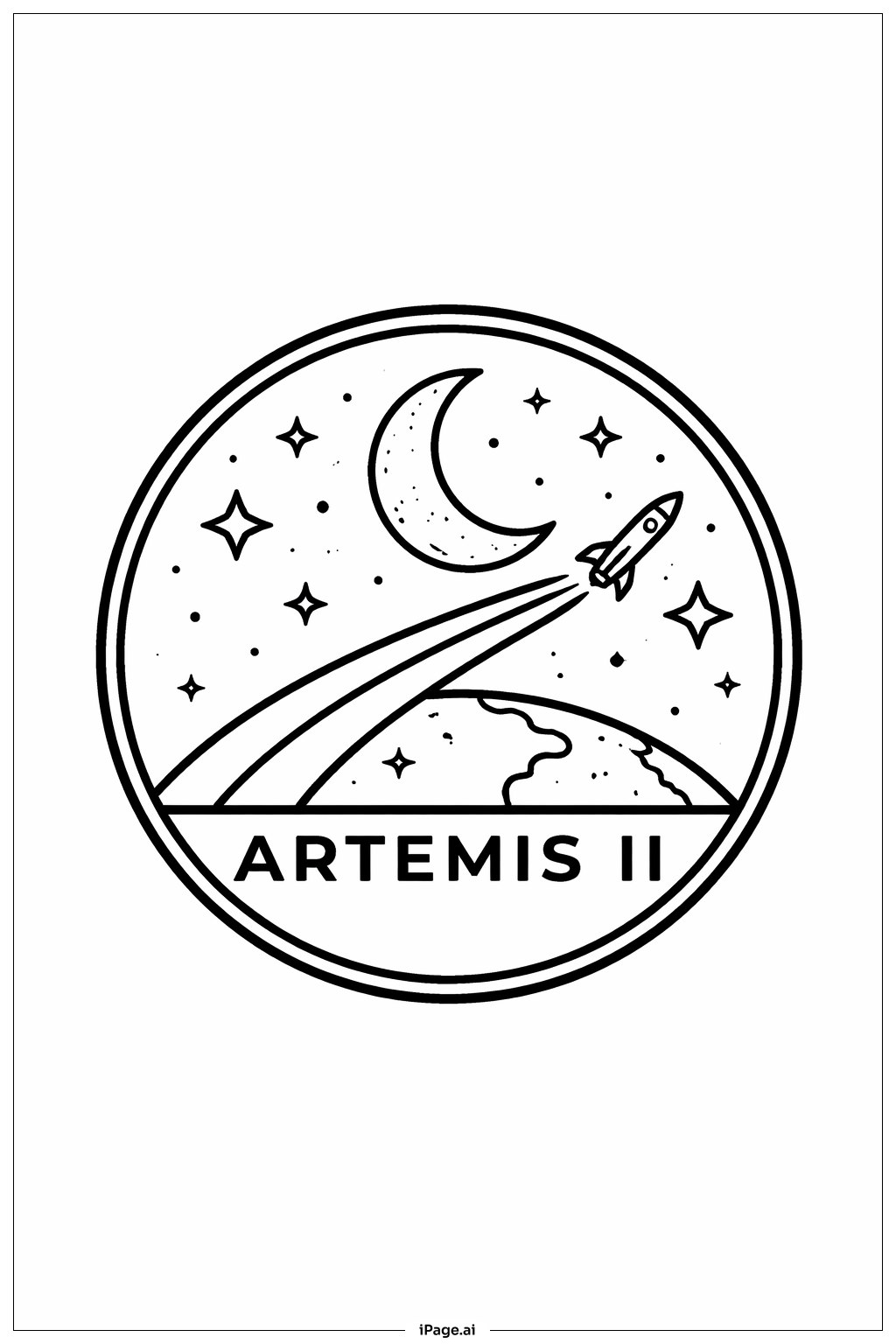
Use bright and bold colors to make the rocket and stars stand out. Try coloring the rocket in silver or white with blue flames to show it flying fast. For the moon, use light grey or pale yellow to create a glowing effect. Color the Earth with blue and green to show the land and water. Use dark colors like deep blue or black for the background to create a night space feel. Finally, color the stars yellow or white to make them sparkle. Adding shading to the rocket’s trail can make it look like it's moving quickly.
Coloring challenges: Which parts are difficult to color and need attention for Artemis II Mission Patch coloring page?
1. The small stars and dots need careful coloring because they are tiny and close together. Staying inside the lines might be hard for younger kids.
2. The rocket trail is long and thin, requiring consistent coloring to avoid patchy areas.
3. The separation between Earth’s land and water is minimal, which might confuse how to color them differently.
4. The crescent moon shape has some small dots inside, so young children need patience to color neatly.
5. The border lines are close to the main design, so careful coloring is needed to avoid mixing colors outside the patch.
Benefits of coloring books: Advantages of drawing Artemis II Mission Patch coloring page
Coloring this picture helps develop fine motor skills by working on small details like stars and the rocket trail. It encourages creativity by allowing children to choose colors to show space and the moon. The design also teaches about space exploration and sparks interest in science and the Artemis II mission. Coloring within the lines builds concentration and patience, helping kids practice focus. Overall, this activity combines fun and learning about space adventures.