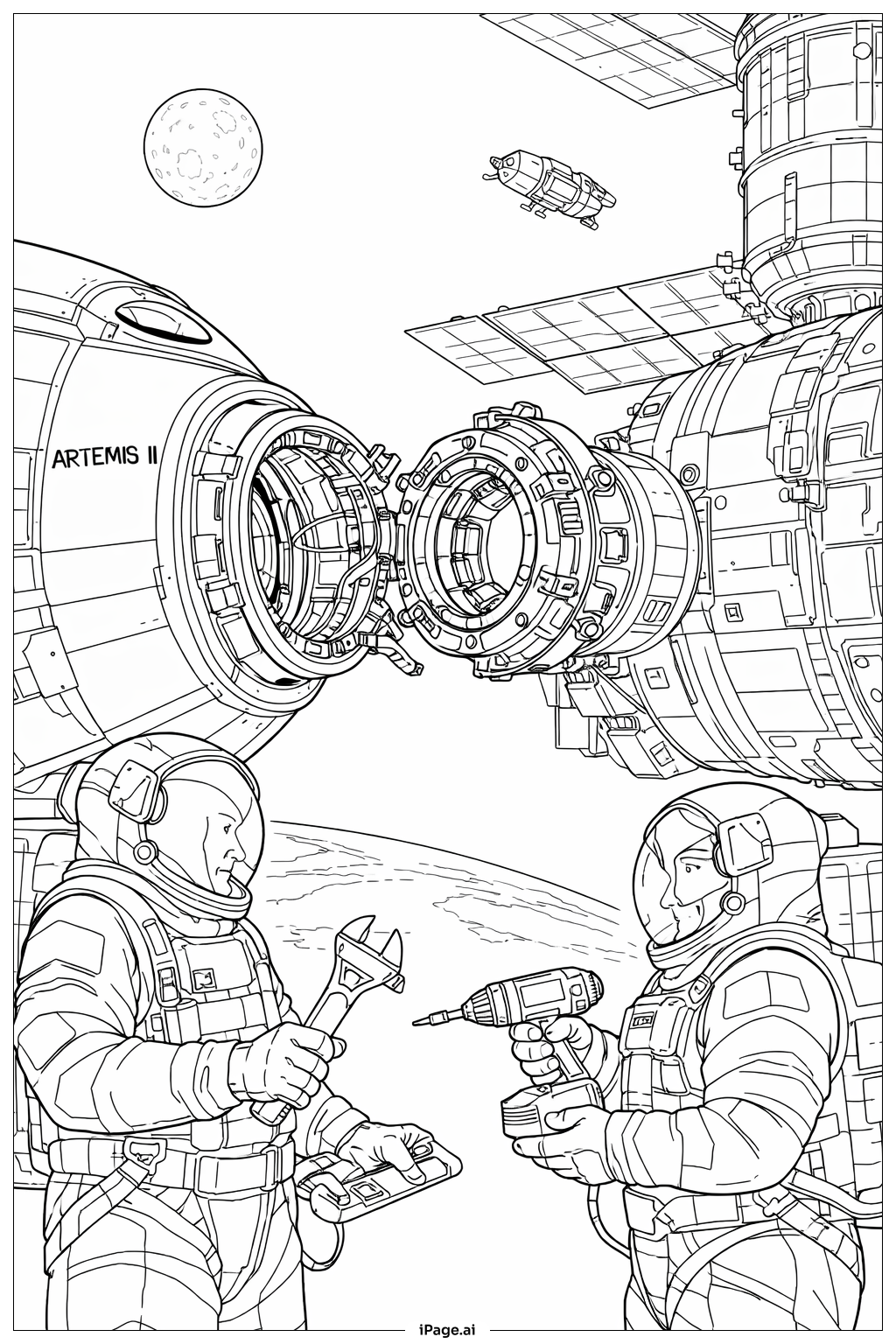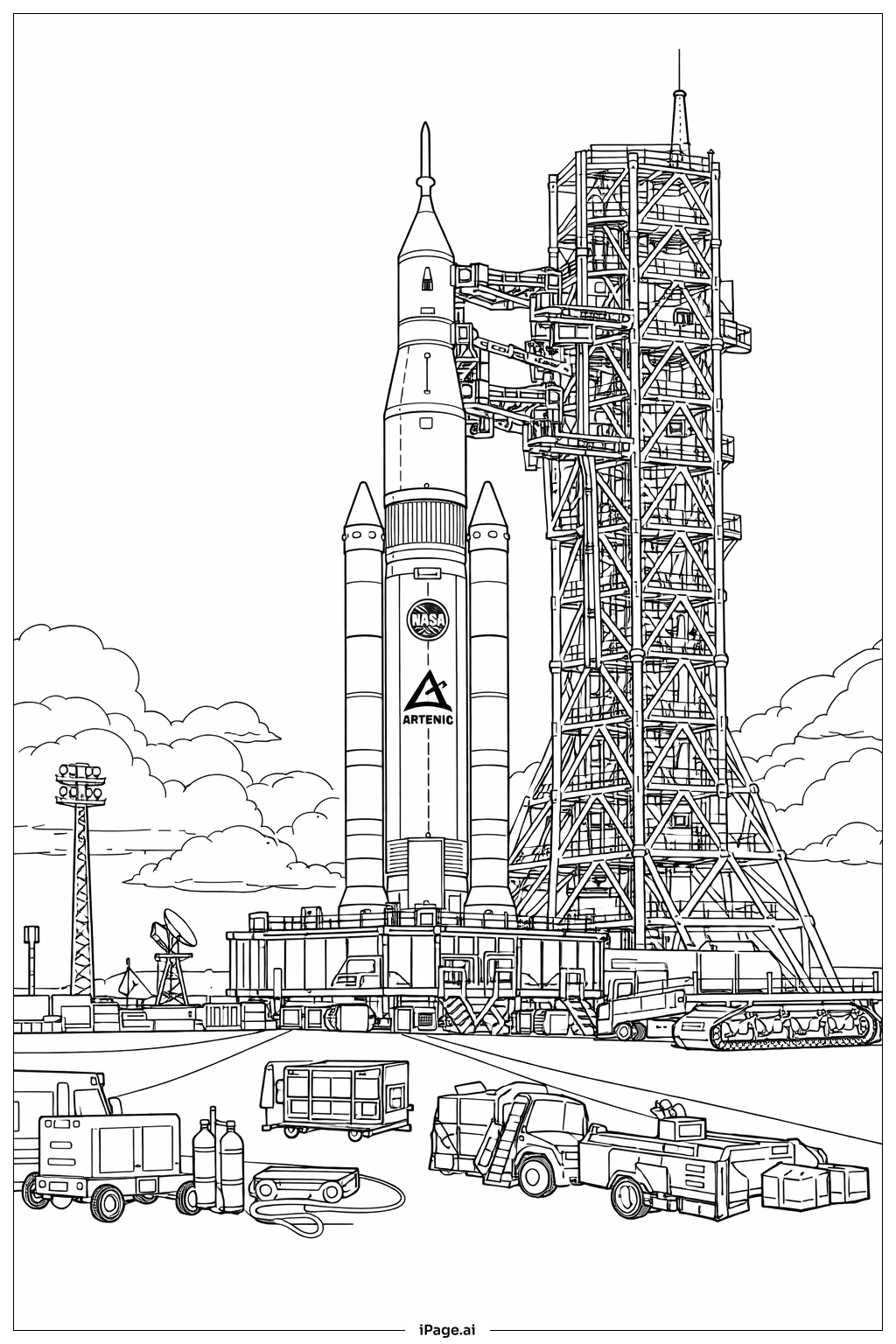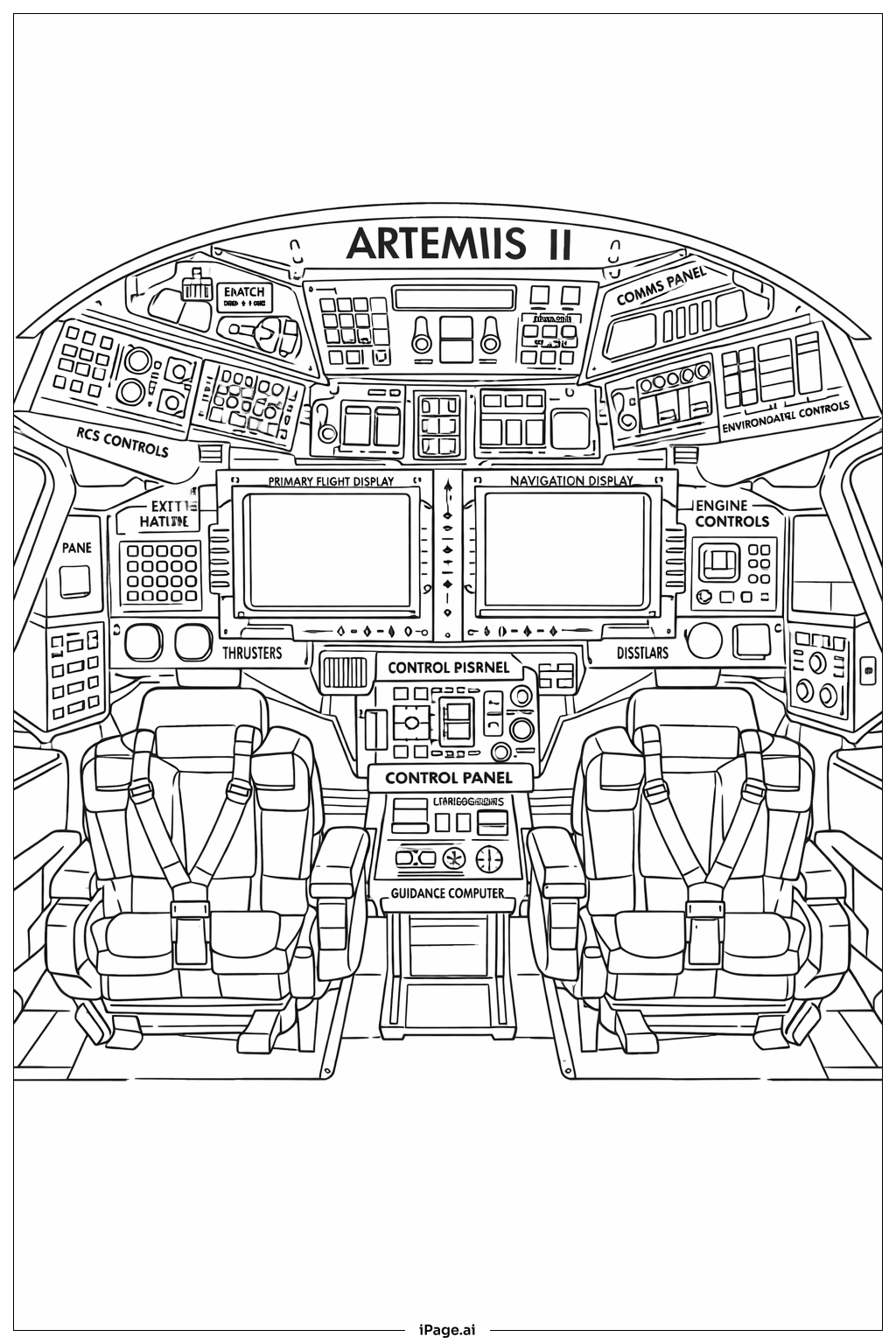
Coloring tips: How to color Artemis II Lunar Module Interior coloring page well?
For the control panels and instrument displays, use dark grays and blacks for the main console surfaces, with bright blues and greens for the digital screens to create a high-tech feel. Color the buttons in varied shades like red, yellow, orange, and white to distinguish different functions. The astronaut seats can be colored in neutral tones like gray or tan with darker accents for straps and padding. Use metallic silver and steel gray for structural elements and equipment housings. Add pops of color to warning labels and indicator lights using bright reds, oranges, and yellows. The overhead panels can feature lighter grays and whites to create depth. Consider using colored pencils or markers to add a subtle glow effect around the screens, making them appear illuminated and operational.
Coloring challenges: Which parts are difficult to color and need attention for Artemis II Lunar Module Interior coloring page?
• Intricate Control Panel Details: The instrument panel contains dozens of small buttons, switches, and display screens that require careful attention and precision coloring. Young children may find it challenging to stay within the tiny boundaries of each individual control element. Using fine-tipped markers or sharp colored pencils will help achieve clean results in these detailed areas.
• Multiple Overlapping Elements: The cockpit interior features many layers of equipment, panels, and structural components that overlap and intersect. Distinguishing between different surfaces and maintaining visual clarity requires thoughtful color choices. Colorists need to use contrasting shades to separate foreground elements from background components, which demands planning and color coordination skills.
• Screen and Display Rendering: The various digital displays and monitors require special attention to create the appearance of illuminated screens. Achieving a realistic glowing effect while maintaining readability of any text or graphics shown on the displays can be tricky. Layering colors and using lighter shades in the center with darker edges can help create depth and luminosity.
• Maintaining Technological Realism: Since this depicts actual spacecraft technology, colorists may want to research authentic color schemes used in real lunar modules. Balancing creative expression with technical accuracy adds an educational challenge. Understanding which elements should be specific colors for safety or function purposes versus which areas allow for artistic freedom requires thought and potentially some research about spacecraft interiors.
Benefits of coloring books: Advantages of drawing Artemis II Lunar Module Interior coloring page
Coloring this Artemis II Lunar Module Interior page offers excellent educational value by introducing children to space exploration technology and STEM concepts. It encourages curiosity about science, engineering, and astronaut careers while developing fine motor skills through the detailed work required. The intricate control panels help improve focus, concentration, and patience as young colorists carefully fill each small button and switch. This page also enhances hand-eye coordination and precision through the challenging detailed elements. Children learn about spatial relationships and depth perception as they distinguish between overlapping equipment panels. The futuristic setting sparks imagination about space travel and future possibilities while teaching about real space missions. Working with the technical elements builds problem-solving skills as colorists decide how to differentiate various components through color choices. This coloring activity combines creative expression with learning about aerospace technology, making it both fun and intellectually stimulating for space enthusiasts of all ages.