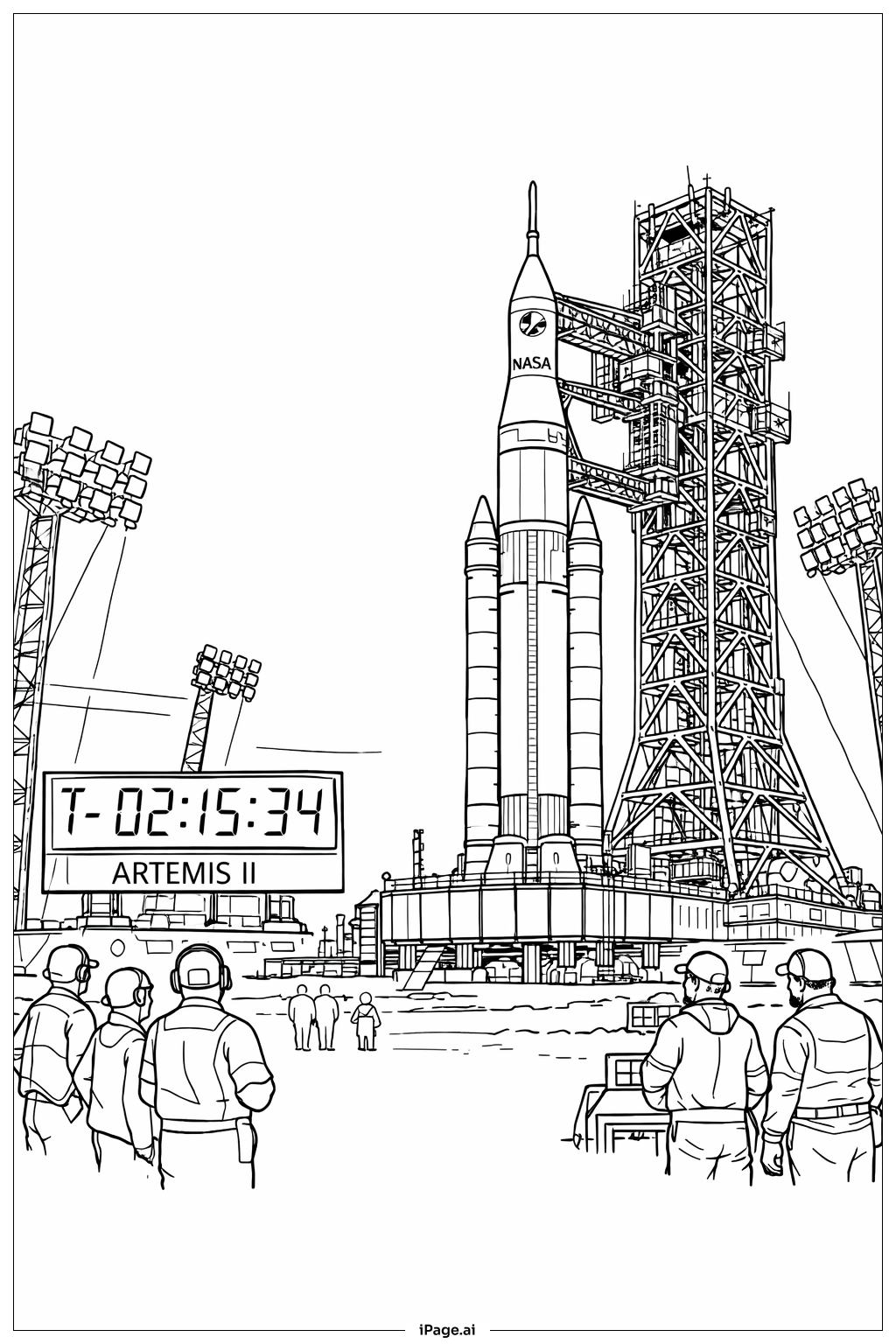
Coloring tips: How to color Artemis II Launch Night Countdown coloring page well?
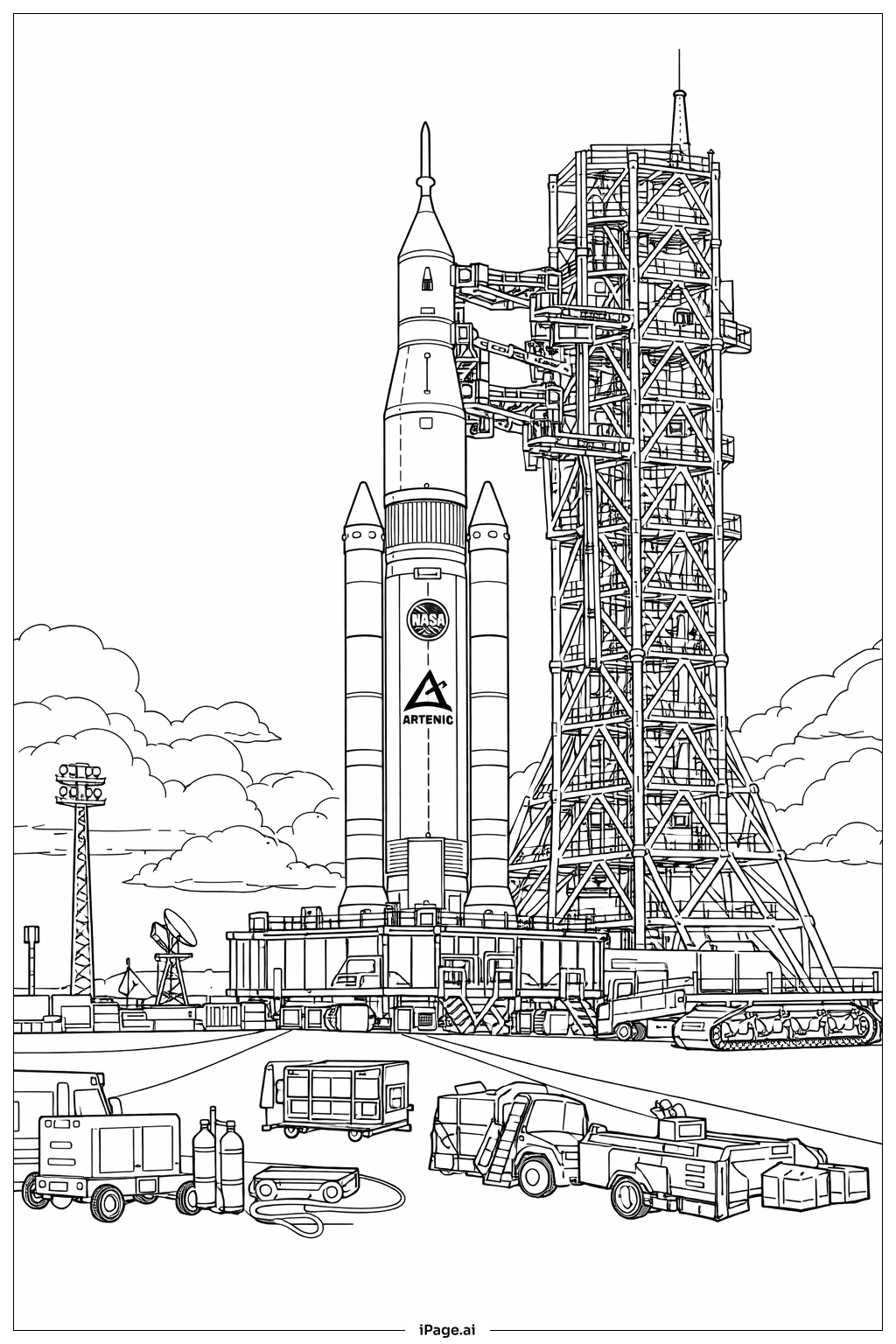
Start with the rocket body using shades of white, silver, and gray to create metallic surfaces. Add orange and red panels where NASA typically places markings. The flames at the base should burst with bright oranges, yellows, and reds, blending outward into lighter tones. Color the billowing smoke in grays and whites with hints of orange reflection from the flames. The night sky can be deep blues or purples, perhaps adding stars with white or yellow. The launch pad structures work well in industrial grays, browns, and metallic silvers. Ground equipment can be various shades of gray, green, or yellow for contrast. Consider adding dramatic lighting effects where the fire illuminates nearby structures with warm orange glows. The launch tower can feature red warning lights or white structural highlights.
Coloring challenges: Which parts are difficult to color and need attention for Artemis II Launch Night Countdown coloring page?
• Intricate Structural Details: The launch pad and support towers contain numerous small geometric shapes, beams, and crosshatches that require careful attention. Staying within these tiny lines while maintaining consistent colors across similar structural elements demands patience and fine motor control, especially for younger colorists.
• Flame and Smoke Blending: Creating realistic fire and smoke effects requires smooth color transitions and blending techniques. The flames need gradual shifts from intense yellows and oranges at the center to deeper reds at the edges, while smoke demands subtle gray variations. Achieving these gradients without harsh lines challenges colorists to develop shading skills.
• Rocket Panel Consistency: The spacecraft features multiple segments with panels, lines, and technical details that should maintain visual consistency. Keeping track of which sections share the same color scheme while differentiating between stages requires planning and organizational skills throughout the coloring process.
• Atmospheric Lighting Effects: Capturing the dramatic night launch atmosphere means understanding how firelight reflects on surrounding objects. The warm glow from the flames should illuminate nearby structures while areas farther away remain darker. This interplay of light and shadow requires advanced color choices and tonal awareness.
• Scale and Proportion Management: Balancing color intensity across different-sized elements—from the massive rocket to tiny structural details—requires strategic color selection. Ensuring the focal point remains clear while not overwhelming smaller details with too-bold choices presents an engaging challenge for developing artistic judgment.
Benefits of coloring books: Advantages of drawing Artemis II Launch Night Countdown coloring page
Coloring this Artemis II launch scene builds fine motor skills through detailed line work in the rocket's panels and launch structures. Children develop hand-eye coordination while navigating complex geometric shapes and small spaces. The technical nature of spacecraft and equipment introduces STEM concepts, sparking curiosity about space exploration and engineering. Choosing colors for flames and smoke encourages experimentation with blending and shading techniques, advancing artistic skills. The dramatic night launch setting allows emotional expression through bold color choices and lighting effects. Completing this detailed scene builds patience, focus, and perseverance. Kids learn about NASA's lunar missions and humanity's return to the Moon, connecting art with real-world science. The structured mechanical elements promote spatial awareness and organizational thinking. This coloring page inspires dreams of space exploration while providing a calming, focused creative activity suitable for various age groups.