Coloring tips: How to color Artemis II Helmet Badge coloring page well?
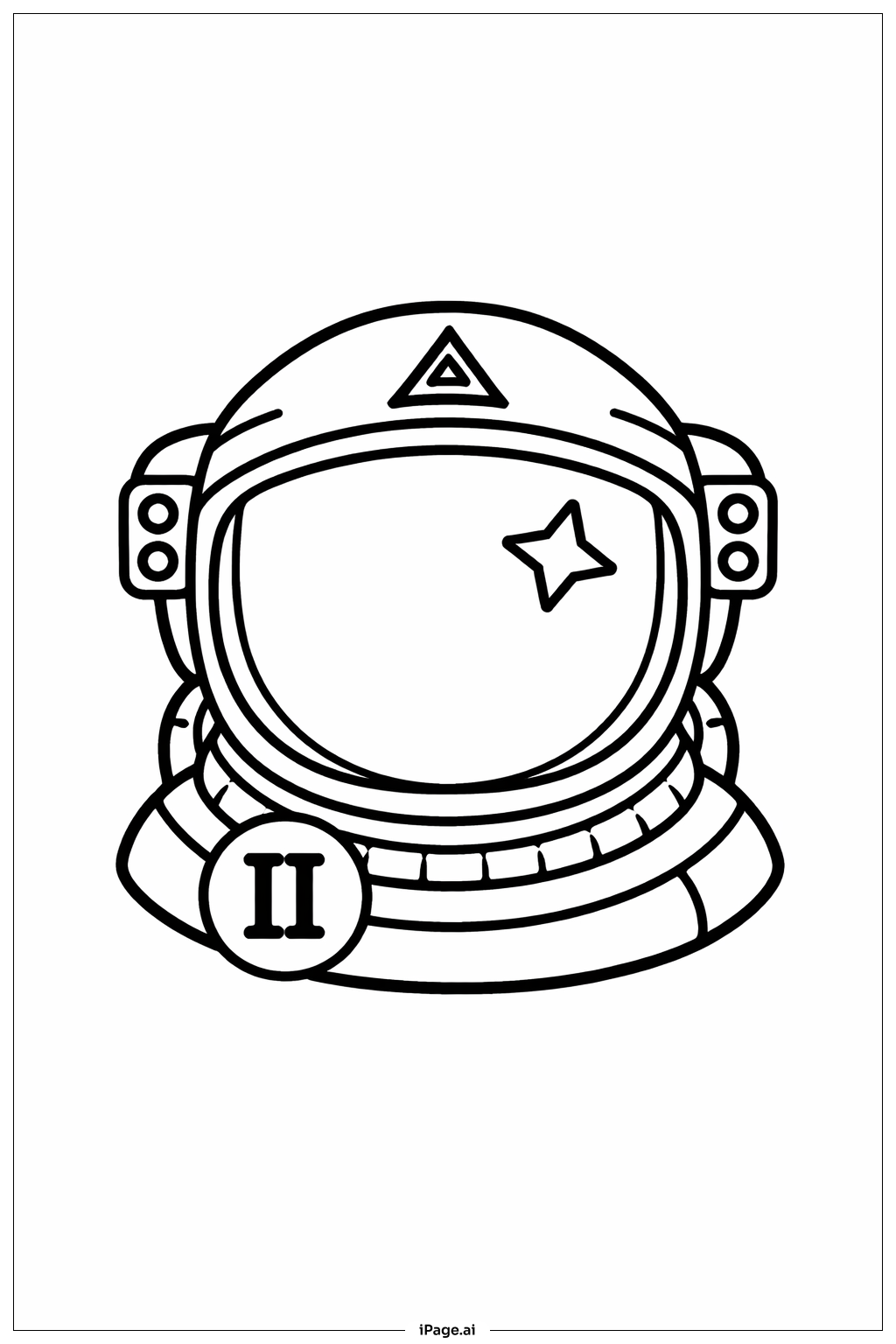
For coloring, use silver or gray shades to represent the metallic parts of the helmet. You can add white highlights to create a shiny effect. The visor can be colored in dark blue or black to mimic reflection and space. Use bright colors like red, blue, or yellow for the triangle symbol and the Roman numeral II badge to make them stand out. The collar area can be colored with darker grays or blacks. Adding some subtle light blue or purple tones can give a cosmic feel to the helmet.
Coloring challenges: Which parts are difficult to color and need attention for Artemis II Helmet Badge coloring page?
1. The curved lines of the visor and helmet require careful coloring to keep the shape smooth and clean. 2. Small details like the two circles on each side and the triangle need precise coloring to avoid going outside the lines. 3. Balancing metallic colors to make the helmet look shiny yet realistic can be challenging. 4. Coloring the star symbol inside the visor without making it blend into the visor’s darker color needs attention. 5. The small Roman numeral II badge requires careful detail to keep the numbers clear and neat during coloring.
Benefits of coloring books: Advantages of drawing Artemis II Helmet Badge coloring page
Coloring this astronaut helmet badge helps children learn about space and space missions like Artemis II. It improves their fine motor skills through careful coloring of detailed parts. It also encourages creativity as they choose colors to make the helmet look realistic or imaginative. Finally, it introduces basic shapes like circles, triangles, and stars, enhancing shape recognition and attention to detail.