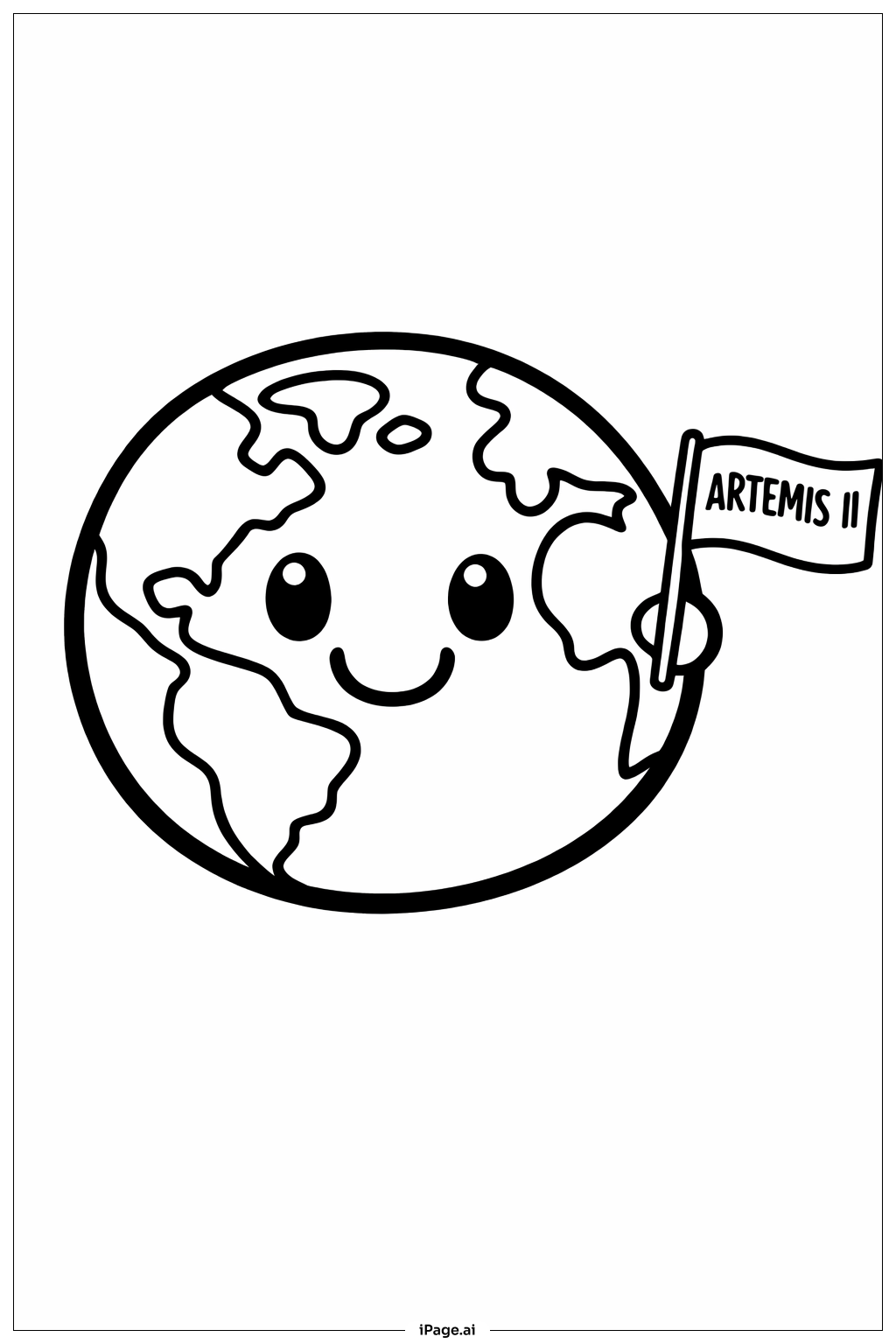
Coloring tips: How to color Artemis II Happy Planet coloring page well?
Use bright blue for the oceans and vibrant green for the continents to make the Earth look lively. You can add a light brown or yellow for some land areas to show deserts or mountains. Color the happy eyes in black with a white sparkle to keep them shiny and cute. For the smile, use a soft pink or red to make it friendly and warm. The flag can be colored with bright colors like red or blue to stand out. Try to color within the lines carefully. Use light shades first and then add darker colors for shadows or details. Have fun mixing colors to make the planet look happy and alive!
Coloring challenges: Which parts are difficult to color and need attention for Artemis II Happy Planet coloring page?
1. Coloring the continents accurately can be challenging because their shapes are complex and curved. 2. Staying inside the small spaces, like the eyes and the flag letters, needs careful attention and steady hands. 3. Choosing colors that look natural but also bright and fun may be tricky for some children. 4. Adding shading or depth to a flat outline requires creativity and some experience with coloring techniques. 5. Balancing colors so the face stands out yet the Earth still looks realistic might be hard for beginners.
Benefits of coloring books: Advantages of drawing Artemis II Happy Planet coloring page
Coloring this picture helps children improve their fine motor skills by practicing staying inside the lines. It encourages creativity as they choose different colors for the ocean, land, and flag. The happy face of the Earth promotes positive feelings about our planet and space exploration. This activity teaches kids about the importance of Earth and NASA's Artemis II mission in a fun way. Coloring also helps to develop focus and patience while making a beautiful picture.