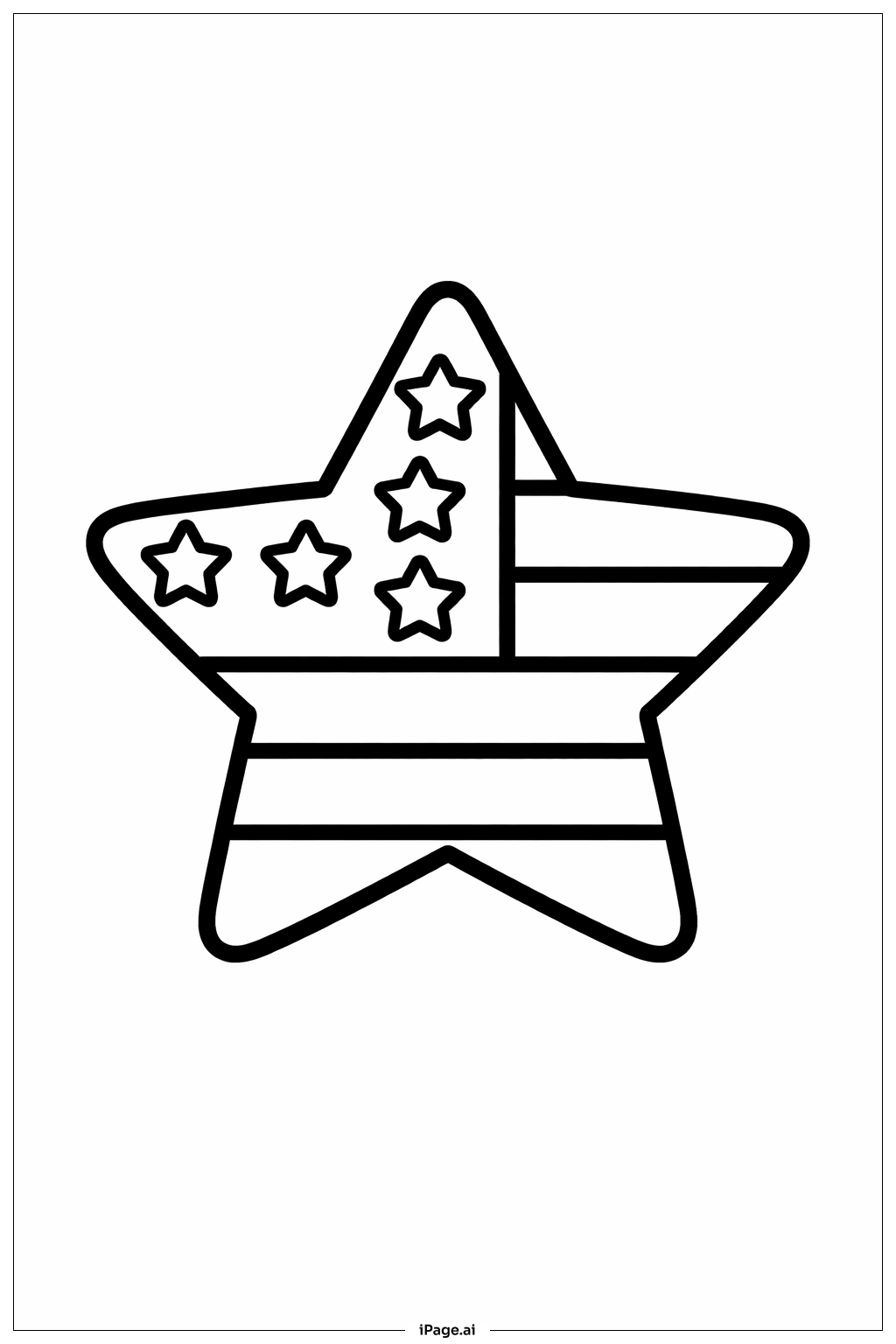
Coloring tips: How to color American Flag Star Badge coloring page well?
Start with the central star using a bright white or yellow to make it stand out as the focal point. Color the stripes in alternating red and white to honor the traditional American Flag pattern. The ribbons can be shaded in deep blue, matching the flag's union canton, or try metallic gold or silver for a medal-like appearance. Consider using different shades of red—from crimson to scarlet—to add depth to the stripes. For the banner text areas, if present, use contrasting colors like navy blue or keep them white for writing special messages. Add subtle shading with colored pencils around the star's edges to create dimension. You might also experiment with a vintage look using muted reds, blues, and cream tones, or go bold with bright, vibrant patriotic colors for a modern celebration feel.
Coloring challenges: Which parts are difficult to color and need attention for American Flag Star Badge coloring page?
• Star Precision: The five-pointed star at the center requires careful attention to keep the color within its sharp angles and pointed tips. Young children may find it challenging to navigate these geometric edges without going over the lines, especially at the narrow points where two edges meet.
• Stripe Consistency: Maintaining even color saturation across the multiple stripes demands patience and steady hand control. Each stripe should appear uniform in tone, which means applying consistent pressure throughout longer strokes. Alternating between red and white stripes also requires focus to avoid accidentally coloring the wrong section.
• Ribbon Curves and Folds: The flowing ribbons feature curved lines and may include fold details that create shadows and highlights. Coloring these dimensional elements convincingly requires understanding of light and shadow placement, which can be complex for beginners. The curves demand smooth, flowing strokes that follow the ribbon's direction.
• Symmetry Balance: The badge design likely has symmetrical elements on both sides, and achieving balanced coloring across mirror sections takes concentration. If one side is colored darker or with different techniques than the other, the overall harmony of the design can appear off-balance.
• Detail Density: With multiple design elements—stars, stripes, ribbons, and border details—packed into a badge format, the image presents many small areas to color. This density requires frequent tool changes and careful planning to prevent colors from unintentionally blending where different sections meet.
Benefits of coloring books: Advantages of drawing American Flag Star Badge coloring page
Coloring this American Flag Star Badge offers wonderful opportunities for children to learn about national symbols and patriotism while developing artistic skills. The symmetrical design naturally teaches balance and pattern recognition, as young artists notice how elements mirror each other. Working with the traditional red, white, and blue color scheme reinforces color identification and cultural literacy about American heritage. The varied elements—from geometric stars to flowing ribbons—help children practice different coloring techniques in one image. Fine motor skills improve as they carefully navigate the star's sharp points and the ribbons' curves. This badge design also encourages pride and conversation about national holidays, family military service, or American history. Completing the page provides a sense of accomplishment and creates a decorative piece suitable for displaying during patriotic celebrations, fostering both creativity and civic awareness.