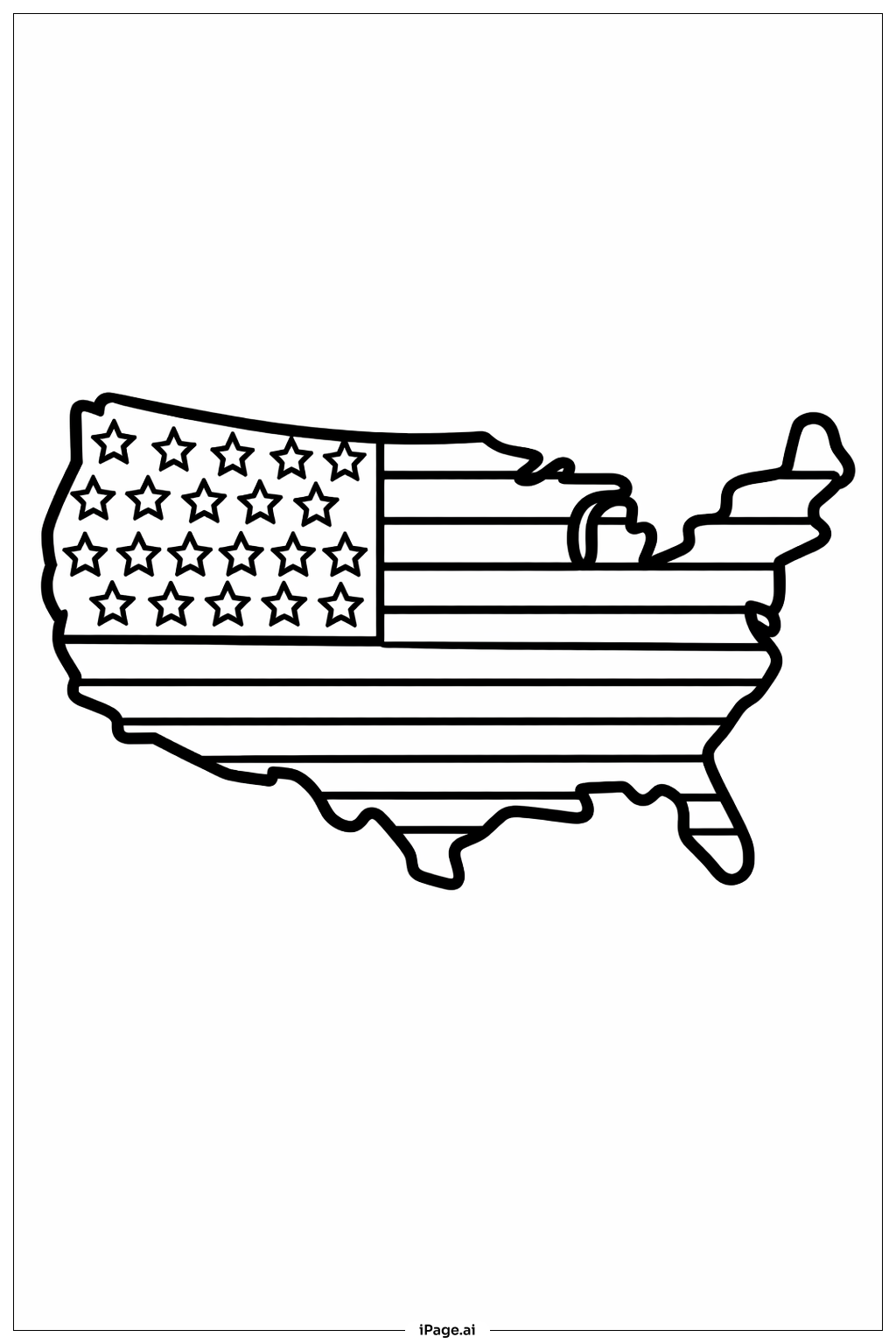
Coloring tips: How to color American Flag Map Shape coloring page well?
Start with the stripes using classic red for seven stripes and leaving the remaining six white or very light. For the canton section containing the stars, use a deep blue background. Color each of the fifty stars bright white or leave them uncolored for contrast. Consider using different shades of red to add depth to the stripes, perhaps darker tones at the edges and lighter toward the center. The blue canton can incorporate navy, royal blue, or even subtle purple undertones for visual interest. Add shading along the map's borders to create a three-dimensional effect. You might also experiment with metallic colors like gold or silver for the stars to make them sparkle. For a creative twist, use gradient techniques within each stripe, transitioning from darker to lighter tones. Remember to maintain the traditional red, white, and blue color scheme to preserve the flag's patriotic symbolism.
Coloring challenges: Which parts are difficult to color and need attention for American Flag Map Shape coloring page?
• Star Precision: Coloring fifty small stars within the canton requires patience and fine motor control. Each star needs careful attention to avoid coloring outside the lines. Young children may find the tiny points challenging, while the repetitive nature can test concentration. Using fine-tipped markers or colored pencils helps achieve clean results. Consider coloring the blue background first, then carefully filling or outlining each star.
• Stripe Consistency: Maintaining uniform color intensity across long horizontal stripes that follow the map's irregular outline presents a unique challenge. The stripes curve and bend with the geographic contours, requiring steady hand movement and consistent pressure. Avoiding streaks or patches demands patience, especially when using markers or crayons. Coloring in one direction helps achieve smooth, even coverage across each stripe's full length.
• Map Border Definition: The outer edge of the map shape requires precision to keep colors within the continental outline. The coastlines and borders feature curves, points, and irregular shapes that demand careful coloring. Areas like Florida's peninsula or the Pacific Northwest's curves need extra attention. This boundary work helps develop hand-eye coordination and spatial awareness.
• Color Transitions: Creating smooth transitions between the red and white stripes while maintaining the map shape tests blending skills. The junction points where stripes meet the blue canton area require careful color management to avoid overlap or gaps. Achieving crisp, clean divisions between colored sections enhances the overall appearance and develops technical coloring abilities.
Benefits of coloring books: Advantages of drawing American Flag Map Shape coloring page
Coloring this American Flag Map Shape offers wonderful educational and developmental benefits. Children learn about American symbols while developing fine motor skills and hand-eye coordination. The repetitive stripe pattern promotes focus and patience, helping build concentration abilities. Recognizing and working with the map outline teaches basic geography and national awareness. The patriotic theme creates opportunities for discussions about history, citizenship, and national identity. The combination of large stripe areas and detailed star sections accommodates various skill levels, making it inclusive for different ages. Completing this complex image builds confidence and provides a sense of accomplishment. The color recognition involved in traditional flag colors reinforces learning, while creative variations encourage artistic expression. This coloring page serves as both an entertaining activity and a meaningful connection to American heritage and pride.