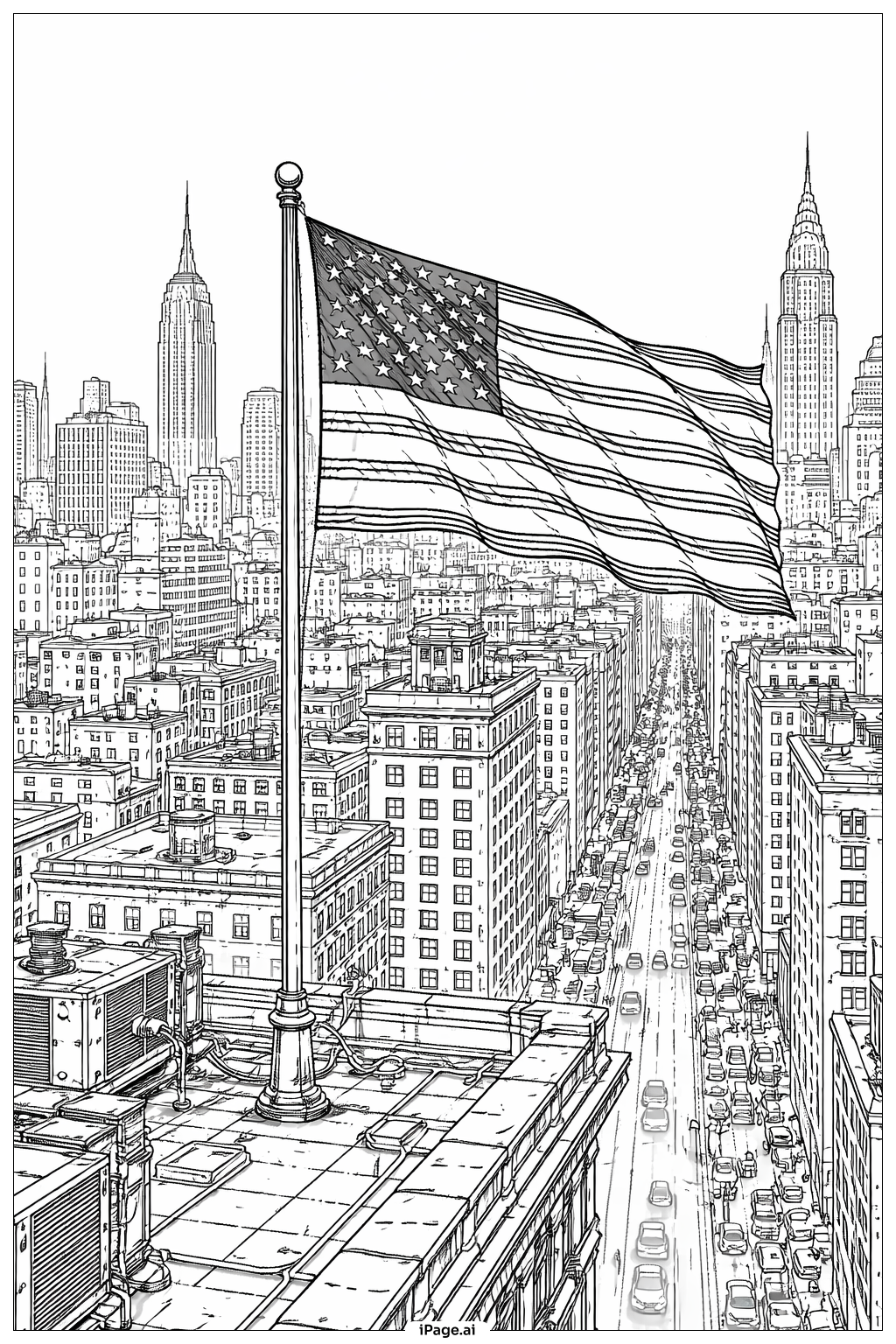
Coloring tips: How to color American Flag Over Rooftop Cityscape coloring page well?
For the American flag, use traditional red for the stripes, deep blue for the canton, and white for alternating stripes and stars. Consider using different shades of red and blue to add depth and dimension to the flowing fabric. The cityscape buildings offer wonderful creative opportunities. Try using grays, browns, and tans for concrete and brick structures. Add pops of color with blue or tinted windows to suggest glass reflections. You might use warmer tones like golden yellows or oranges for a sunrise or sunset atmosphere, or cooler blues and purples for an evening scene. Consider leaving some windows white or light yellow to represent illuminated offices. The sky background could be light blue for daytime, or gradient shades of orange, pink, and purple for dramatic dawn or dusk lighting. Don't forget to add shadows on buildings using darker versions of your base colors to create realistic depth.
Coloring challenges: Which parts are difficult to color and need attention for American Flag Over Rooftop Cityscape coloring page?
• Flag Details and Stripes: The American flag contains 13 alternating stripes that must be colored carefully to maintain the correct pattern. Staying within the lines of these parallel stripes requires steady hand control and patience. The 50 small stars in the blue canton are particularly challenging, as each star needs to remain white or be colored precisely without bleeding into the surrounding blue field.
• Building Windows and Architectural Details: The cityscape contains numerous small rectangular windows across multiple buildings that require careful attention. Coloring each window consistently while maintaining straight lines can be tedious and time-consuming. The repetitive nature of windows might challenge younger colorists to stay focused and precise throughout the entire image.
• Depth and Shading Techniques: Creating realistic depth in the cityscape requires understanding of perspective and shading. Buildings in the foreground should appear darker and more detailed, while those in the background need lighter tones to suggest distance. This requires planning color choices before starting and blending skills that may be difficult for beginners.
• Color Consistency Across Large Areas: The flag's stripes and the building surfaces present large areas that need even, consistent coloring. Avoiding streaks, maintaining uniform pressure, and preventing white gaps between strokes takes practice and patience, especially when using colored pencils or crayons.
Benefits of coloring books: Advantages of drawing American Flag Over Rooftop Cityscape coloring page
Coloring this patriotic cityscape helps children develop fine motor skills through the precise work required for the flag's stripes and stars. The detailed windows and building features improve hand-eye coordination and concentration abilities. This image teaches about American symbols and national pride while encouraging artistic expression. The architectural elements introduce basic concepts of perspective, depth, and urban environments. Working with the traditional flag colors reinforces color recognition and following patterns, while the cityscape allows creative freedom in choosing building colors. The combination of structured elements like the flag and more flexible areas like the buildings helps build confidence in both rule-following and creative decision-making. Completing this detailed scene provides a strong sense of accomplishment and can spark conversations about cities, architecture, and patriotism. The image also offers opportunities to practice shading techniques and color blending for more advanced colorists.