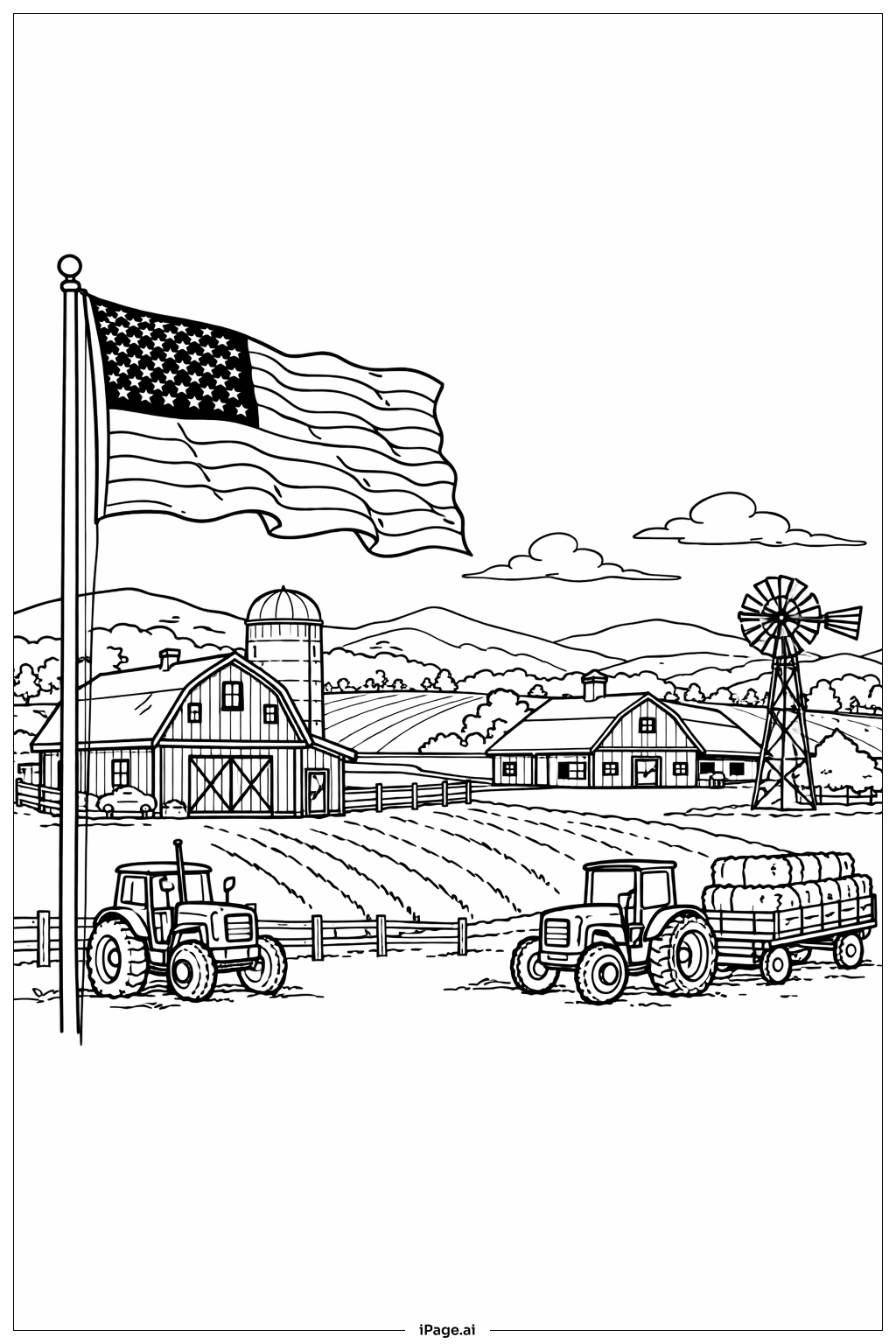
Coloring tips: How to color American Flag Over Farm Fields coloring page well?
For the American flag, use the traditional colors: red for the stripes, blue for the star field, and leave the stars and alternating stripes white or very light. You can use bright, bold shades to make the flag stand out against the sky. For the farm fields, try different shades of green, yellow, and brown to show various crops like wheat, corn, or freshly plowed earth. Use lighter greens and yellows for fields in the distance to create depth. The sky can be colored in soft blues with white or gray clouds, or try a sunrise palette with oranges and pinks for a warm feeling. Consider using darker greens or browns for field boundaries to define the landscape sections. You might add golden tones to suggest harvest time, or fresh bright greens for spring planting season.
Coloring challenges: Which parts are difficult to color and need attention for American Flag Over Farm Fields coloring page?
• Flag Star Field: The most challenging part is coloring the union section of the flag where the stars appear. Keeping the stars white or light while filling the blue field around them requires patience and careful control. Younger children may find it difficult to stay within the small spaces between stars, and might need to use fine-tipped coloring tools or work slowly to avoid coloring over the star outlines.
• Stripe Precision: Maintaining even color within the seven red stripes while keeping them distinct from the six white stripes requires steady hands and attention to detail. The stripes are relatively long horizontal sections, and achieving smooth, consistent color without streaks or gaps can be challenging, especially when using markers or crayons that may leave visible strokes.
• Field Texture and Variation: Creating realistic depth in the farm fields requires using multiple shades and understanding how to show distance. Blending colors to show crop rows, using lighter colors for distant fields, and darker tones for foreground areas demands some color theory knowledge. Children may struggle with choosing which greens, browns, or yellows work well together to create a natural agricultural landscape.
• Sky and Background Layers: Coloring the sky smoothly while working around the flag and landscape elements requires planning. Deciding whether to make the sky uniform or graduated, and avoiding white gaps between elements, takes careful technique. The background hills also need lighter, softer colors than foreground elements to show atmospheric perspective properly.
Benefits of coloring books: Advantages of drawing American Flag Over Farm Fields coloring page
Coloring this American flag and farm scene helps children learn about national symbols and agricultural heritage simultaneously. It provides an opportunity to practice the traditional flag colors while understanding their significance. The repetitive stripes help develop hand-eye coordination and staying within lines. Working on the detailed farm fields encourages experimentation with natural earth tones and understanding how colors create depth and distance. This image also teaches patience through the careful work required for the star field section. Children can explore seasonal color choices, imagining the fields in different growing seasons. The combination of geometric flag elements and organic landscape shapes exercises different coloring skills in one page. This scene also sparks conversations about farming, patriotism, and where food comes from, making it both an artistic and educational activity.