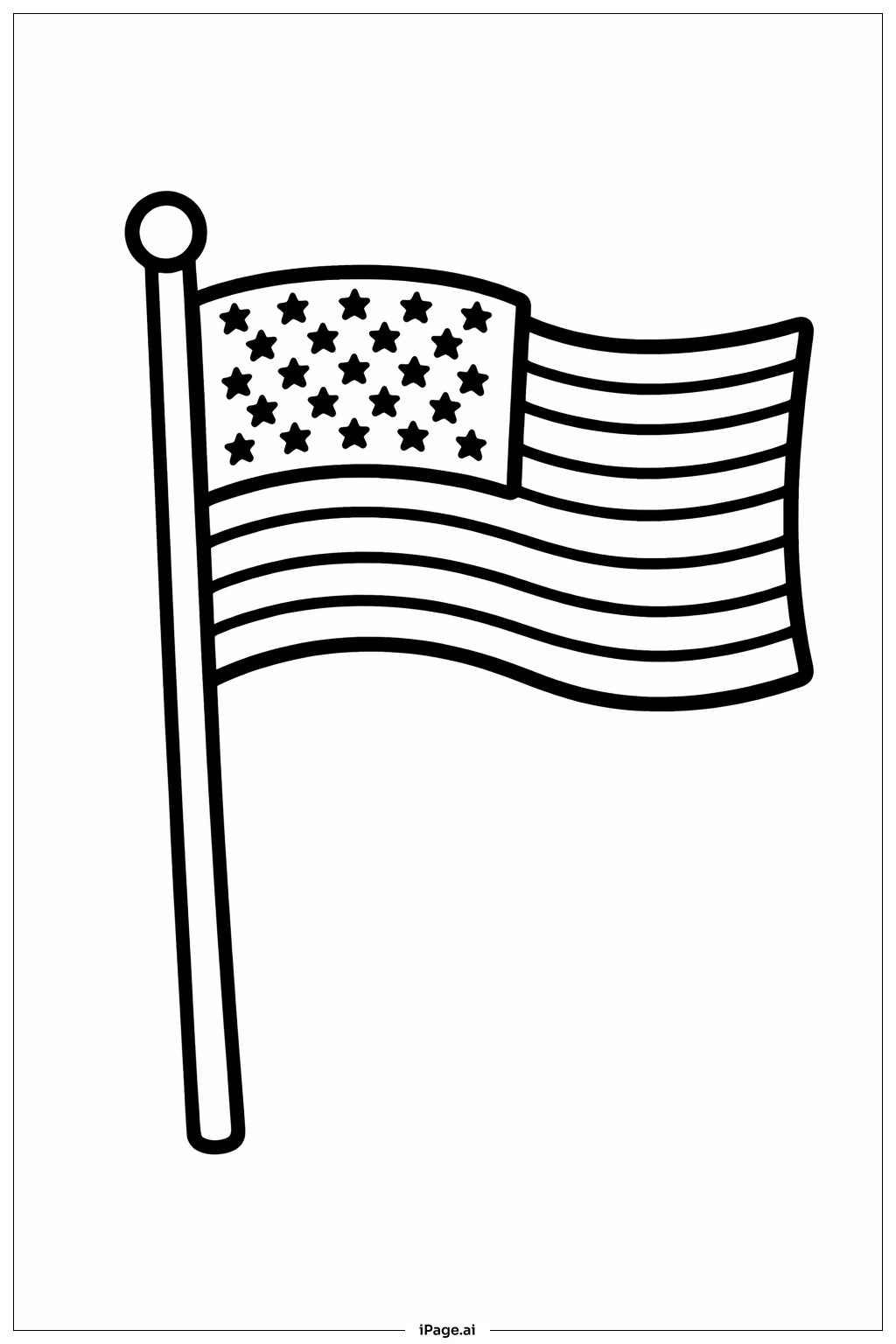
Coloring tips: How to color American Flag On Pole coloring page well?
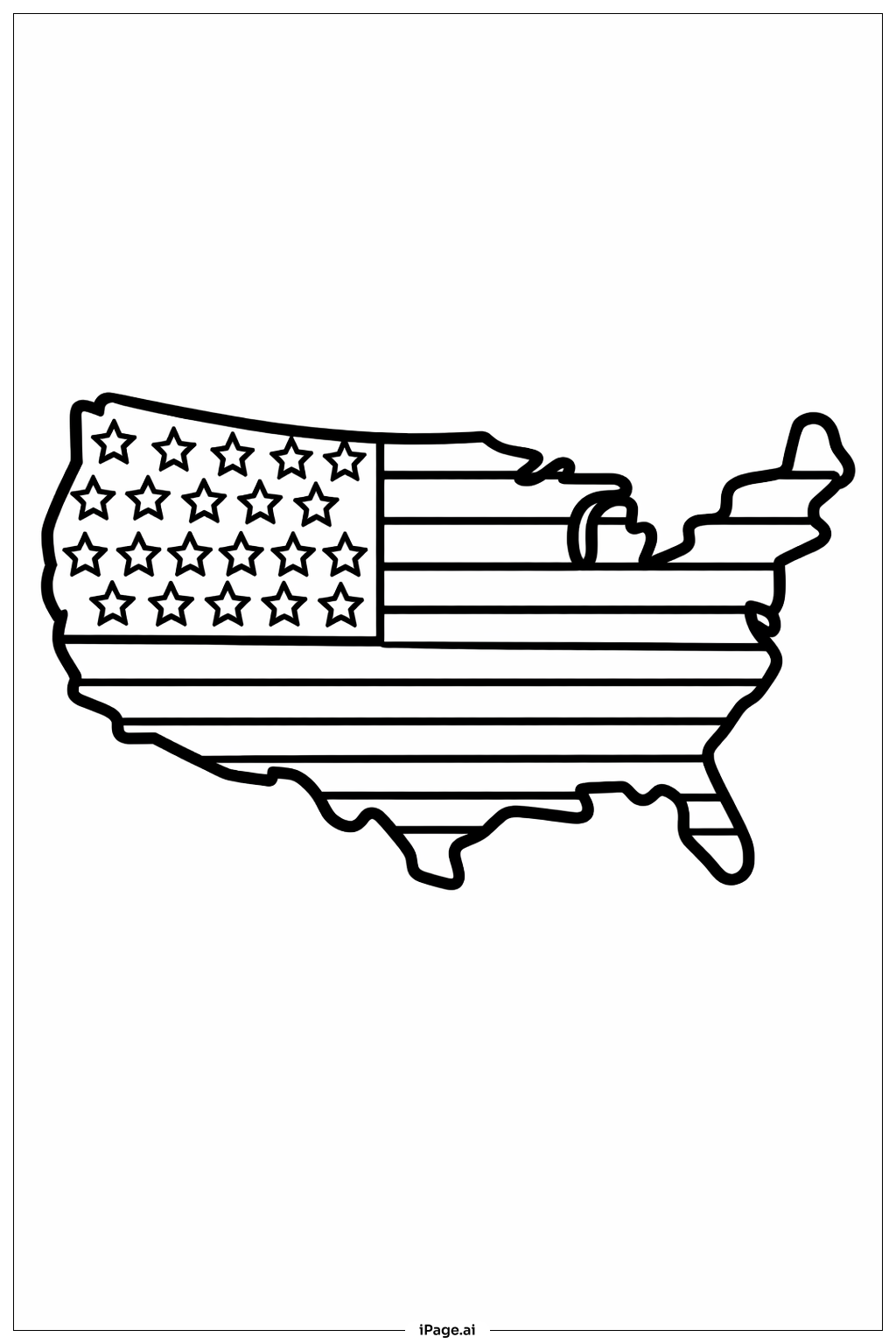
Start with the stripes by alternating red and white, leaving seven stripes red and six white. Use a bright, bold red crayon or marker for consistent coverage. For the blue canton, choose a deep navy or royal blue that stands out against the stripes. Color the fifty stars bright white or leave them uncolored if your paper is white. The flagpole can be colored silver, gray, or a metallic gold to give it a realistic appearance. Add shading to the flag's folds using slightly darker shades of red and blue to create depth and dimension. Consider coloring the sky behind the flag in light blue with soft clouds, or leave it white for a clean, focused look. Use smooth, even strokes within each stripe to maintain the flag's dignified appearance.
Coloring challenges: Which parts are difficult to color and need attention for American Flag On Pole coloring page?
• Stripe Consistency: Maintaining even color within each of the thirteen stripes requires patience and steady hand control. Children may find it challenging to stay within the lines, especially where the flag curves and folds. The alternating pattern also requires concentration to avoid coloring two red stripes adjacent to each other. Using long, horizontal strokes helps achieve smooth coverage without streaking.
• Star Details: The fifty stars in the canton present a significant challenge due to their small size and quantity. Each star must remain white or be carefully colored, and the spacing between them is minimal. Younger children may struggle with the precision needed to color around each star without accidentally covering them. Using a fine-tip marker or colored pencil for the blue background can help preserve the star shapes.
• Wave and Fold Shading: Creating realistic depth in the flag's flowing fabric requires understanding light and shadow. The curves and ripples need darker shades in the creases and lighter tones on the raised portions. This advanced technique of gradient shading challenges even experienced colorists, as it requires blending skills and spatial awareness to determine which areas should be darker.
• Color Boundaries: Where the blue canton meets the red and white stripes creates a complex intersection that requires careful attention. Colorists must switch colors precisely at these boundaries while maintaining the wave pattern. The overlapping visual effect of the flowing flag makes these transitions even more intricate, demanding focus and fine motor control throughout the coloring process.
Benefits of coloring books: Advantages of drawing American Flag On Pole coloring page
Coloring this American flag design helps children learn about their national symbol while developing important skills. It teaches color recognition and pattern awareness through the alternating stripe sequence. The activity enhances fine motor skills and hand-eye coordination, especially when working around the detailed stars and maintaining stripe boundaries. Children gain practice in patience and concentration as they carefully complete each section. This coloring page also provides an opportunity for educational discussions about patriotism, history, and the meaning behind the flag's design. The repetitive nature of coloring stripes can be calming and meditative, reducing stress while building confidence. Successfully completing this detailed image gives children a sense of accomplishment and pride in creating something meaningful and recognizable.