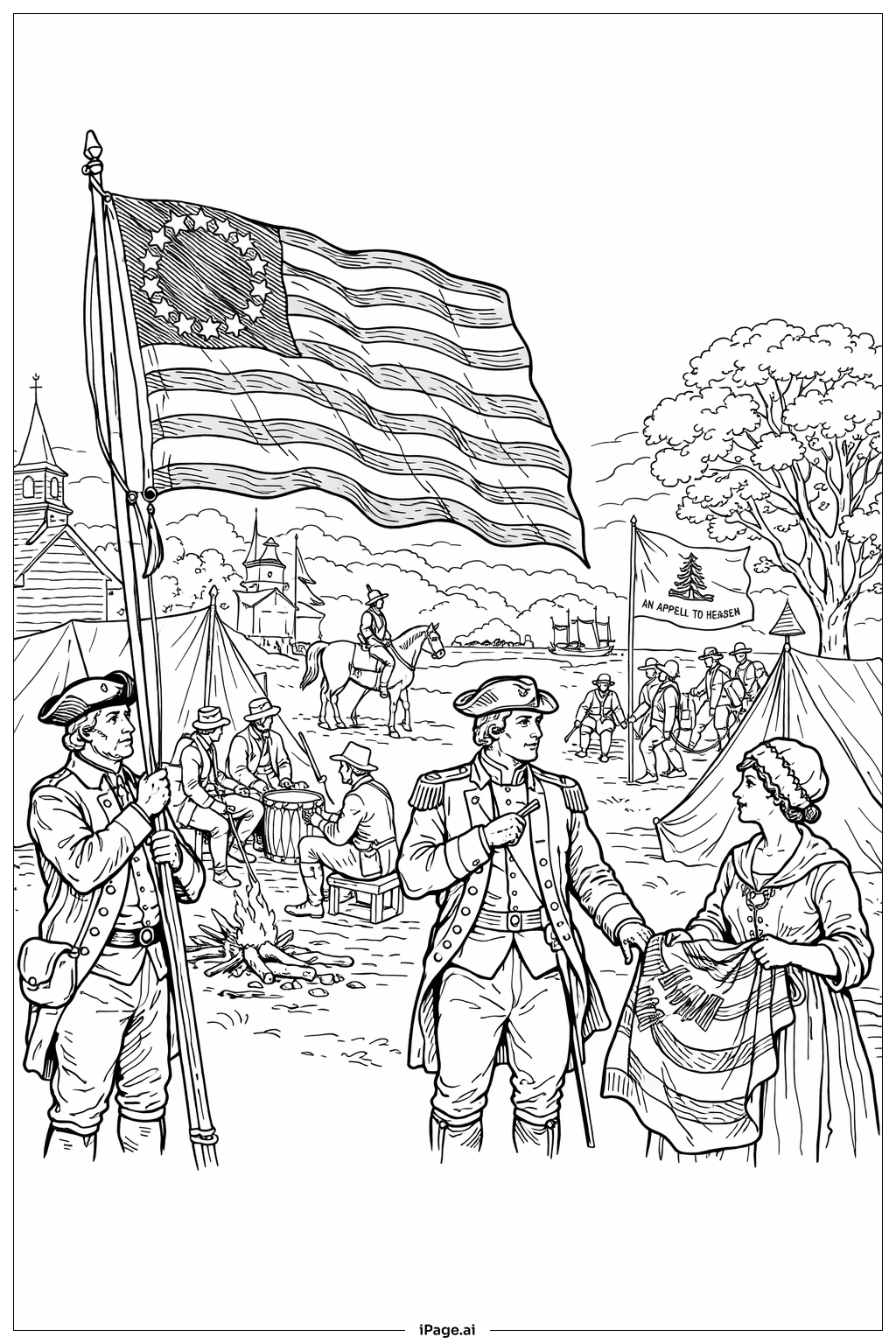
Coloring tips: How to color American Flag Colonial Encampment coloring page well?
Start with the American flag as your focal point. Use bright red for the stripes, keeping alternating stripes white or leaving them uncolored. Color the canton field a deep blue, and make the thirteen stars bright white or light yellow. For the colonial tents, use natural canvas colors like beige, tan, or light brown. Add subtle shading with darker browns to show the fabric folds and shadows. The wooden barrels and crates can be colored in various wood tones from light oak to dark walnut. Use greens and browns for any trees or grass in the background. Consider adding gray or brown for dirt paths around the camp. You might add small touches of color to represent soldiers' uniforms in blue and buff colors if any figures are present. Use lighter pressure for distant objects and stronger colors for items in the foreground to create depth.
Coloring challenges: Which parts are difficult to color and need attention for American Flag Colonial Encampment coloring page?
• Flag Detail Work: The American flag contains multiple elements requiring precision. The thirteen stripes must alternate consistently in color, and staying within the narrow stripe boundaries can be challenging. The circle of thirteen stars in the canton requires careful coloring to keep each star distinct and evenly colored, especially if using white or yellow against the blue field.
• Tent Fabric Texture: Creating realistic fabric appearance on the colonial tents involves understanding how to show folds, shadows, and the natural drape of canvas material. The A-frame structure creates diagonal lines and angular shadows that need different shading techniques. Blending colors smoothly to show dimension without making the tents look flat or overly dark requires practice.
• Wood Grain and Barrel Details: The wooden barrels and crates feature curved surfaces and metal bands that need distinct coloring approaches. Creating convincing wood grain texture with colored pencils or crayons takes patience. The curved surface of barrels requires gradual shading from light to dark to show roundness, and the metal bands need a different technique to appear metallic.
• Depth and Perspective: This scene contains multiple elements at different distances, from foreground objects to background trees and tents. Creating proper depth requires using lighter colors and less detail for distant objects while keeping foreground items bold and detailed. Balancing these elements so the scene looks three-dimensional rather than flat presents a challenge for younger or less experienced colorists.
Benefits of coloring books: Advantages of drawing American Flag Colonial Encampment coloring page
Coloring this historical scene helps children learn about American history and the Revolutionary War period in an engaging, hands-on way. As they color the thirteen stars and stripes, they can understand the symbolism behind the early American flag. This page develops fine motor skills through the detailed work required for stripes, stars, and small camp objects. It enhances focus and concentration as children work to stay within lines and match appropriate historical colors. The scene encourages historical thinking as children imagine what life was like in a colonial military camp. Working with different textures like fabric, wood, and metal helps develop artistic techniques such as shading and blending. This coloring page can spark conversations about patriotism, sacrifice, and the founding of the nation, making it both an educational and creative activity suitable for classroom or home use.