Coloring tips: How to color American Flag Ball coloring page well?
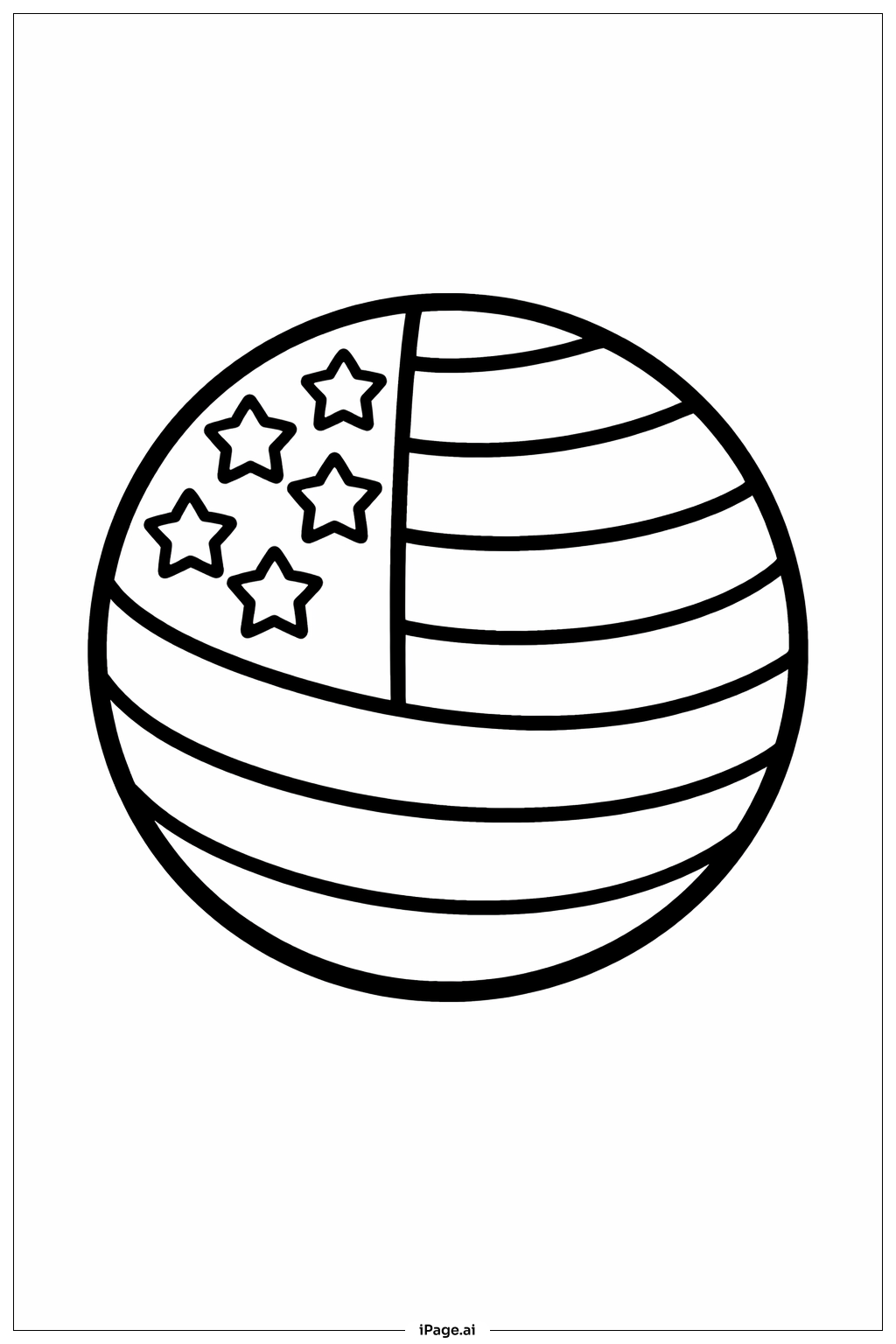
Start with the star field area. Fill it in with a solid, deep blue. Take your time placing each star — use bright white or leave them uncolored so they stand out against the blue background. Next, move on to the stripes. Alternate between bold red and white for each stripe. Red, white, red, white — keep the pattern steady. Use a slightly darker red near the edges of the ball to show the curved shape. For the white stripes, a very light gray shading along the edges can add a nice rounded look. Colored pencils work great here for smooth blending. Crayons are fun too and give a bright, bold finish. Try pressing lighter on the white sections to keep them clean and crisp. Take breaks between sections so colors don't bleed together. This image is a great way to practice staying inside the lines and mixing colors with confidence.
Coloring challenges: Which parts are difficult to color and need attention for American Flag Ball coloring page?
• Curved Stripes: The stripes on this ball are not straight lines — they curve and wrap around the ball's round surface. Keeping your coloring neat along these curved edges takes patience and a steady hand. Younger colorists may find it tricky to follow the curves without going over the lines.\n\n• Star Details: The star field contains many small five-pointed stars packed closely together. Each star has sharp points and tiny spaces between them. Filling in the blue background around the stars without accidentally covering them requires a fine-tipped tool or a sharp colored pencil. This is one of the most detailed sections of the image.\n\n• Color Consistency: The stripes must alternate perfectly between red and white. Losing track of the pattern — especially where stripes narrow near the edges of the ball — is a common mistake. Counting the stripes before you start and marking them lightly can help keep the pattern correct.\n\n• Shading the Ball Shape: Because this is a sphere, adding shading makes it look more realistic and three-dimensional. Deciding where the light hits the ball and where shadows fall can be confusing for beginners. Applying slightly darker tones on one side and keeping the other side lighter takes some planning and color-mixing skill.\n\n• Keeping White Areas Clean: The white stripes must stay bright and clean. If red bleeds into a white stripe, it is hard to fix. Working slowly and using the right tools — like fine-tipped markers or sharp pencils — helps protect those clean white spaces.
Benefits of coloring books: Advantages of drawing American Flag Ball coloring page
Coloring this American Flag Ball page brings a mix of fun, learning, and creativity. Here are some great reasons to pick up your colors and get started.\n\nIt builds focus and patience. Following the curved stripes and filling in the tiny stars takes concentration. Kids practice staying inside the lines and develop better hand control over time.\n\nIt teaches patriotic symbols. As children color the stars and stripes, they learn about the American Flag and what its parts represent. It turns a creative activity into a small history lesson.\n\nIt improves color recognition. Choosing the right red, white, and blue helps young colorists understand primary colors and how they interact on the page.\n\nIt encourages creativity. While the flag has traditional colors, colorists can also experiment with shading and different tones to make the ball look round and lifelike. This sparks artistic thinking.\n\nIt is relaxing and rewarding. Coloring is a calm, screen-free activity that helps reduce stress. Finishing this page gives a real sense of accomplishment, especially when the bold flag design comes together beautifully.