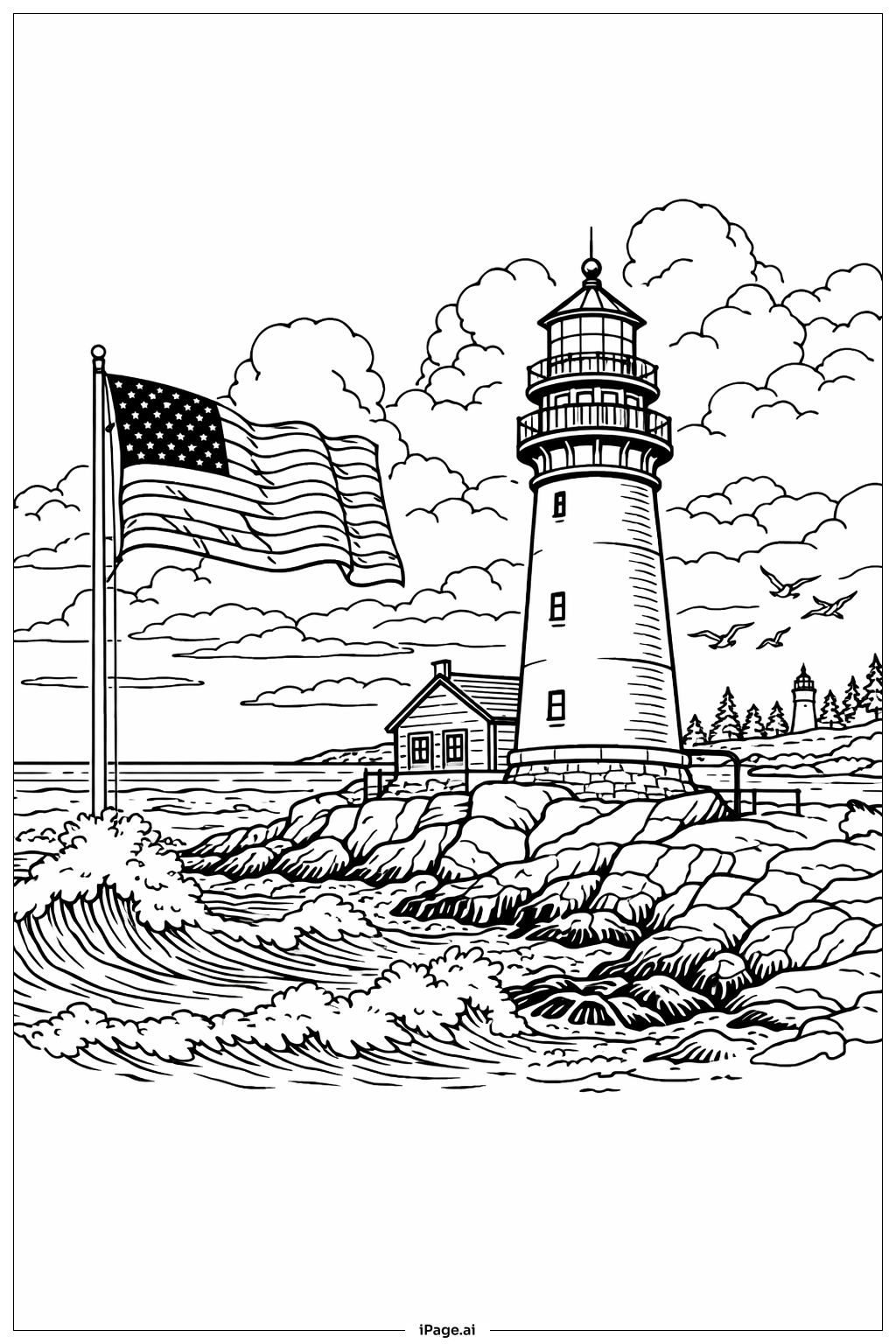
Coloring tips: How to color American Flag At Lighthouse coloring page well?
For the American flag, use traditional red for the stripes and blue for the canton, leaving the stars and white stripes uncolored or using white crayon. The lighthouse can be colored in classic white or cream with a red or black top section for the lantern room. Add yellow or golden tones to the light chamber to suggest illumination. Color the rocky base in various shades of gray, brown, and tan to create natural stone textures. The ocean waves can be shaded with blues and greens, adding white foam for realistic water movement. Use light blue for the sky with white or gray clouds. Consider adding a warm sunset palette with oranges, pinks, and purples in the sky for a dramatic effect. Seabirds can be white or gray, and small vegetation around the rocks can be green.
Coloring challenges: Which parts are difficult to color and need attention for American Flag At Lighthouse coloring page?
• Flag Stripes and Stars: The American flag contains thirteen alternating stripes and fifty small stars within the canton, requiring careful attention to maintain the correct pattern. Young children may find it challenging to color within the narrow stripe boundaries and to fill each tiny star precisely. The repetitive nature demands patience and steady hand control to avoid crossing lines between red and white stripes.
• Lighthouse Architectural Details: The lighthouse features intricate brickwork patterns, window frames, railings, and the detailed lantern room structure at the top. These small architectural elements require fine motor control and precision coloring, especially when trying to create realistic brick textures or highlight metallic railings. The curved surface of the cylindrical tower may also challenge children trying to create consistent shading or color application.
• Rocky Texture and Dimension: The rocky coastal base consists of numerous individual stones and boulders with irregular shapes and overlapping layers. Creating realistic rock textures requires blending multiple shades and understanding how to show depth and shadow. Children may struggle with deciding which rocks should be lighter or darker to achieve a three-dimensional appearance, and the many small spaces between rocks can be tedious to color completely.
• Wave and Water Movement: Depicting realistic ocean waves requires understanding how to blend colors and create the impression of motion and depth. The foam, crests, and shadowed areas of waves need different color intensities, which can be difficult for younger colorists to execute. Showing transparency and movement in water while maintaining a cohesive ocean appearance presents an artistic challenge that goes beyond simple fill-in coloring.
Benefits of coloring books: Advantages of drawing American Flag At Lighthouse coloring page
Coloring this patriotic lighthouse scene helps children develop fine motor skills and hand-eye coordination through the detailed elements like flag stripes, stars, and brickwork. It teaches about American symbols and coastal geography, fostering national pride and environmental awareness. The variety of textures from smooth flag fabric to rough rocks and flowing water encourages experimentation with different coloring techniques and blending methods. Working on the repetitive patterns of the flag stripes and lighthouse bricks builds patience, focus, and attention to detail. The scene offers opportunities to learn about primary and secondary colors, especially when mixing blues and greens for ocean water. Completing this moderately challenging image boosts confidence and provides a sense of accomplishment, while the subject matter can spark conversations about maritime history, lighthouse keepers, and the importance of navigational aids in coastal communities.