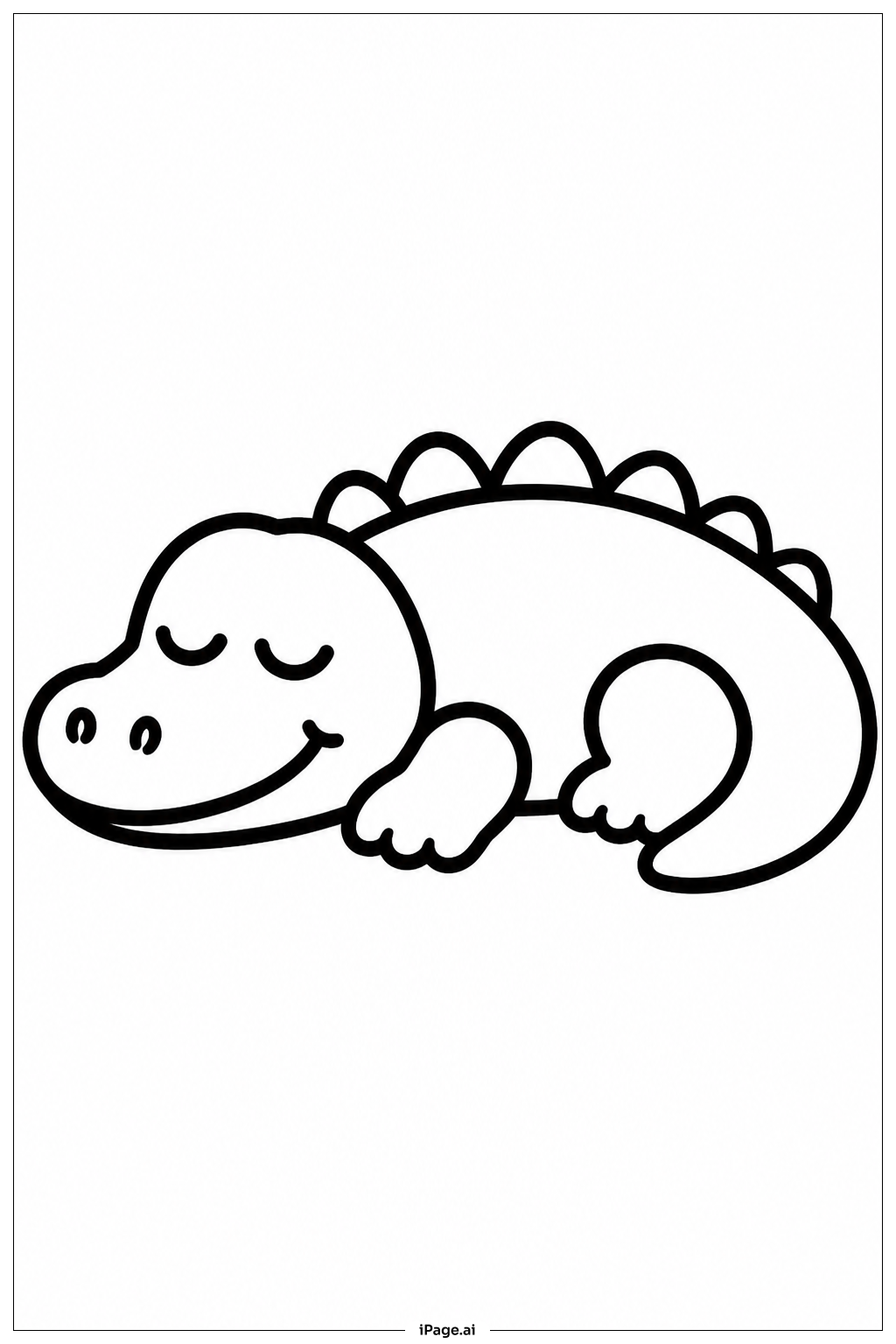
Coloring tips: How to color Sleepy Alligator coloring page well?
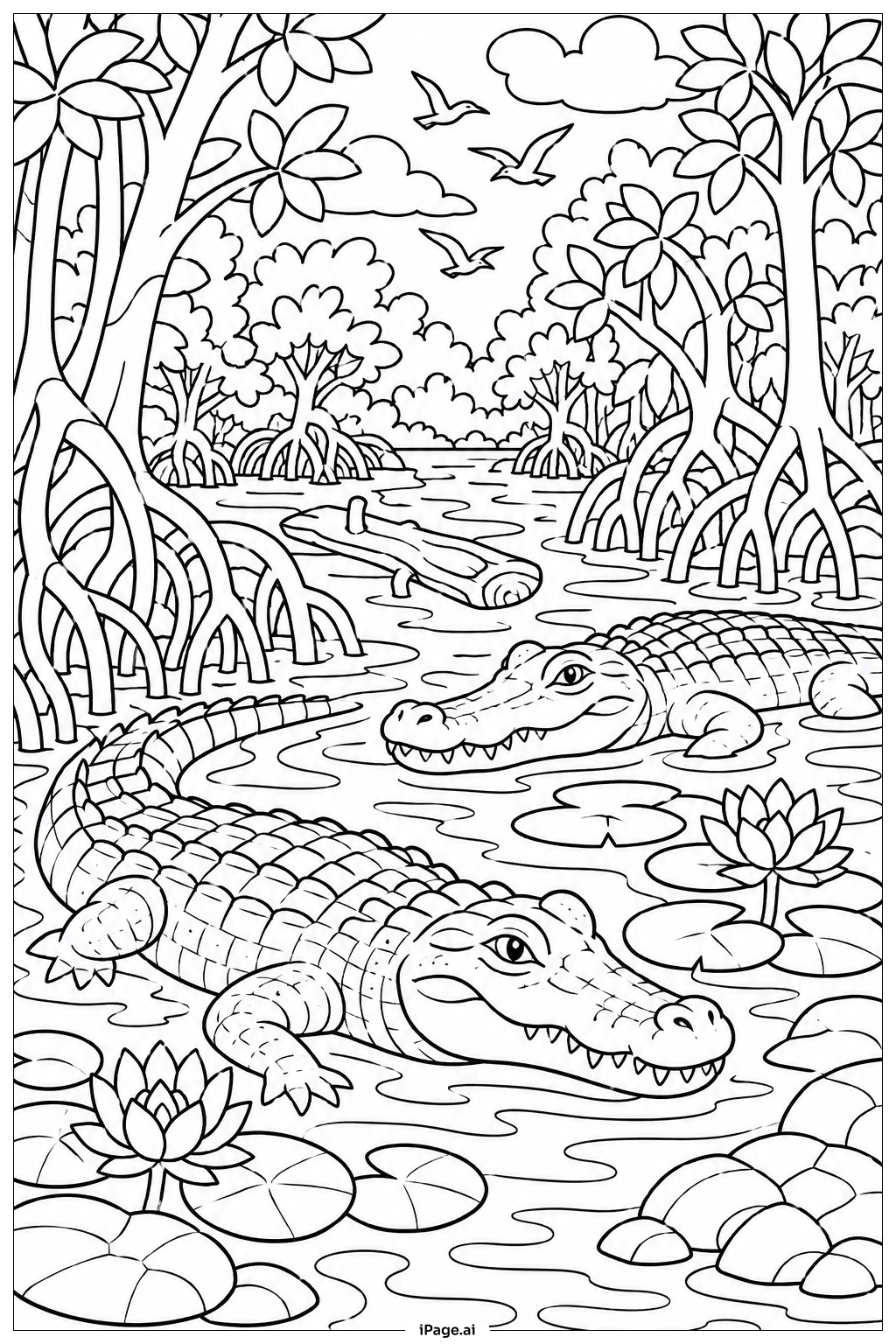
Try using different shades of green for the alligator’s body to make it look lively. You can use a darker green for the scales and a lighter green or yellow-green for the belly and legs. The water around the alligator can be colored in light blue or turquoise to create a fresh feeling. For the background, soft browns and tans work well to represent soil or a riverbank. You might also add a splash of colorful flowers or plants to make the scene brighter. Use crayons or colored pencils for smooth, gentle strokes that match the sleepy mood.
Coloring challenges: Which parts are difficult to color and need attention for Sleepy Alligator coloring page?
• Detailed Scales: The texture of the alligator’s skin has many small scales. Coloring each scale carefully requires patience and attention. It can be tricky to shade them to look natural while staying inside the lines. • Curved Tail: The tail curves around the body and overlaps with the legs. Coloring this part evenly without smudging colors together needs careful control. • Facial Expression: The alligator has a subtle sleepy expression. It can be challenging to capture this by coloring the eyes and mouth gently without making it look angry or too bright. • Water Waves: The soft waves around the alligator need light, even coloring to keep a calm atmosphere. It is important not to over-color this section to maintain balance. • Color Layering: Mixing different shades of green and brown for realistic skin and environment requires some coloring skill to blend smoothly without harsh lines.
Benefits of coloring books: Advantages of drawing Sleepy Alligator coloring page
Coloring this Sleepy Alligator image helps improve focus and fine motor skills as children carefully color the detailed scales and curved shapes. It encourages creativity through choosing colors that reflect nature or personal imagination. The calm scene promotes relaxation and can help reduce stress in young artists. Coloring the subtle expressions teaches kids to observe small details and translate emotions through art. Additionally, it strengthens hand-eye coordination and patience, as the image requires gentle and controlled strokes. Overall, this image offers a fun and educational coloring experience for children.