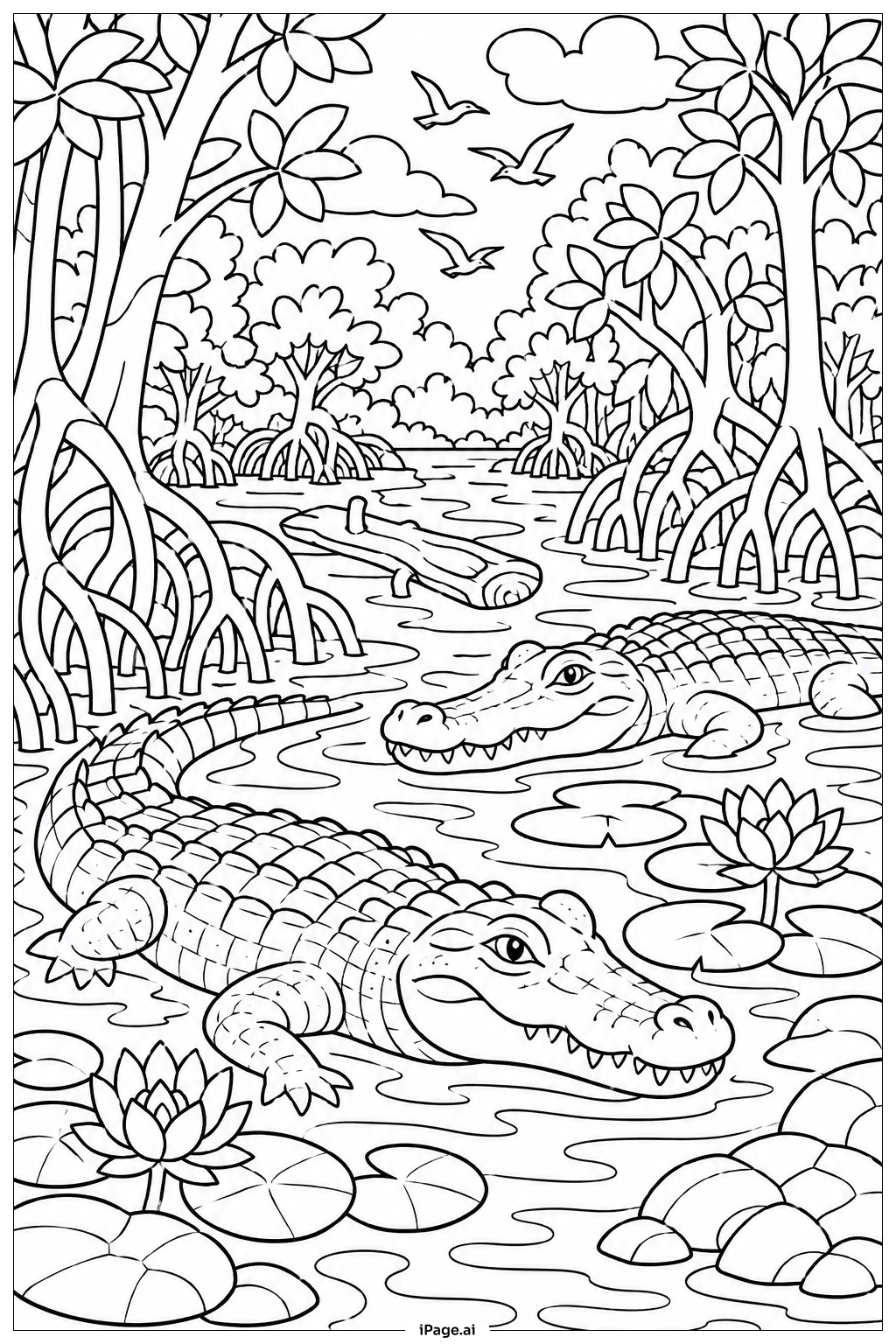
Coloring tips: How to color Alligator In Mangrove Forest coloring page well?
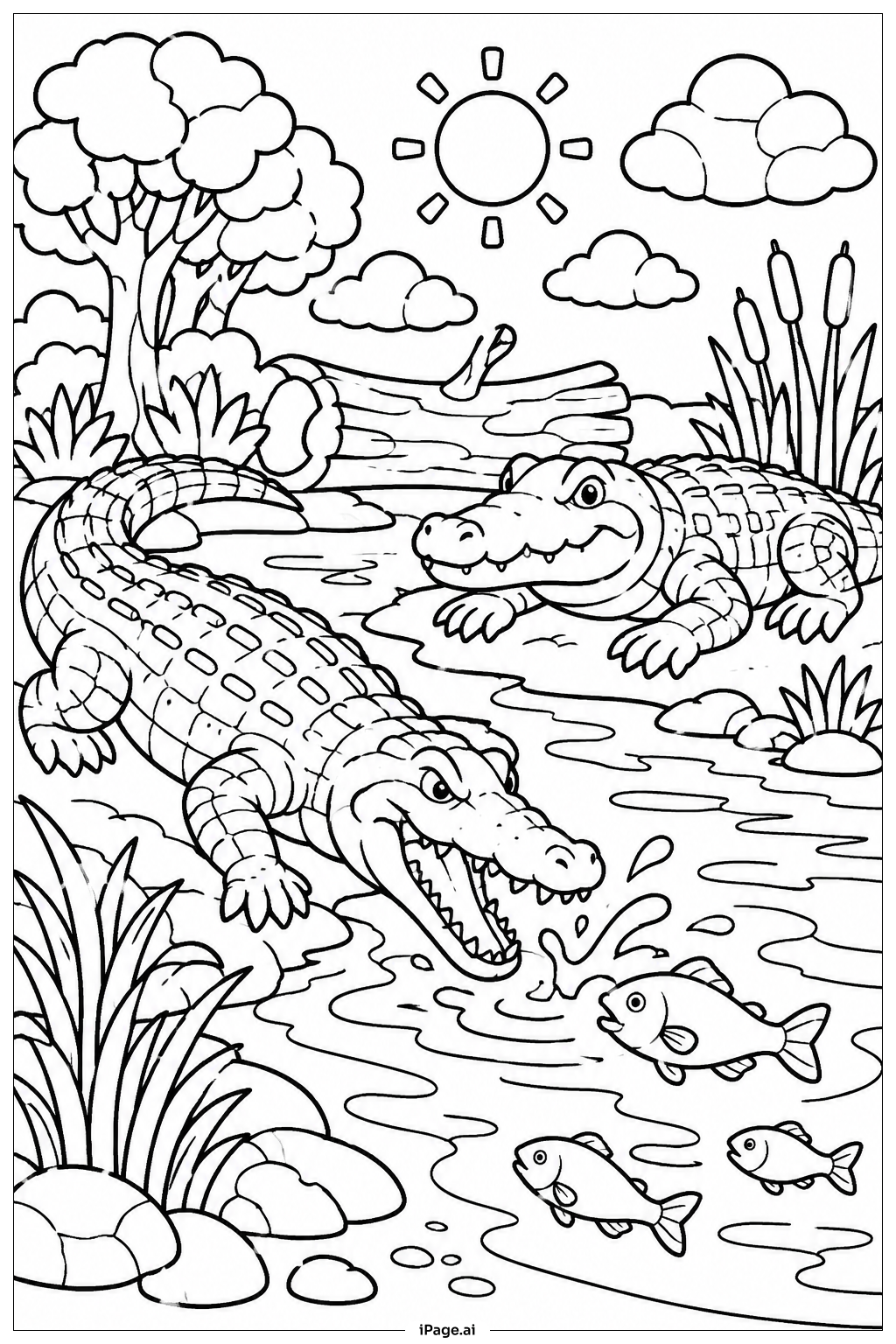
To color this picture, use different shades of green for the mangrove leaves and roots to show the variety in the forest. You can choose dark and light greens to make the leaves look lively. The alligator’s skin can be colored in shades of dark green, gray, or brown to make it look realistic. For the muddy ground, try browns and tans. Use light blue or gray for the water to add contrast. Don’t forget to color the little plants and shadows to add depth. You can also add touches of yellow or orange on some leaves to show sunlight filtering through the canopy.
Coloring challenges: Which parts are difficult to color and need attention for Alligator In Mangrove Forest coloring page?
• Detail Complexity: The alligator’s skin has many small scales and textures, which can be tricky to color evenly while showing the reptile’s rough surface. Careful shading is needed to keep it looking natural.
• Root Structure: The mangrove roots twist and curve, overlapping each other. Coloring them requires patience to show depth and avoid mixing colors unintentionally.
• Light and Shadow: The dense forest and water reflections create areas of shadow that are subtle. Balancing light and dark colors to represent shadows can be challenging.
• Color Variety: The image includes many different greens for leaves and roots, along with muddy and watery areas. Choosing the right colors to keep the scene lively without becoming too busy requires good color planning.
• Fine Details: Small leaves and tiny plants need careful coloring to avoid blurring the image and to keep the distinct shapes clear.
Benefits of coloring books: Advantages of drawing Alligator In Mangrove Forest coloring page
Coloring this image helps improve focus and patience thanks to the many details in the alligator’s scales and the mangrove roots. It encourages children to practice using different shades of green and brown, improving their understanding of natural colors and textures. This activity also sparks interest in wildlife and ecosystems, fostering curiosity about the alligator’s habitat. Coloring shadows and reflections helps develop basic skills in light and contrast. Overall, it provides a relaxing and educational experience that can boost creativity while learning about nature.