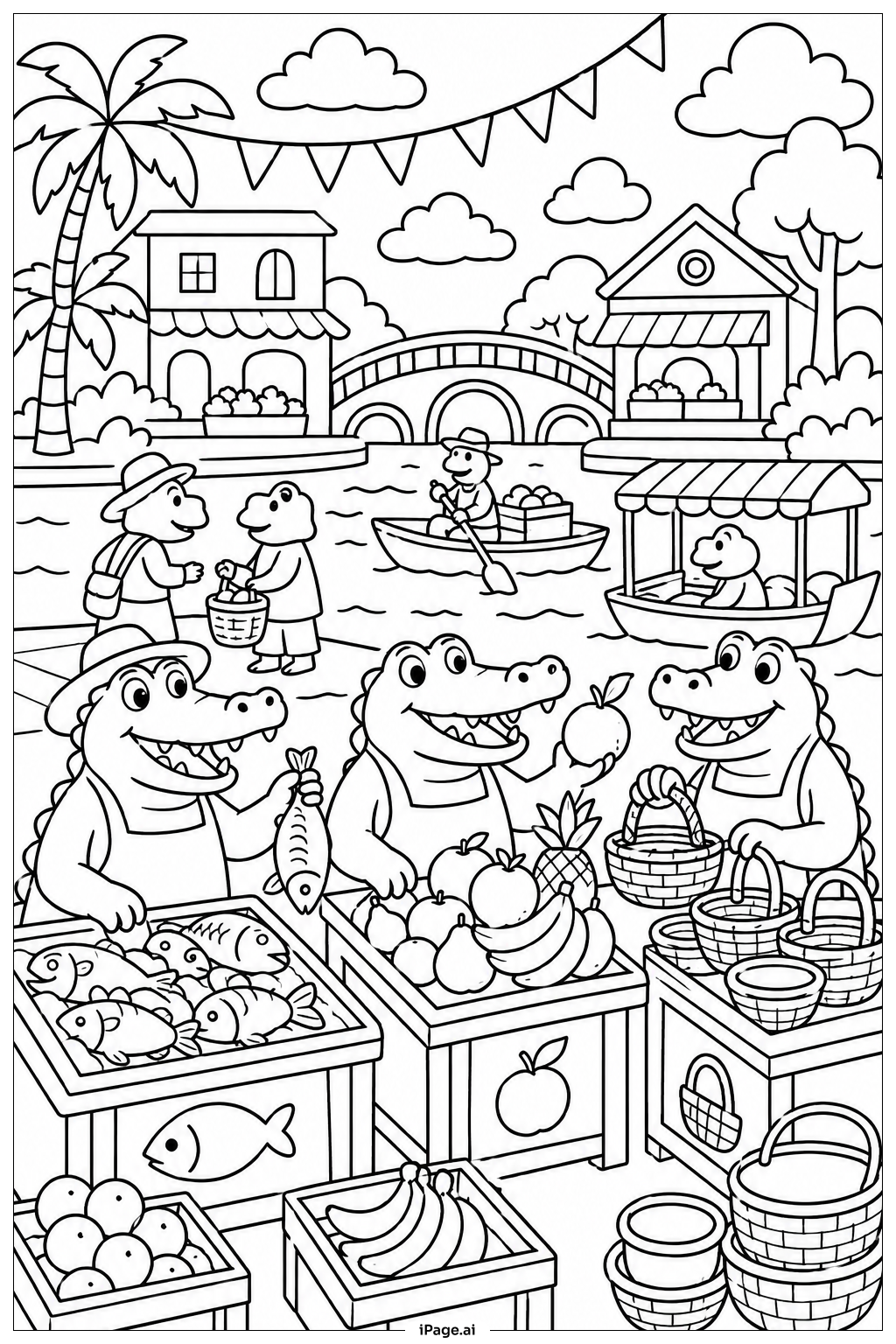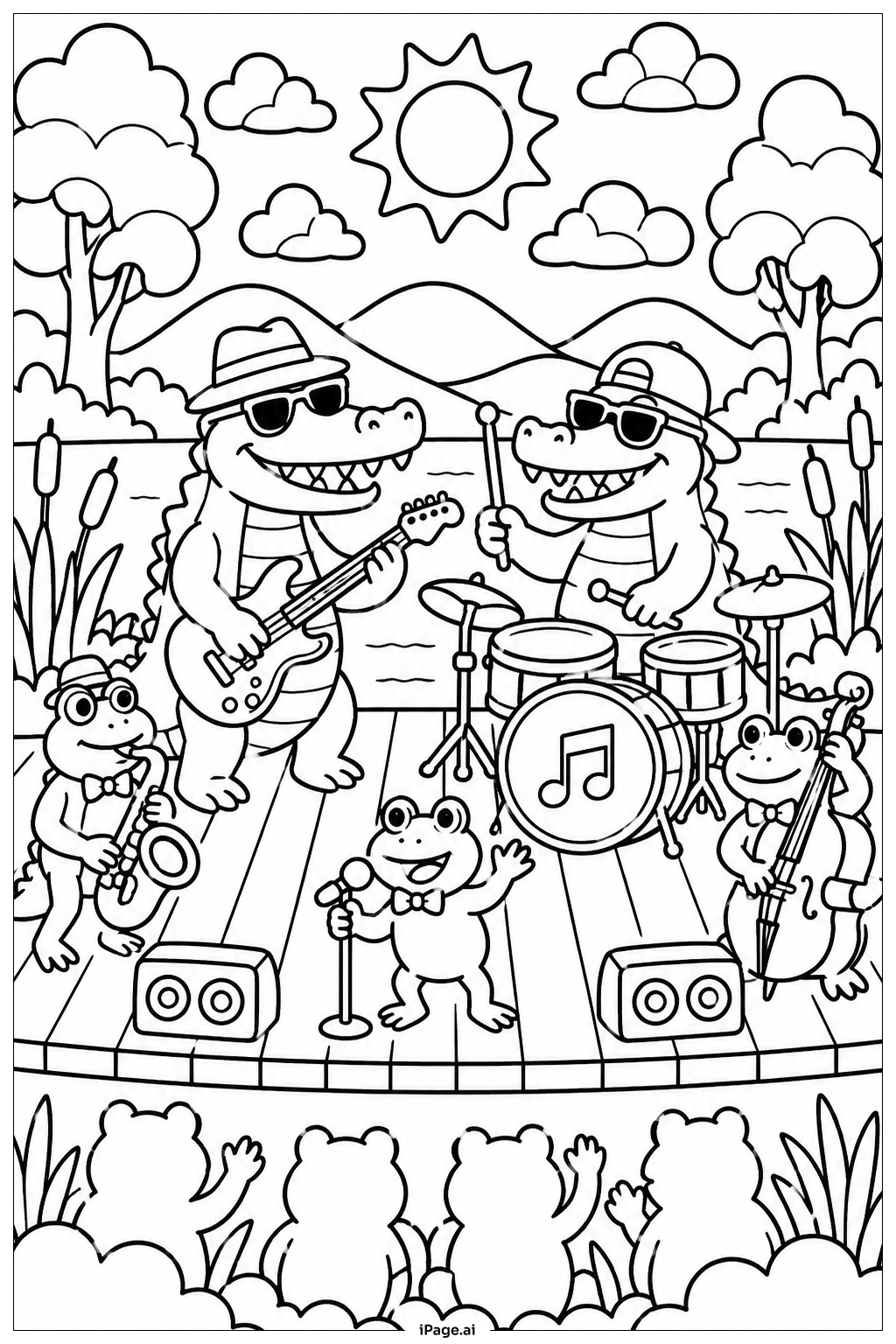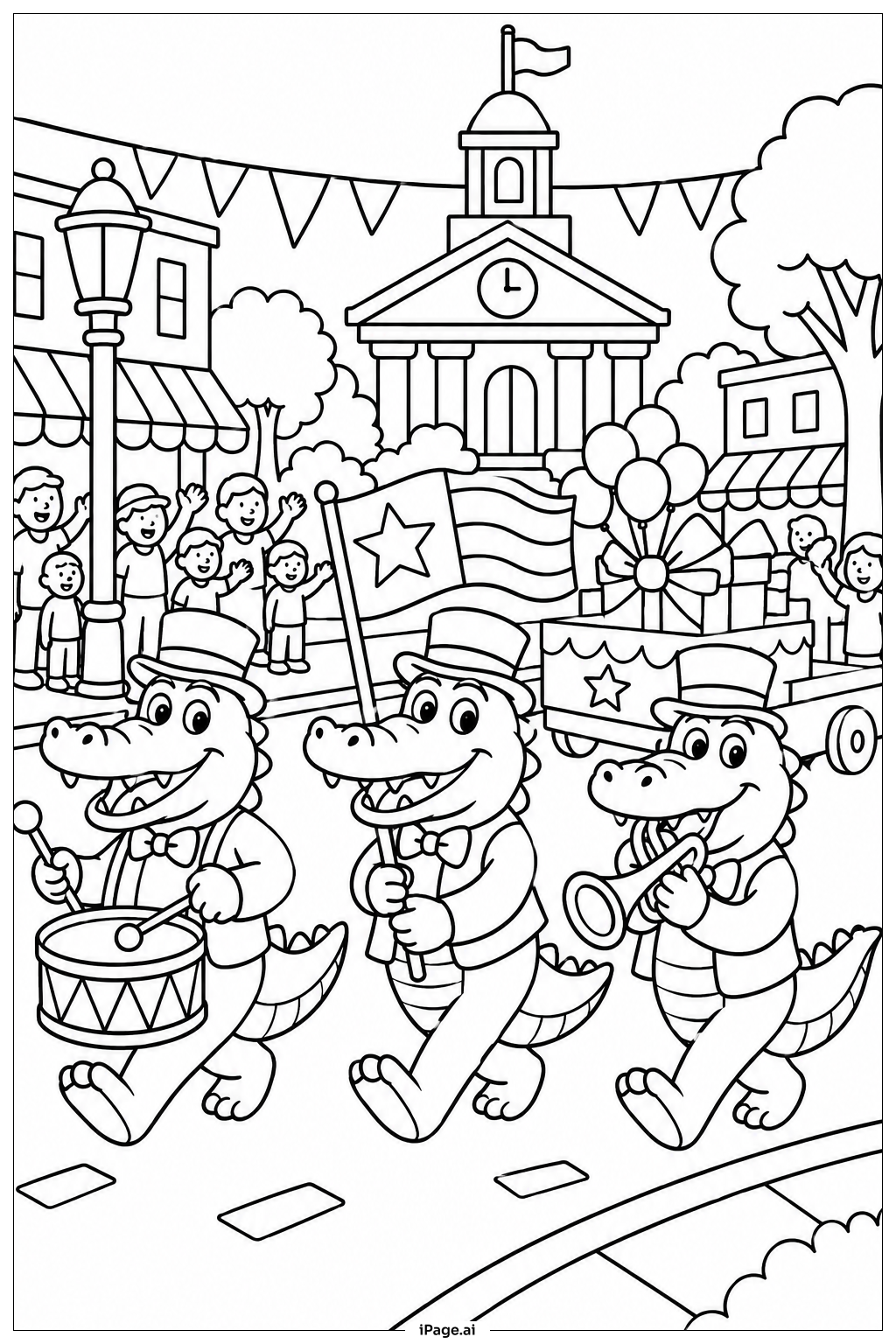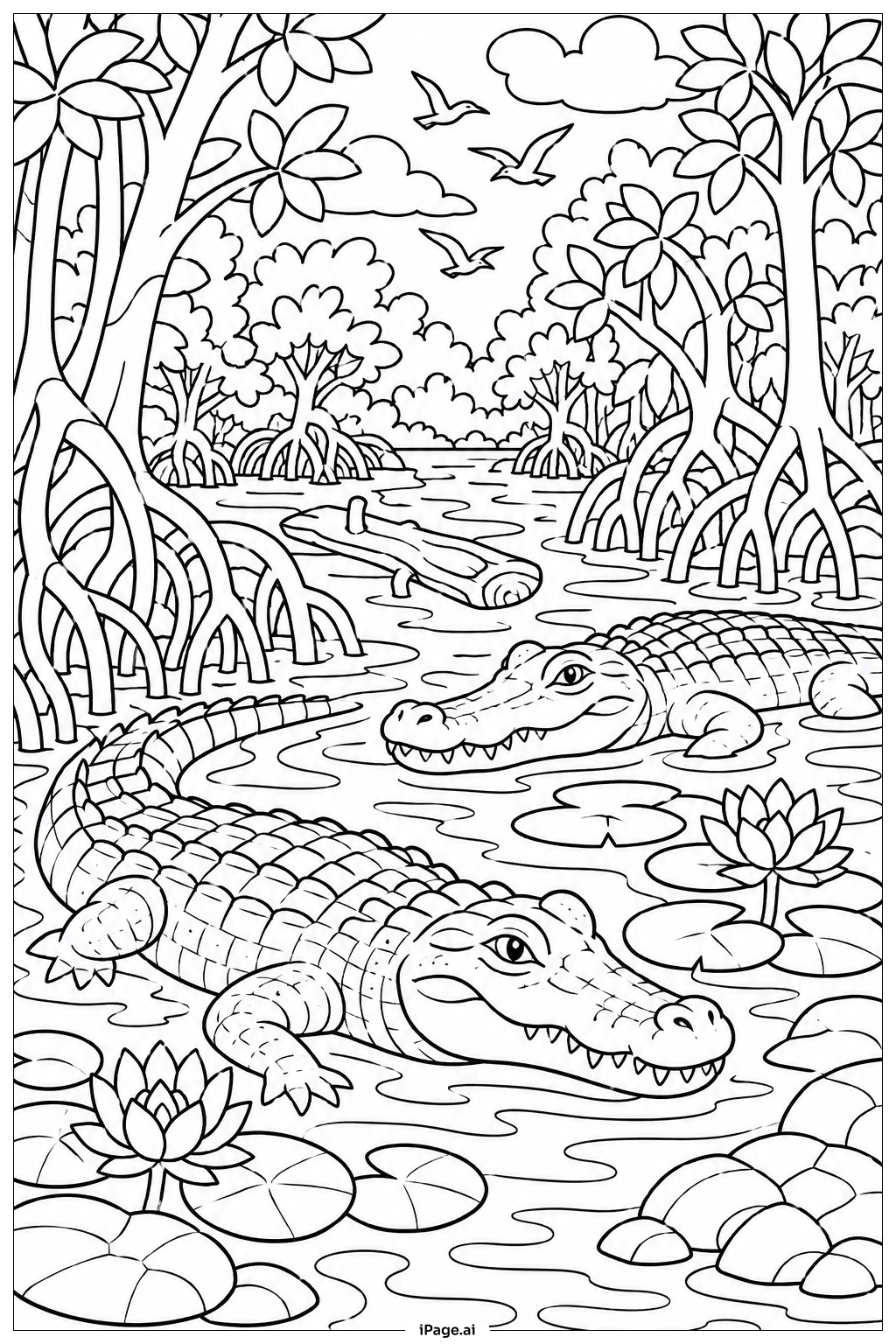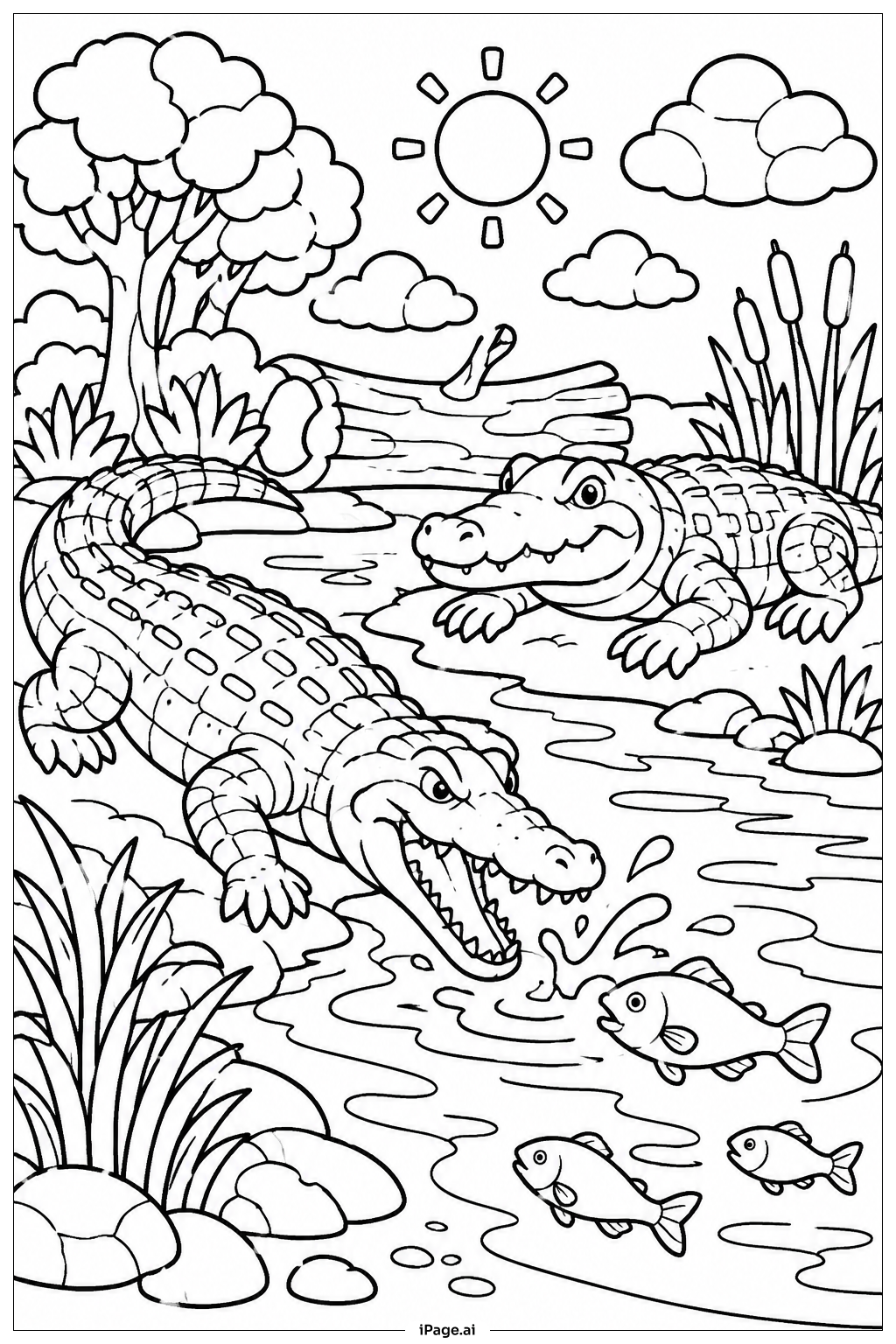
Coloring tips: How to color Alligator Hunting Fish Scene coloring page well?
Use various shades of green and brown for the Alligator to show its rough, scaly skin. Dark greens and olive tones work well. For the water, try different blues and light greens to create a realistic swamp look. Add some white or light blue highlights to show splashes and ripples. Color the fish with bright colors like silver, orange, or yellow to make it stand out. You can also add some color to the surrounding plants using greens and browns. Be creative with shadows under the Alligator and water reflections. This will give your picture a lively and natural feel.
Coloring challenges: Which parts are difficult to color and need attention for Alligator Hunting Fish Scene coloring page?
• Alligator Texture: The scales on the Alligator are detailed and small. Coloring them accurately requires patience to stay inside the lines and show the rough skin.
• Water Effects: Capturing the look of splashing water with waves and ripples can be hard. Blending different shades of blue and white takes some practice.
• Fish Movement: The fish is in motion, so coloring it with bright and shiny colors while making it look like it’s swimming can be tricky.
• Shadows and Reflections: The scene has shadows under the Alligator and reflections on the water surface. Getting these details right helps the picture look realistic but needs careful blending.
• Balancing Colors: Using many different colors for the animals, water, and plants without making the picture look messy can challenge younger colorers.
Benefits of coloring books: Advantages of drawing Alligator Hunting Fish Scene coloring page
Coloring this Alligator Hunting Fish Scene helps improve fine motor skills as you carefully color small details like scales and water splashes. It encourages patience and focus, especially with challenging textures and blending. Working on this scene also sparks curiosity about nature and animal behavior by showing a real-life moment of hunting. The variety of colors needed allows children to practice color recognition and learn how to use shades to show light, shadow, and movement. Overall, coloring this image supports creativity, concentration, and knowledge about wildlife.