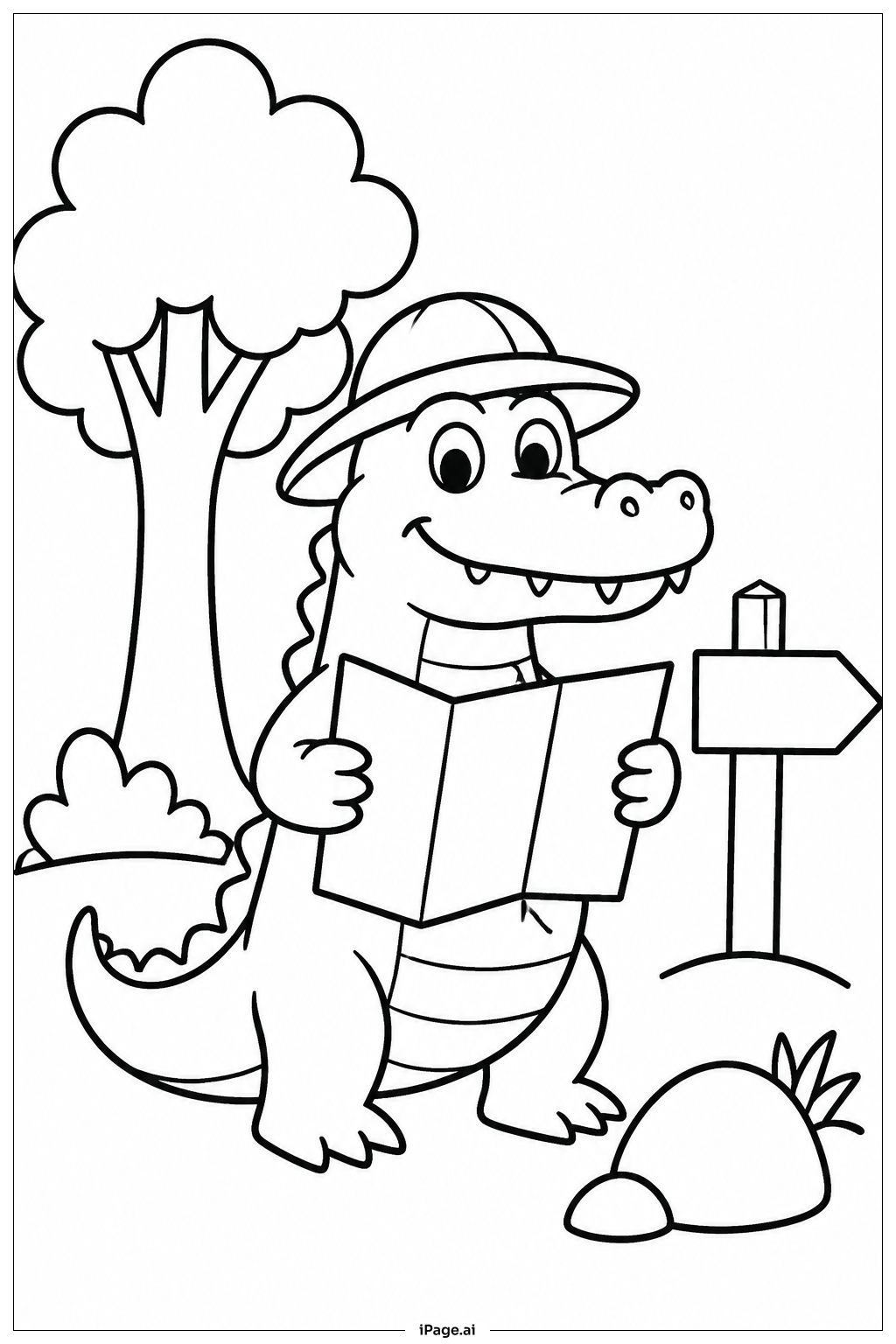
Coloring tips: How to color Explorer Alligator coloring page well?
Start with the alligator's body using various shades of green, from bright lime to deeper forest tones. You can add yellow or cream for the belly area to create natural contrast. The safari vest can be colored in earthy tones like tan, khaki, or brown to match the explorer theme. Consider adding small details like buttons in gold or silver. The explorer hat works well in beige, tan, or light brown. For the eyes, use bright colors like yellow or orange with black pupils to make them pop. Add darker green or brown shadows along the scales and edges to create depth. The teeth can be white or cream colored. Don't forget to add some texture by varying your pressure or using multiple shades within each section to make the scales look more realistic and three-dimensional.
Coloring challenges: Which parts are difficult to color and need attention for Explorer Alligator coloring page?
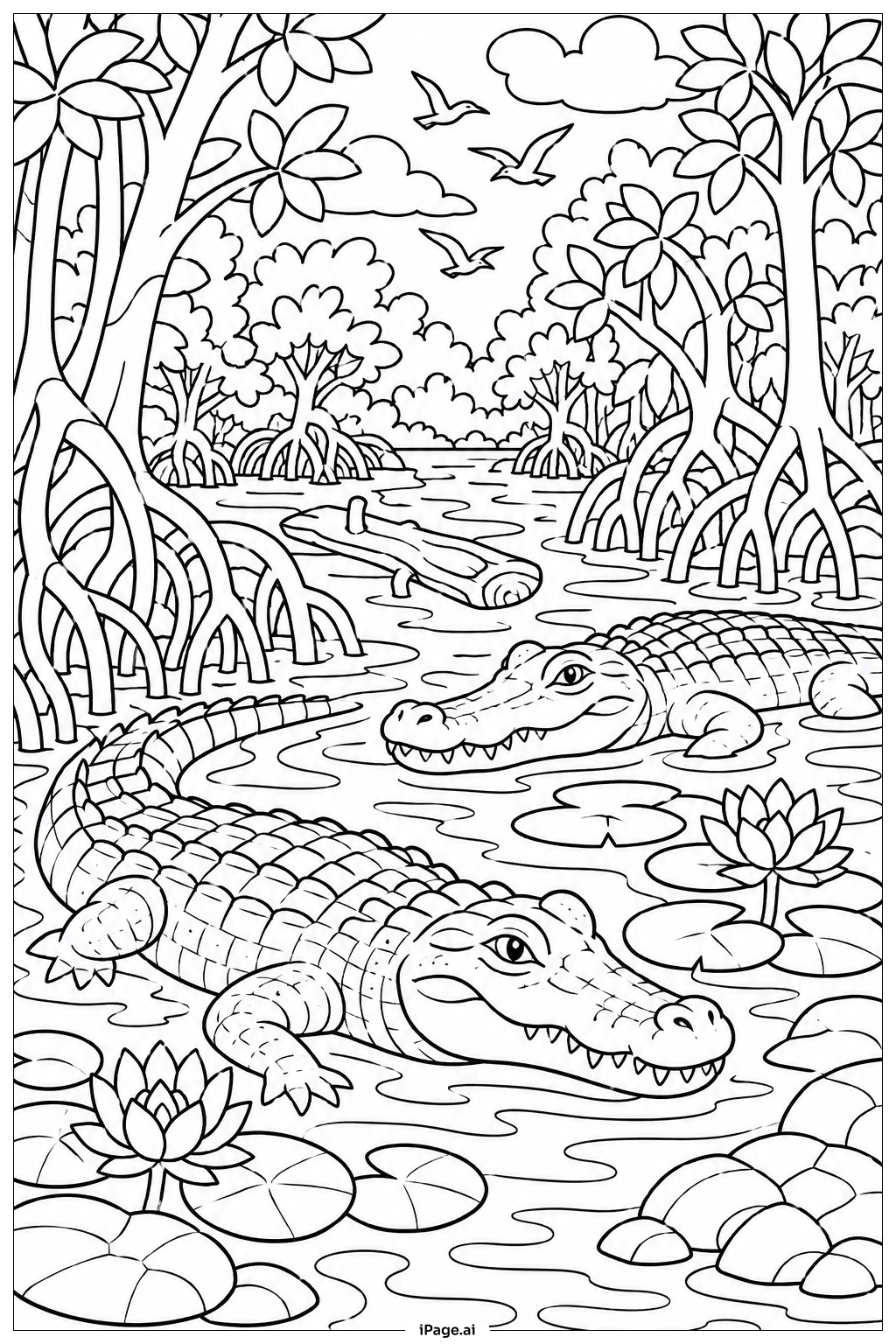
• Scale Texture Details: The alligator's body is covered with numerous individual scales that require careful attention and patience. Each scale can be colored with slight variations in tone to create a realistic reptilian texture, which means young colorists need to work slowly and methodically across the entire body, tail, and limbs without rushing.
• Small Vest Pockets and Accessories: The explorer vest features multiple small pockets, seams, and potentially buttons or closures that require precision coloring. These tiny elements can be challenging for younger children who are still developing fine motor control, as staying within the narrow lines requires steady hands and focused concentration.
• Maintaining Consistent Color Across Large Areas: The alligator's body, being the dominant element in the image, requires maintaining consistent color throughout a large area while also incorporating the scale texture. This can be tiring for young hands and requires planning to avoid patchy or uneven coloring, especially when trying to blend different shades of green smoothly.
• Facial Features and Expression: The alligator's face includes detailed features like eyes, nostrils, multiple teeth, and expressive elements that give it personality. Coloring these small facial details while keeping them distinct from each other and maintaining the friendly expression requires careful attention and precision work in a relatively small area.
Benefits of coloring books: Advantages of drawing Explorer Alligator coloring page
Coloring this Explorer Alligator helps children develop fine motor skills and hand-eye coordination through the detailed scale patterns and small accessories. The image encourages creativity by allowing kids to experiment with different color combinations for the alligator's body, clothing, and accessories. Working on the intricate scales teaches patience and attention to detail, important skills for academic success. The adventurous explorer theme sparks imagination and storytelling, helping children create narratives about where the alligator might be exploring. This activity also provides a calming, focused task that can improve concentration and reduce stress. Children learn about color mixing and shading techniques while working on the textured scales. The friendly character helps reduce any fears about reptiles while teaching respect for wildlife. Completing this detailed coloring page builds confidence and gives a sense of accomplishment, especially for children who persist through the challenging elements.