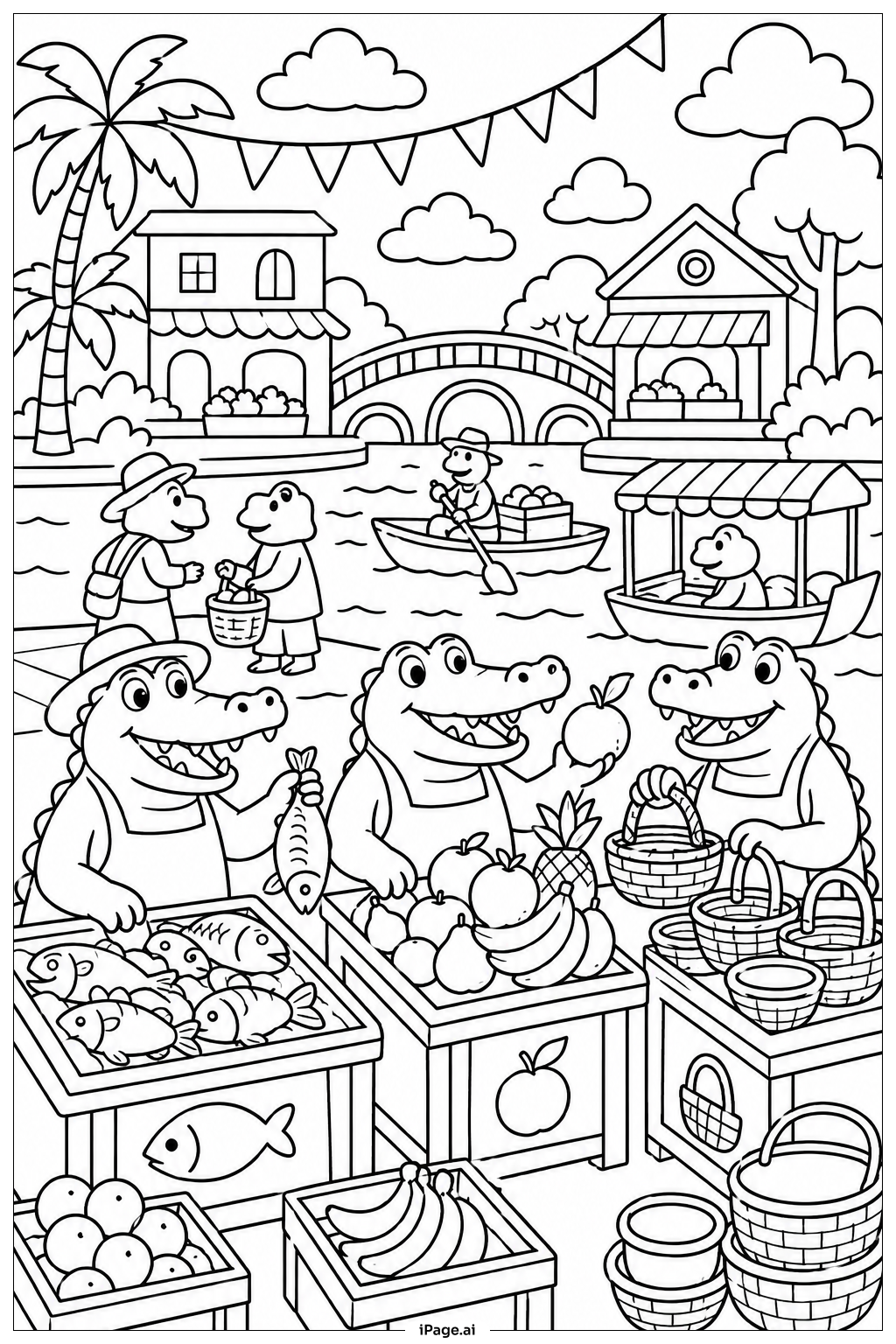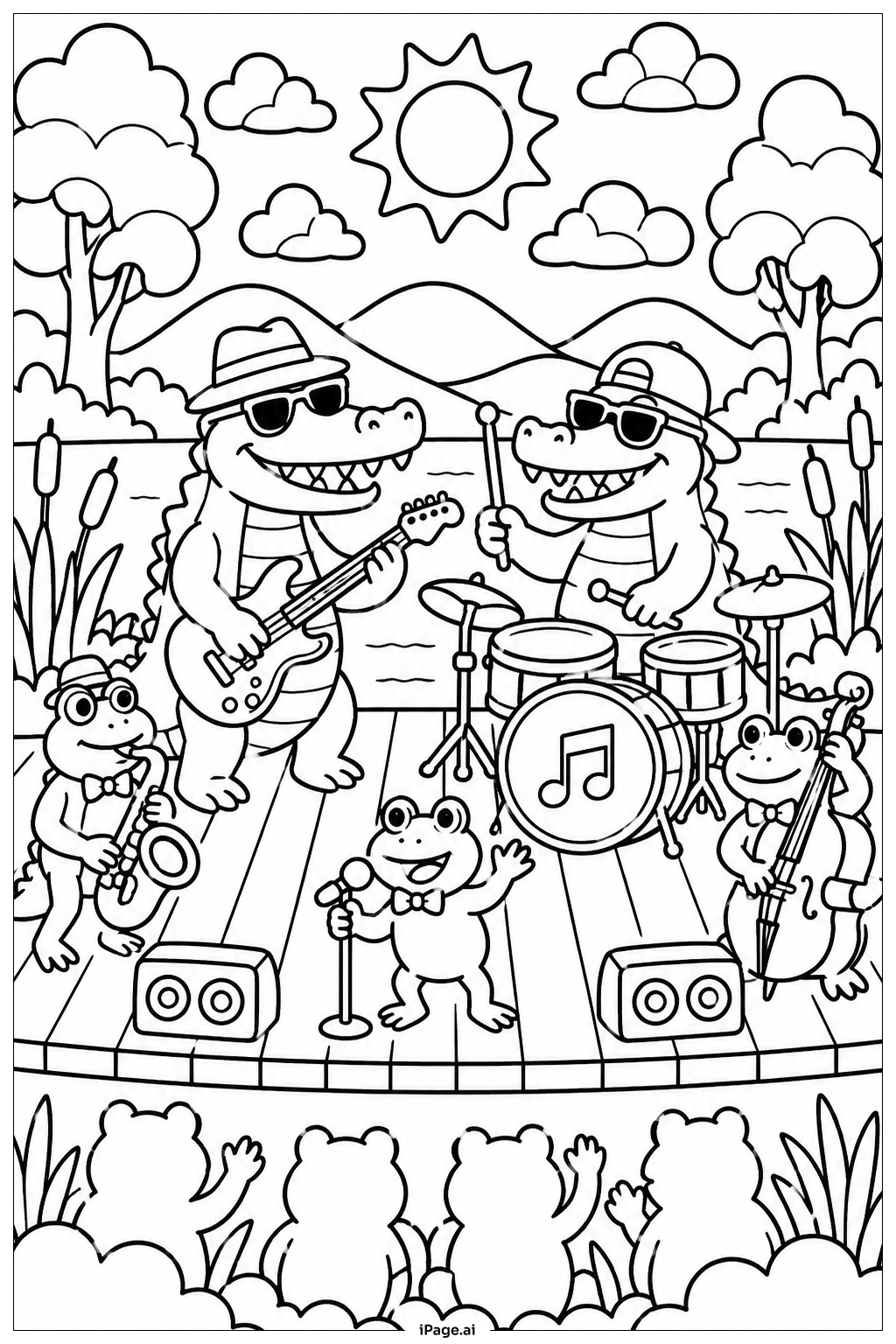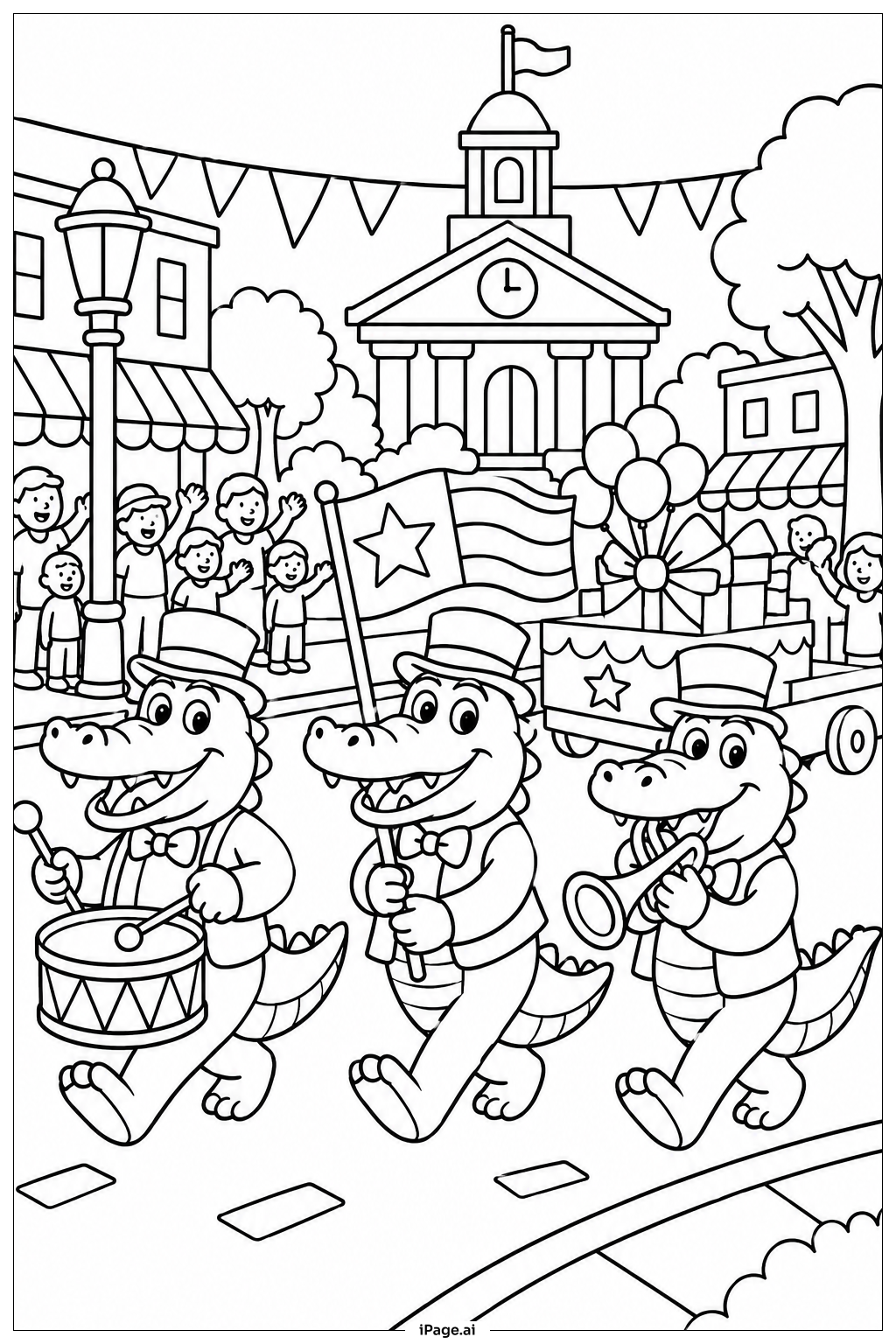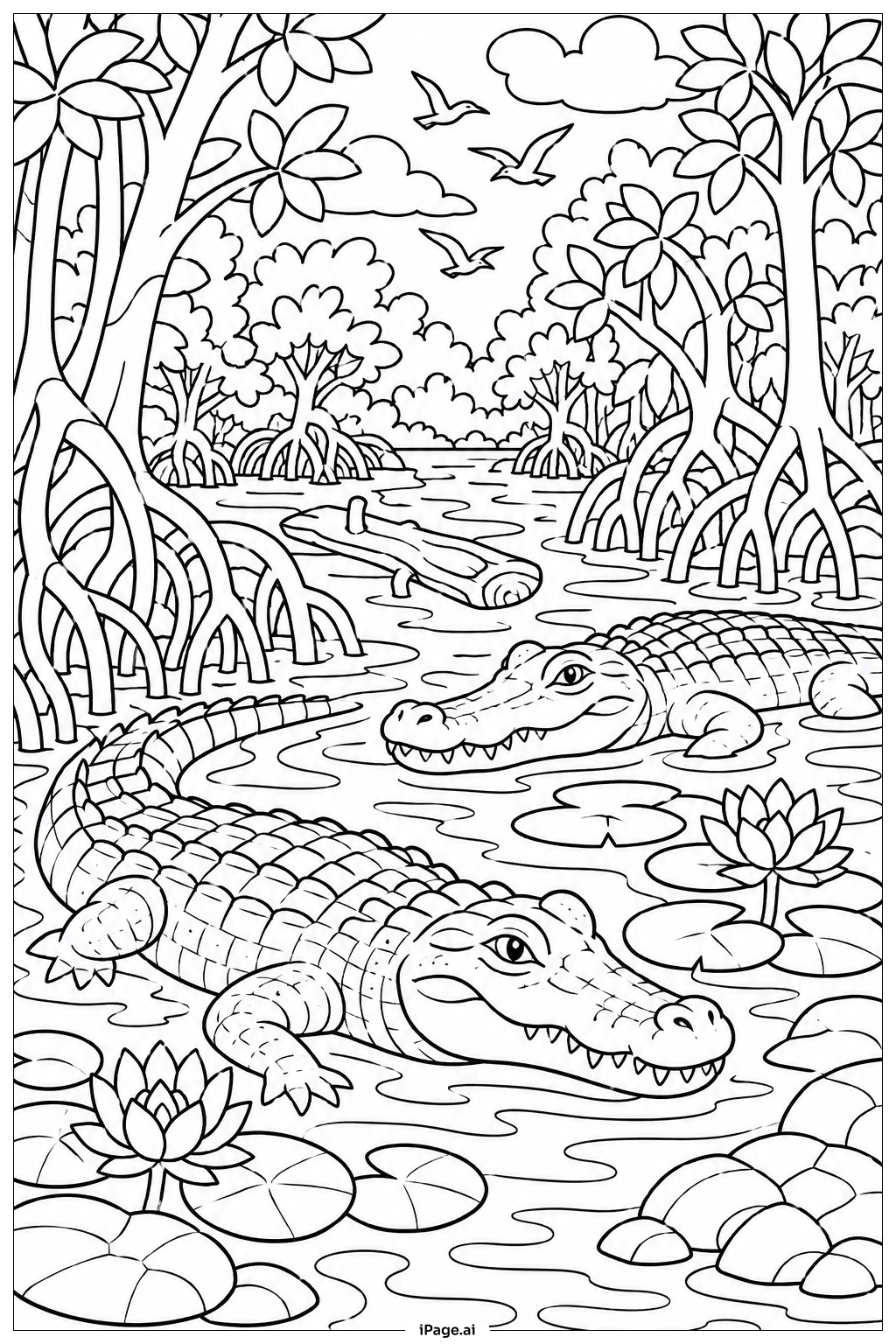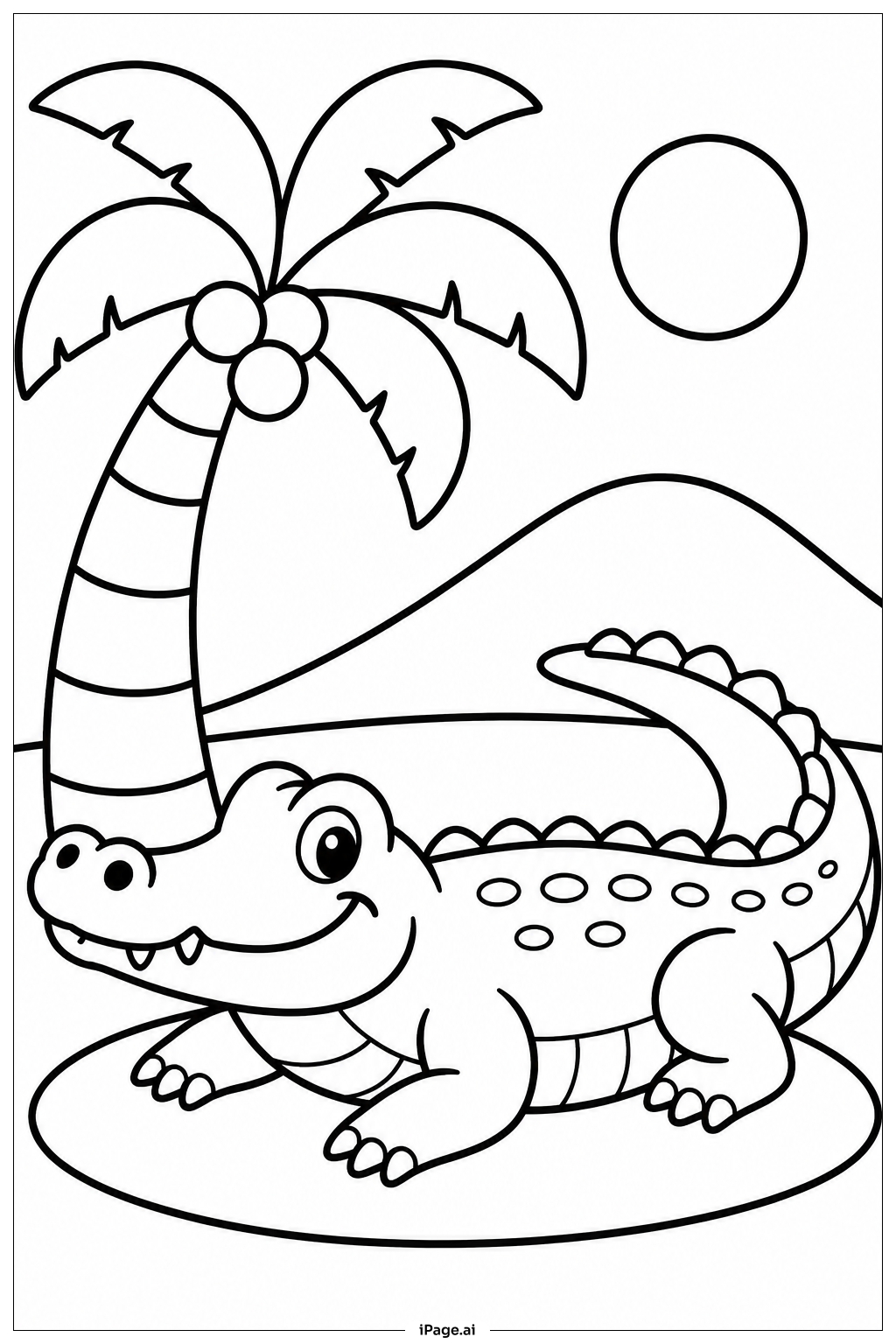
Coloring tips: How to color Alligator With Palm Tree coloring page well?
Start with the alligator's body and use shades of green — try a medium green for the main body and a lighter green or yellow-green for the belly area. Add darker green or olive tones along the back ridges and tail to give the scales some depth and texture. Use a bright white or cream color for the teeth to make the smile pop.
For the palm tree, color the trunk in warm browns or tans, adding streaks of darker brown to show texture. The palm fronds look great in different shades of green — mix bright green with deeper forest green to make the leaves look lush and layered. Color the coconuts in medium brown or tan.
Feel free to add a sunny background with a blue sky, golden sand, or even a bright ocean scene to make the tropical setting feel complete. Use warm yellows and oranges for a sunset look, or stick to bright blues and whites for a cheerful daytime feel. Have fun mixing colors to make this scene your own!
Coloring challenges: Which parts are difficult to color and need attention for Alligator With Palm Tree coloring page?
• Scale Texture on the Alligator's Body: The alligator's skin is covered in many small scales and bumpy ridges. Coloring each scale individually takes patience and a steady hand. Using colored pencils with a fine tip helps keep the details clean. Try shading lightly between scales to create a three-dimensional effect without going outside the lines.
• Blending Multiple Greens: Both the alligator and the palm fronds are primarily green, which can make the image look flat if only one shade is used. The challenge is choosing different tones of green for each element so they stand out from one another. Practicing light layering and gradual blending helps create natural-looking contrast between the animal and the plant.
• Palm Frond Details: The large feathery leaves of the palm tree have many thin, overlapping sections. Staying inside the narrow leaf shapes requires careful control of your coloring tool. Markers may bleed into neighboring fronds, so colored pencils or fine-tip crayons are a better choice for this part of the image.
• The Alligator's Teeth: The row of teeth inside the alligator's wide grin are small and closely spaced. Keeping each tooth neatly white or cream without smudging into the surrounding areas is tricky. Using a thin marker or a sharpened white pencil gives you the most control here.
• Creating a Cohesive Background: Adding a background that complements the tropical scene without overpowering the main subjects can be challenging. Keeping background colors lighter and softer than the foreground colors helps the alligator and palm tree remain the clear focal points of the image.
Benefits of coloring books: Advantages of drawing Alligator With Palm Tree coloring page
Coloring this Alligator With Palm Tree page offers a wide range of benefits for children and beginners alike.
First, it helps develop fine motor skills. Carefully coloring within the outlines of scales, teeth, and palm fronds trains hand muscles and improves pencil control — skills that also support handwriting and drawing.
Second, it encourages creativity. Choosing colors for the alligator's skin, the tree, and the background sparks imagination. There are no strict rules, so kids feel free to experiment and express themselves confidently.
Third, it builds focus and patience. The detailed scale patterns and layered palm leaves require sustained attention, gently training children to slow down and concentrate on one area at a time.
Fourth, it introduces nature and geography. The tropical setting with an alligator and palm tree sparks curiosity about reptiles, rainforests, and warm climates. This makes coloring a fun starting point for learning about the natural world.
Finally, finishing the page gives a real sense of accomplishment. Seeing a completed, colorful artwork boosts self-esteem and motivates kids to take on more creative challenges. It is a simple, screen-free activity that brings joy and calm to any day.