Coloring tips: How to color Alligator With Fish coloring page well?
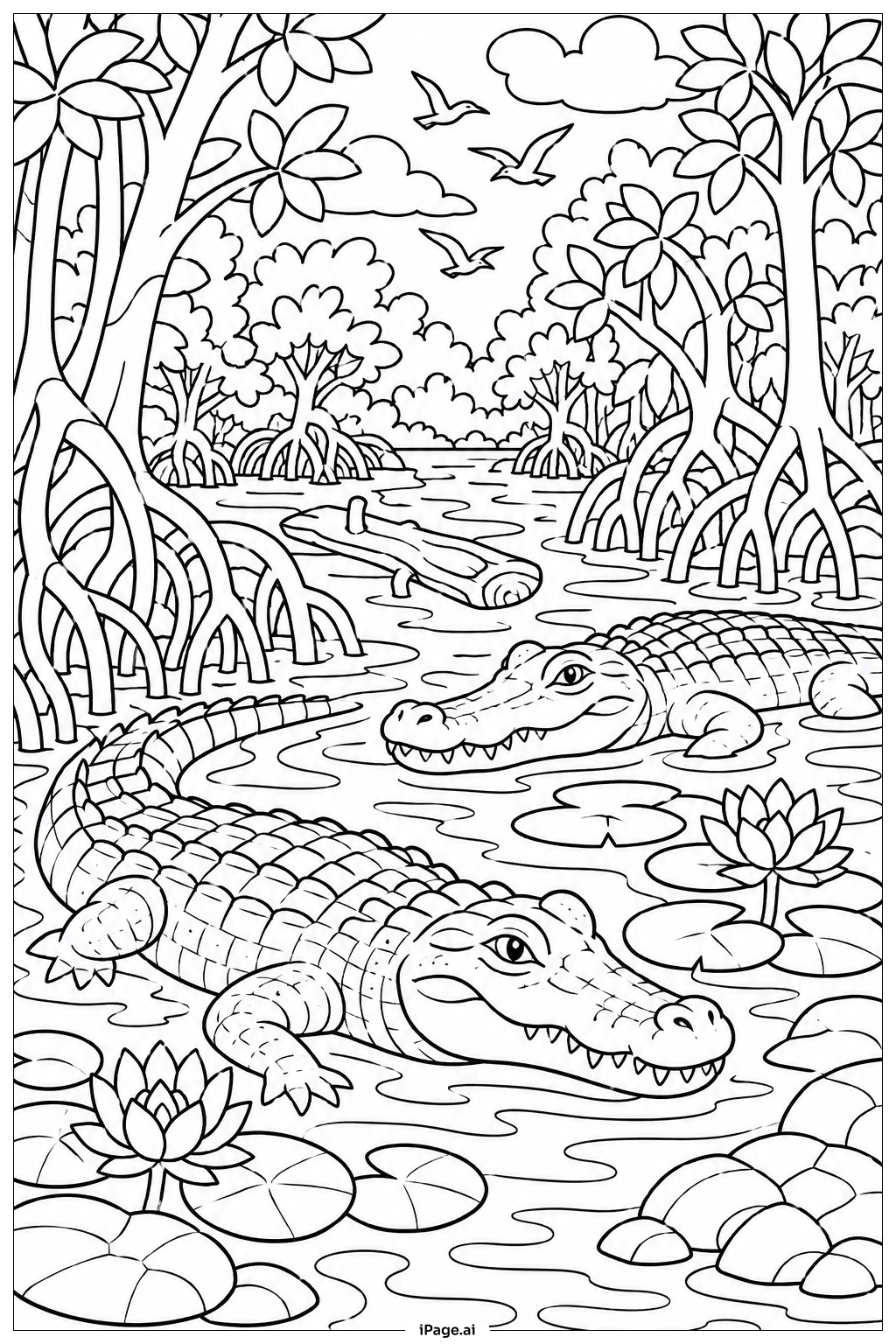
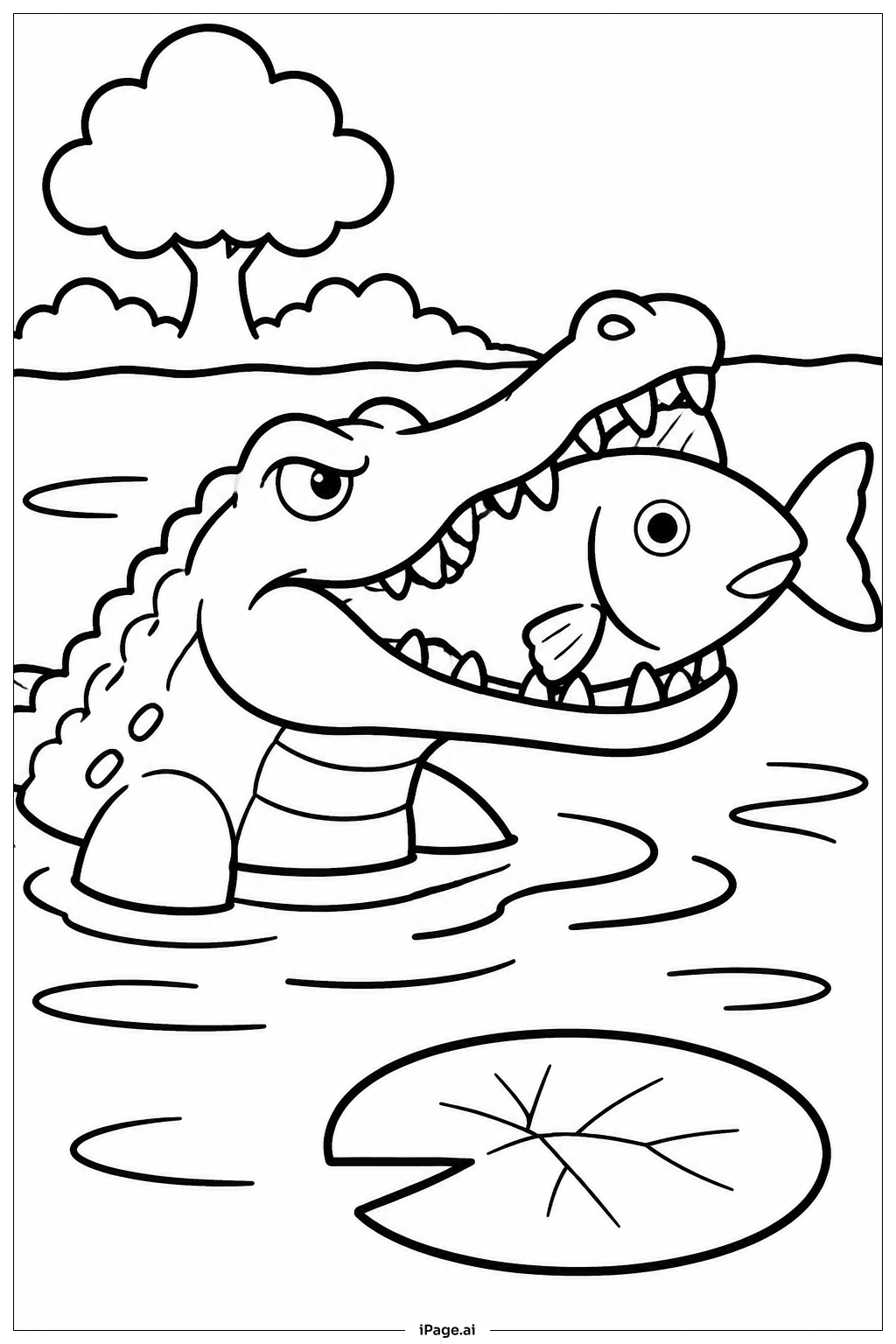
Try using different shades of green and brown to color the alligator’s rough skin, giving it a lifelike texture. For the fish, bright colors like orange, yellow, or silvery blue can make it stand out clearly beside the alligator. The water can be colored with soft blues and hints of white to show reflections and movement. Adding shadows with darker tones under the animals will give the scene depth. Don’t forget to use gentle greens and yellows for the reeds and plants to bring the habitat to life in a natural way.
Coloring challenges: Which parts are difficult to color and need attention for Alligator With Fish coloring page?
• Texture Details: The alligator’s skin has many small scales and bumps that require careful coloring to show the rough texture without making it look too busy or flat. Staying within the lines while shading these details can be tricky for younger children. • Water Effects: Representing the look of water around both animals involves blending colors smoothly. It can be challenging to capture the reflections and ripples without over-coloring or making the water appear too uniform. • Fish Scale Patterns: The fish’s scales are small and detailed, requiring precise, consistent strokes to show shine and pattern. Coloring each scale separately may be time-consuming and require patience. • Overlapping Elements: Parts of the fish overlap the alligator’s mouth and the reeds overlap the water. Coloring these overlapping areas neatly without mixing colors can be difficult for early colorers. • Natural Look: Choosing realistic colors that still look vibrant enough to engage children is challenging. Too dark or dull tones may hide details, while too bright colors might appear unnatural.
Benefits of coloring books: Advantages of drawing Alligator With Fish coloring page
Coloring this image helps improve fine motor skills as children must carefully fill in the alligator’s textured patterns and the fish’s detailed scales. It encourages focus and patience because of the many small areas to color neatly. This scene also teaches about nature by showing animals in their habitat, sparking curiosity about wildlife and ecosystems. The coloring process stimulates creativity as kids decide which colors to use for a realistic or imaginative look. Overall, it helps develop hand-eye coordination and gives children a satisfying sense of accomplishment when they finish coloring such a detailed picture.