Coloring tips: How to color Alligator With Ball coloring page well?
Try using shades of green for the Alligator’s body, mixing lighter and darker greens to bring out its scales. You can color the tail a slightly darker green for depth. The ball can be bright and colorful—like red, blue, or yellow—to make it stand out in the picture. Use different colors for the eyes, such as light green or yellow, to show its lively character. Don’t forget to color the Alligator’s claws a pale brown or gray. This contrast will highlight the details well. Feel free to add some background color like blue for the sky or brown for the ground to give the scene more life.
Coloring challenges: Which parts are difficult to color and need attention for Alligator With Ball coloring page?
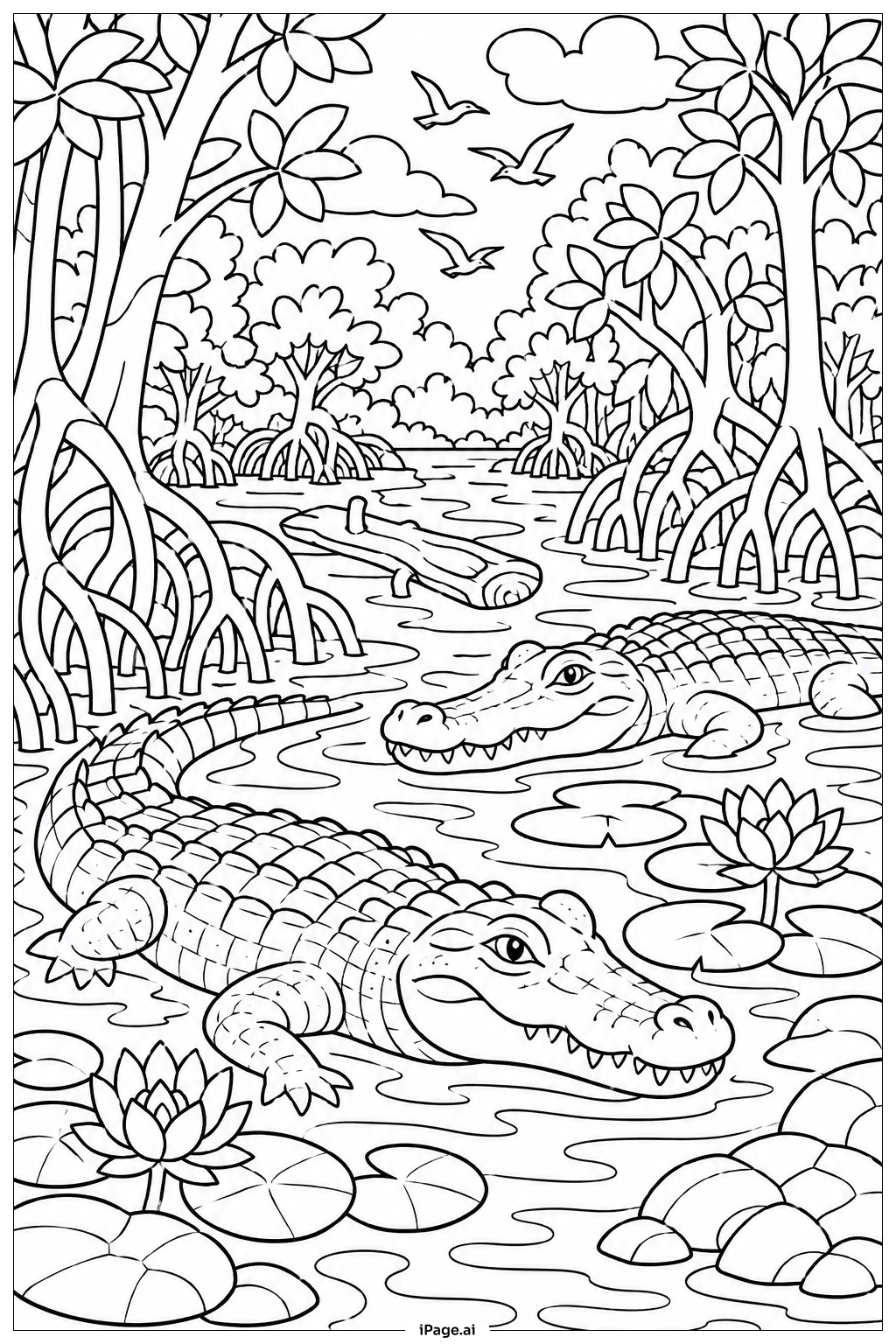
• Scale Details: The Alligator’s body is covered with many small scales, which require careful coloring to highlight the texture without mixing colors too much.
• Claw and Leg Separation: The claws on the front legs holding the ball can be tricky because you need to color each claw separately to show the grip clearly.
• Ball Shading: Giving the ball a round look involves shading to create a sense of light and shadow, which can be challenging for beginners.
• Tail Curvature: The curved tail requires smooth coloring lines to keep its shape natural and flowing.
• Eye Expression: Capturing the lively and friendly look through the eyes means carefully choosing shades and small details to avoid making the face look flat or dull.
Benefits of coloring books: Advantages of drawing Alligator With Ball coloring page
Coloring this image helps children develop fine motor skills by working on detailed parts like the scales and claws. It encourages attention to detail as they try to shade and bring out the shape of the ball and tail. The fun and friendly look of the Alligator can spark creativity and imagination, making coloring more enjoyable. It also promotes color recognition by experimenting with different greens and bright ball colors. This activity can boost patience and concentration as children take time to complete the many small areas thoughtfully. Overall, coloring this picture is a playful way to develop important artistic and cognitive skills.