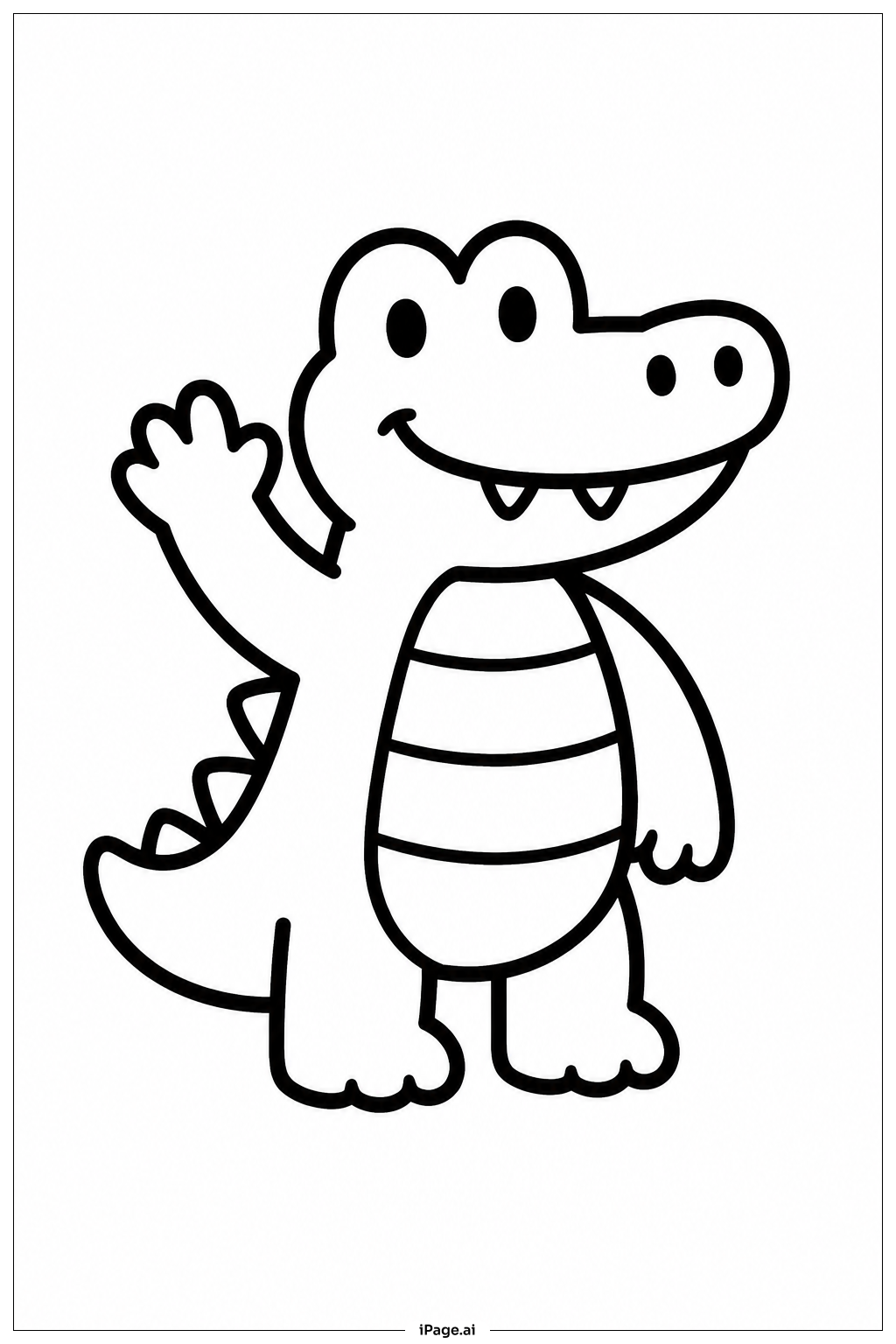
Coloring tips: How to color Alligator Waving coloring page well?
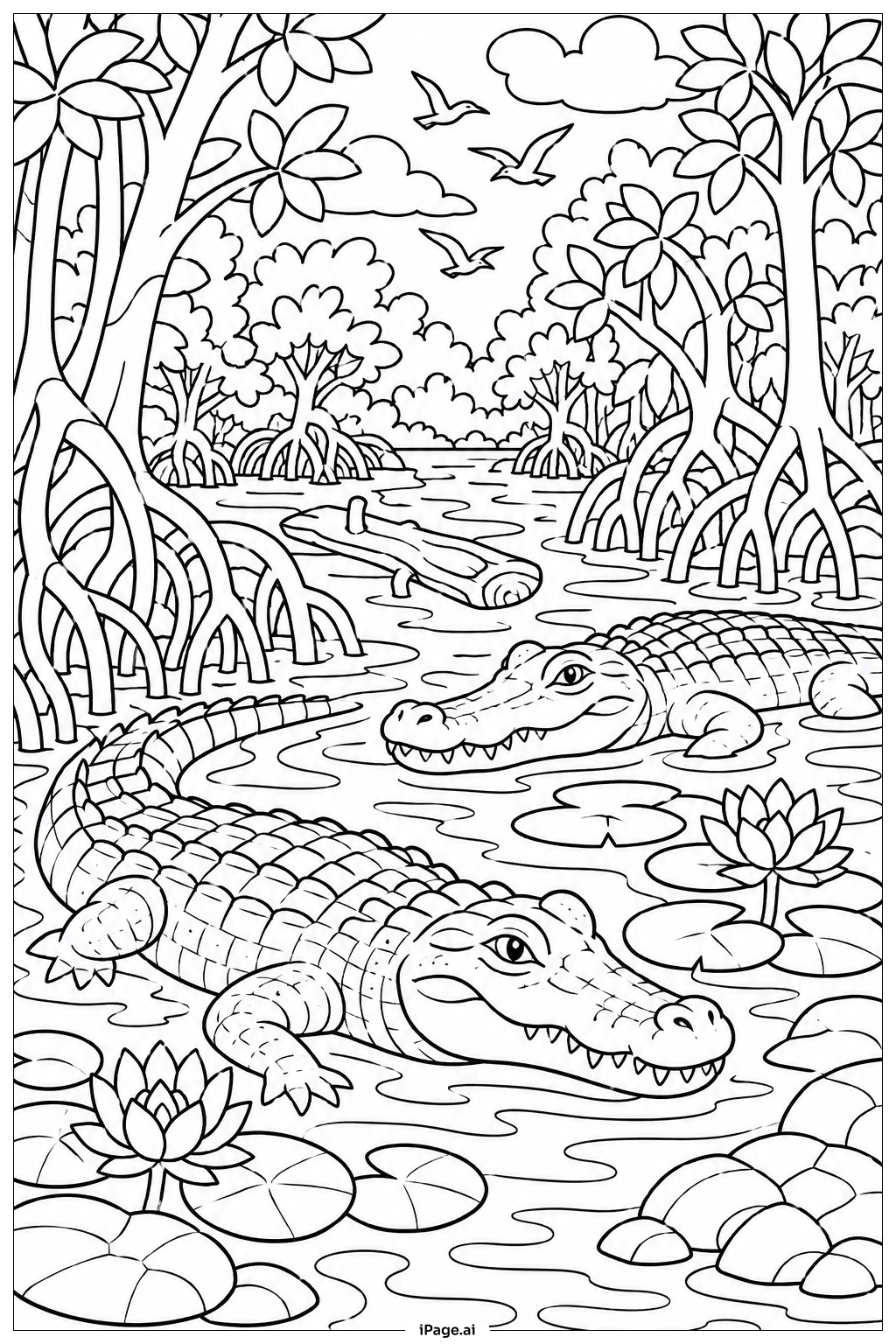
For this Alligator Waving image, try using different shades of green for the body to create a lively and realistic look. You can use dark green for the back and tail scales, and lighter green or yellowish tones for the belly and face. The waving hand can be highlighted with a slightly brighter color to draw attention. Don’t forget to color the eyes using white for the eyeball and a dark color like black or brown for the pupil to give the Alligator an expressive gaze. You can also add touches of brown or grey on the claws and outline the scales with various green tones or even a gentle blue for fun contrast. Feel free to experiment with colorful backgrounds like blue for water or sunny yellow to brighten the whole picture.
Coloring challenges: Which parts are difficult to color and need attention for Alligator Waving coloring page?
• Scale Texture: Coloring the Alligator’s scales can be tricky because the pattern requires careful shading to show the rough texture properly without making the image look too dark or uneven. • Waving Hand Details: The raised front leg has claws and fingers that need precise coloring to keep the hand distinct and visible. Small mistakes might blur this important waving gesture. • Eye Expression: Coloring the eyes demands attention to keep them lively and expressive. Using the wrong shade or neglecting highlights can make the Alligator look less friendly. • Tail Curves: The long, curving tail has overlapping parts that require smooth color transitions to show depth and shape clearly. • Balanced Contrast: Maintaining clear contrast between the belly, body, and tail while using multiple greens can be challenging without blending colors carefully.
Benefits of coloring books: Advantages of drawing Alligator Waving coloring page
Coloring this Alligator Waving image is a great way for children to improve their fine motor skills and focus as they work on detailed areas like scales and claws. It encourages creativity through experimenting with different shades and highlights to bring the friendly Alligator to life. This activity also enhances hand-eye coordination and patience while maintaining the proper proportions and textures. Additionally, coloring an engaging and cheerful animal helps build positive emotional connections and can boost confidence when completing a detailed coloring task. Overall, it’s a fun and educational way to practice art skills while enjoying a playful scene.