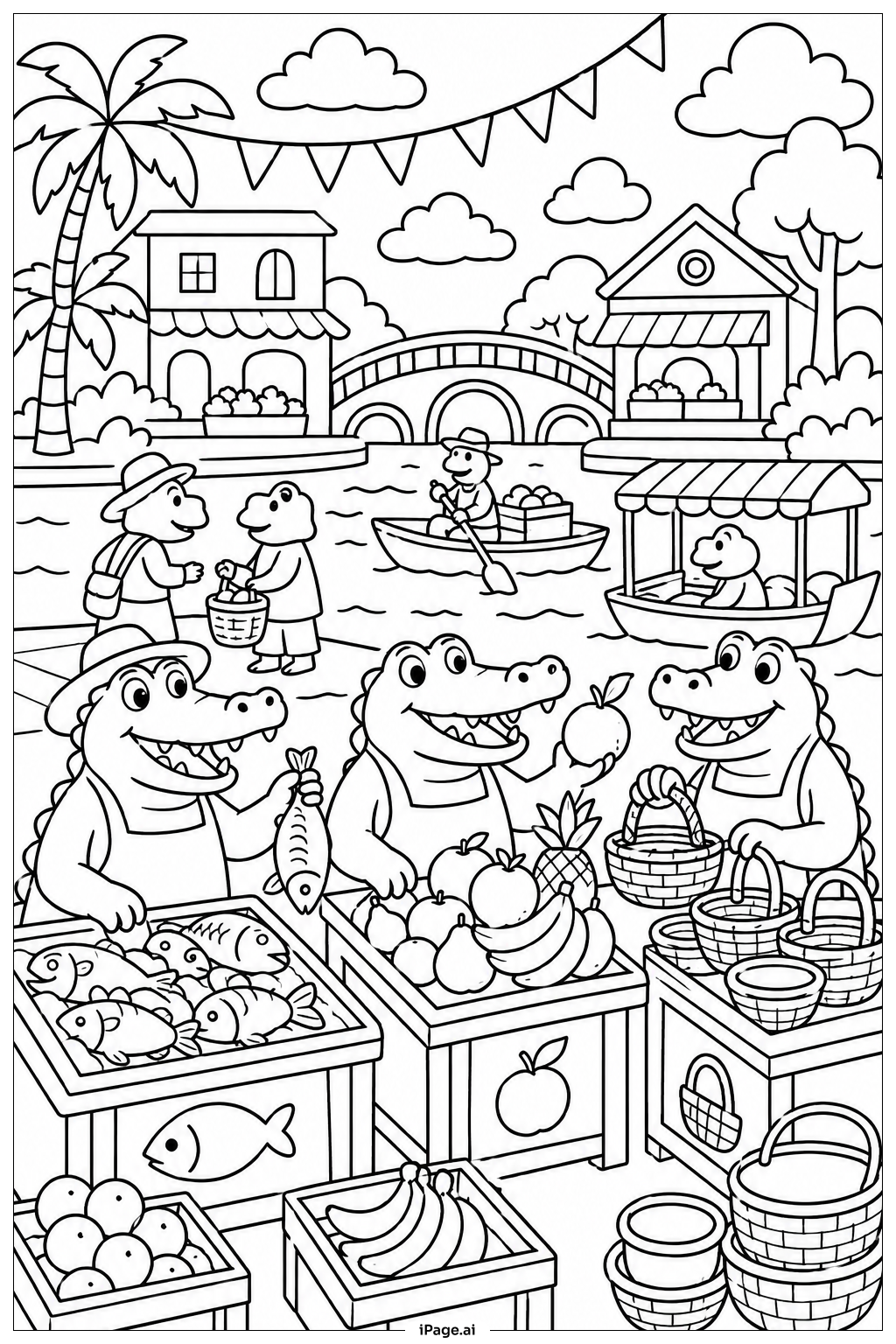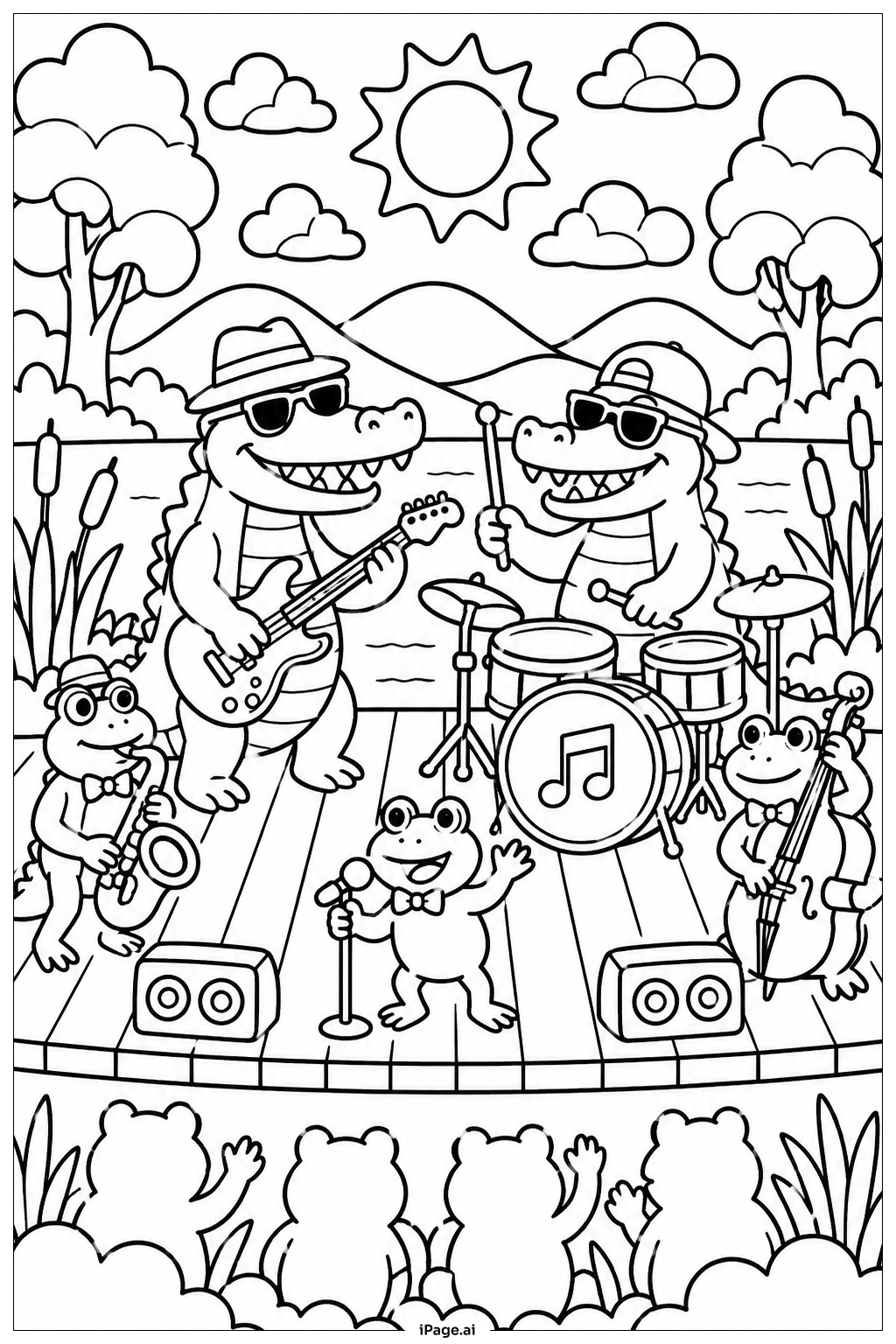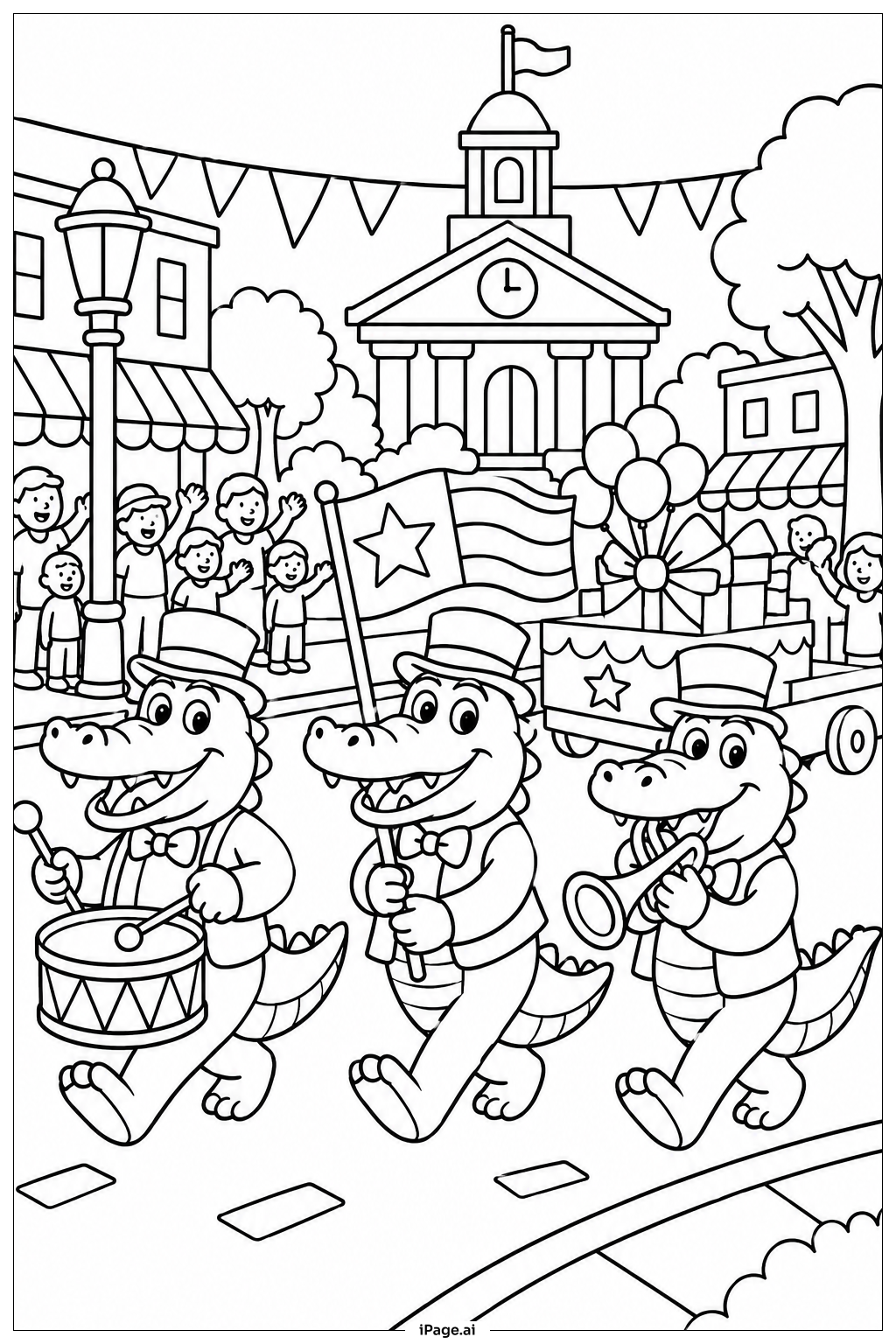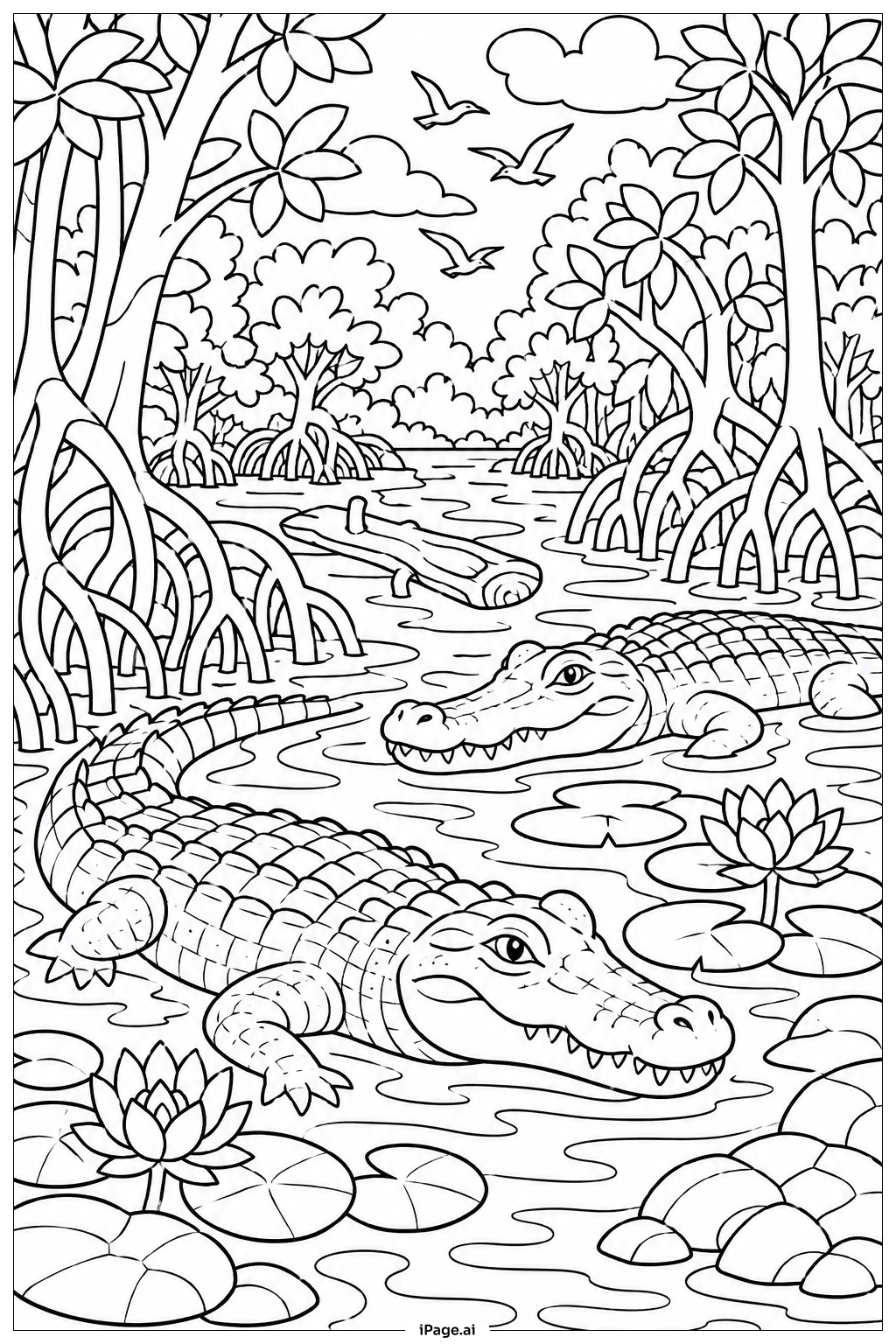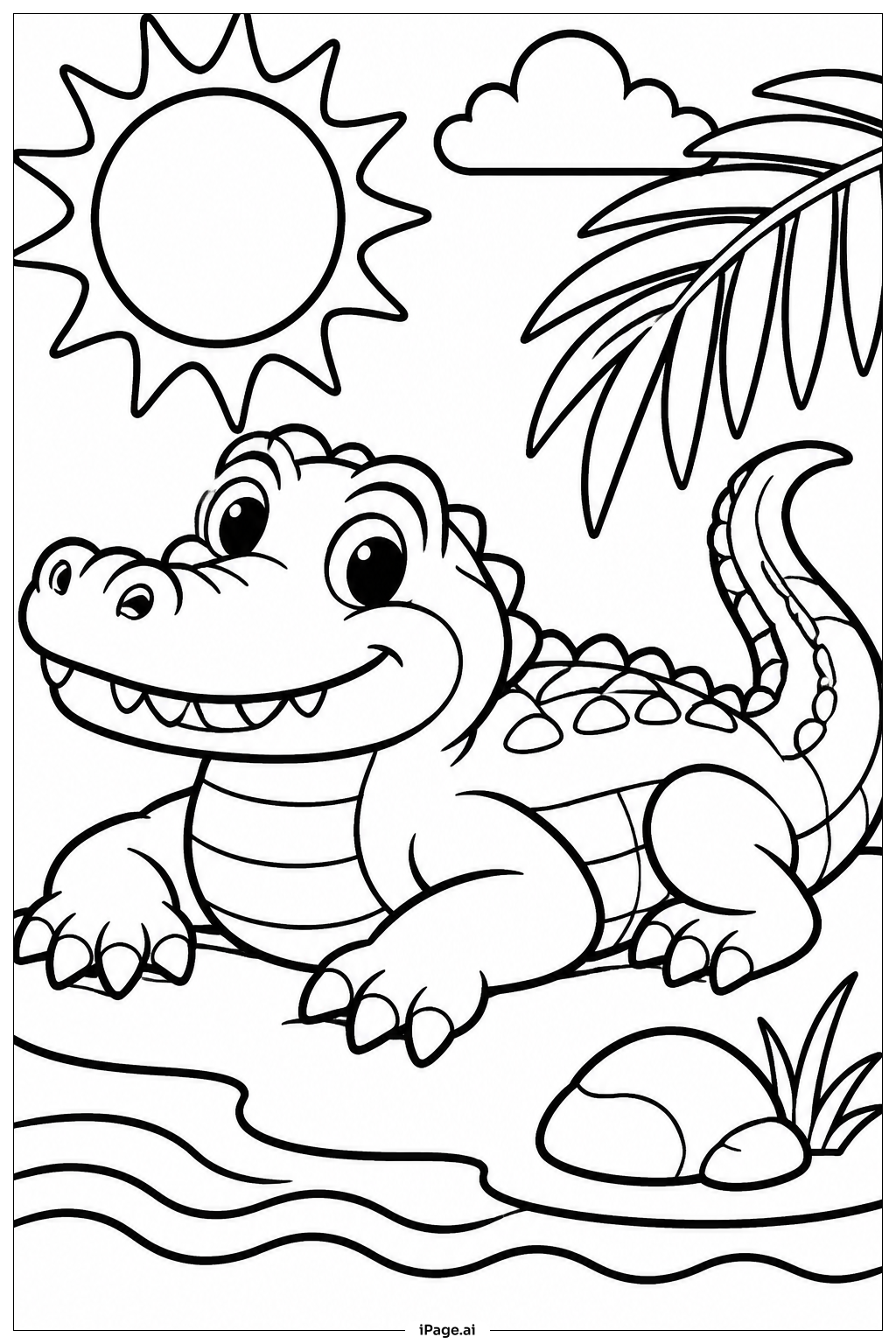
Coloring tips: How to color Alligator Under Sun coloring page well?
Try using various shades of green to color the alligator’s body, from light green for the belly to deeper green for the back and tail. For the sun, bright yellows and oranges will bring it to life. You can color the sun’s rays with a slightly lighter tone for a glowing effect. The plants around the alligator can be different greens or even add a little brown for the soil. Don’t forget to use soft blue or white for the background to suggest the sky, making the scene feel warm and sunny. Feel free to add some creative colors too, like pink or purple flowers if you want to make the picture even more fun!
Coloring challenges: Which parts are difficult to color and need attention for Alligator Under Sun coloring page?
• Alligator Texture: The scales on the alligator’s body require careful coloring to show texture. It can be tricky to color each scale distinctly while keeping the overall shape smooth. • Sun Rays: The sun has multiple rays extending outward. Coloring them evenly and lightly so they look bright without overwhelming the picture can be a challenge. • Small Details: Tiny parts, like the alligator’s claws and eyes, need attention to detail to not color outside the lines. • Shading: Creating a sense of depth with light and shadow on the alligator and the sun can be difficult, especially for younger kids still learning how to blend colors. • Consistency: Keeping color tones consistent across different parts (like matching the alligator’s scales) requires patience and concentration.
Benefits of coloring books: Advantages of drawing Alligator Under Sun coloring page
Coloring this image helps improve fine motor skills as children learn to stay inside the lines of the alligator’s shape and details. It also encourages creativity by choosing colors for natural elements like the sun, plants, and alligator while allowing personal expression. This activity supports focus and patience as small areas and multiple parts demand precise coloring. Additionally, coloring an animal in a natural setting can enhance knowledge about wildlife and nature, making it a fun learning experience. Overall, it’s a relaxing exercise that boosts hand-eye coordination and builds confidence in artistic ability.