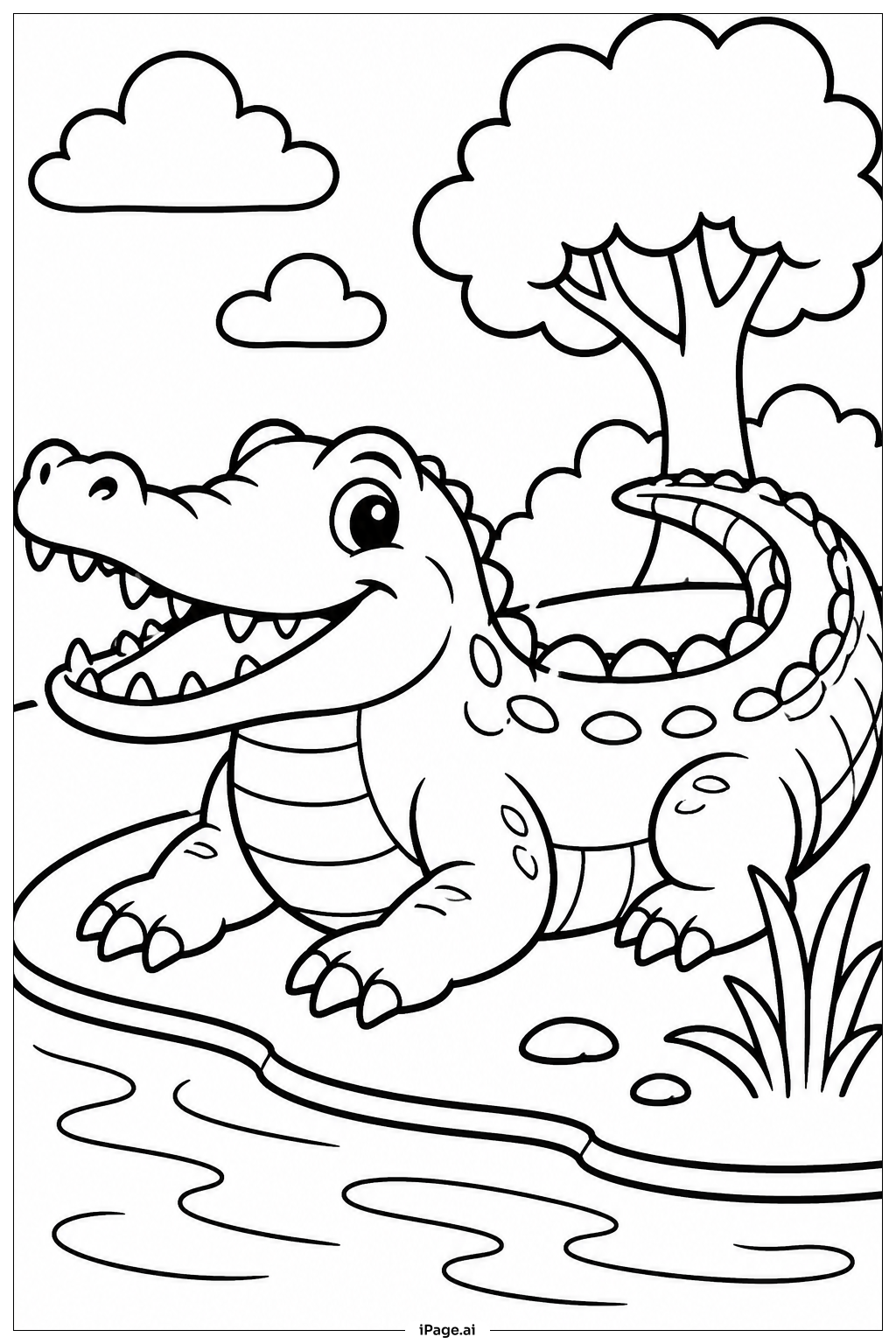
Coloring tips: How to color Alligator On Riverbank coloring page well?
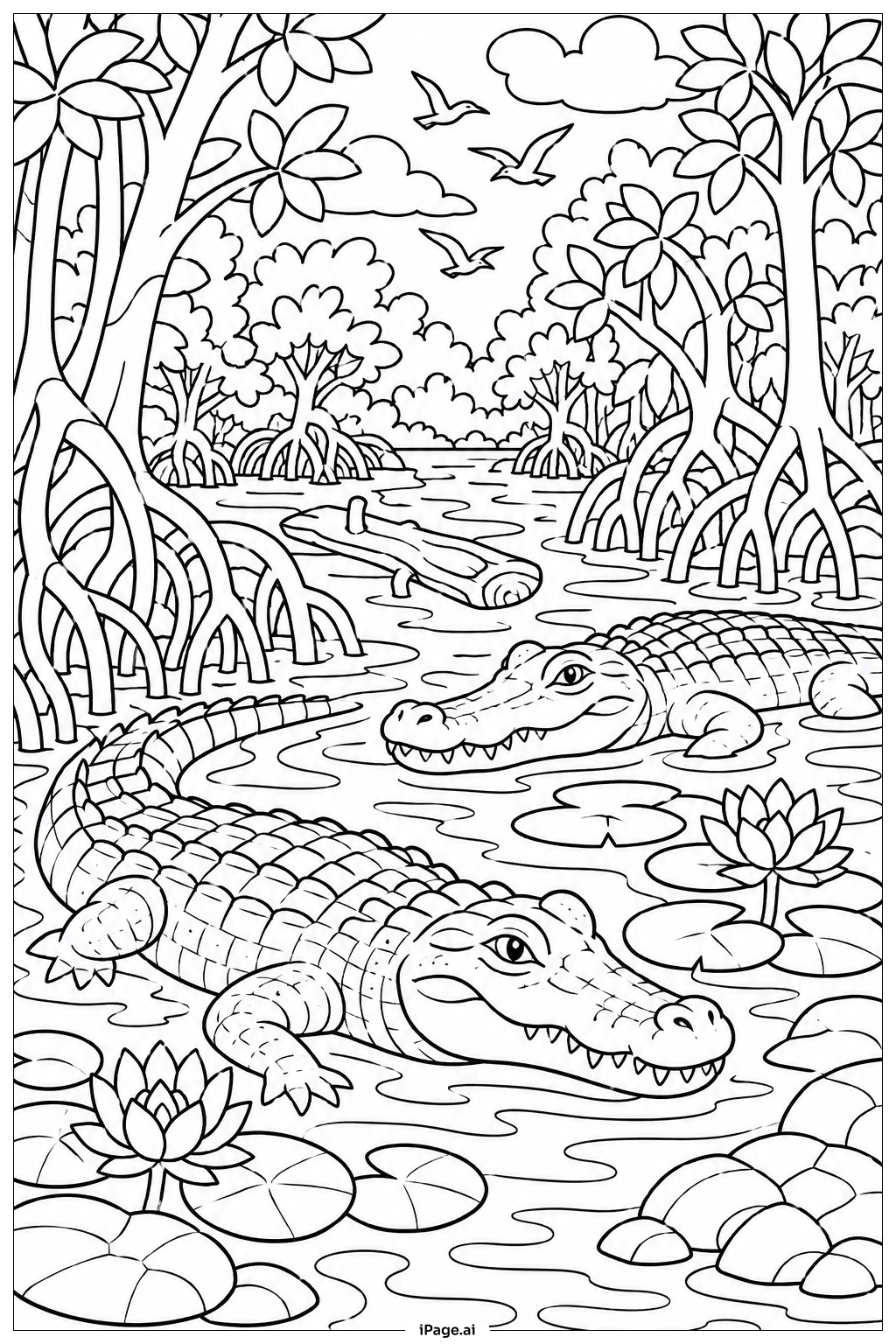
Try using deep greens and browns for the Alligator’s scaly skin to bring out its rugged texture. Use different shades of green to color the grasses and reeds along the riverbank, mixing lighter and darker tones to create a natural look. The river water can be colored in blues and soft turquoise shades for a peaceful feel. Adding touches of yellow or light brown can highlight the earth and sand near the water’s edge. For the Alligator’s eyes, try bright yellow or orange to make them stand out. Feel free to experiment with blending colors gently to show light reflecting off the Alligator and the water, giving the picture a lifelike effect.
Coloring challenges: Which parts are difficult to color and need attention for Alligator On Riverbank coloring page?
• Fine Scale Details: The Alligator’s skin has many tiny scales and textures that require careful coloring to avoid blurring the intricate patterns. Staying inside the lines here can be tricky, especially for younger artists.
• Shading Variation: Achieving a realistic effect with shading on the Alligator’s body demands gradual blending of colors, which can be challenging without staining or uneven tones.
• Background Complexity: The mix of grasses, reeds, and water means switching between different colors and techniques in a small space, testing the artist’s attention to detail and layering skills.
• Water Reflection: Depicting the gentle flow and reflection of the river requires subtle color gradients and patience, making it harder to keep the colors soft and natural.
• Long Tail Shape: The tail curves and narrows, which can be difficult to color evenly while preserving the shape’s three-dimensional look, requiring controlled strokes.
Benefits of coloring books: Advantages of drawing Alligator On Riverbank coloring page
Coloring this Alligator On Riverbank picture helps improve focus and patience by encouraging careful attention to small details, such as the scales and natural surroundings. It develops fine motor skills because of the varied textures and shapes that need precise coloring. This activity also sparks creativity, allowing children to experiment with different greens, browns, and blues to bring a natural riverside scene to life. Additionally, coloring animals and nature scenes can boost knowledge about wildlife and habitats in a fun and engaging way. Overall, this image supports artistic growth and relaxation, making it a great project for children and adults alike.