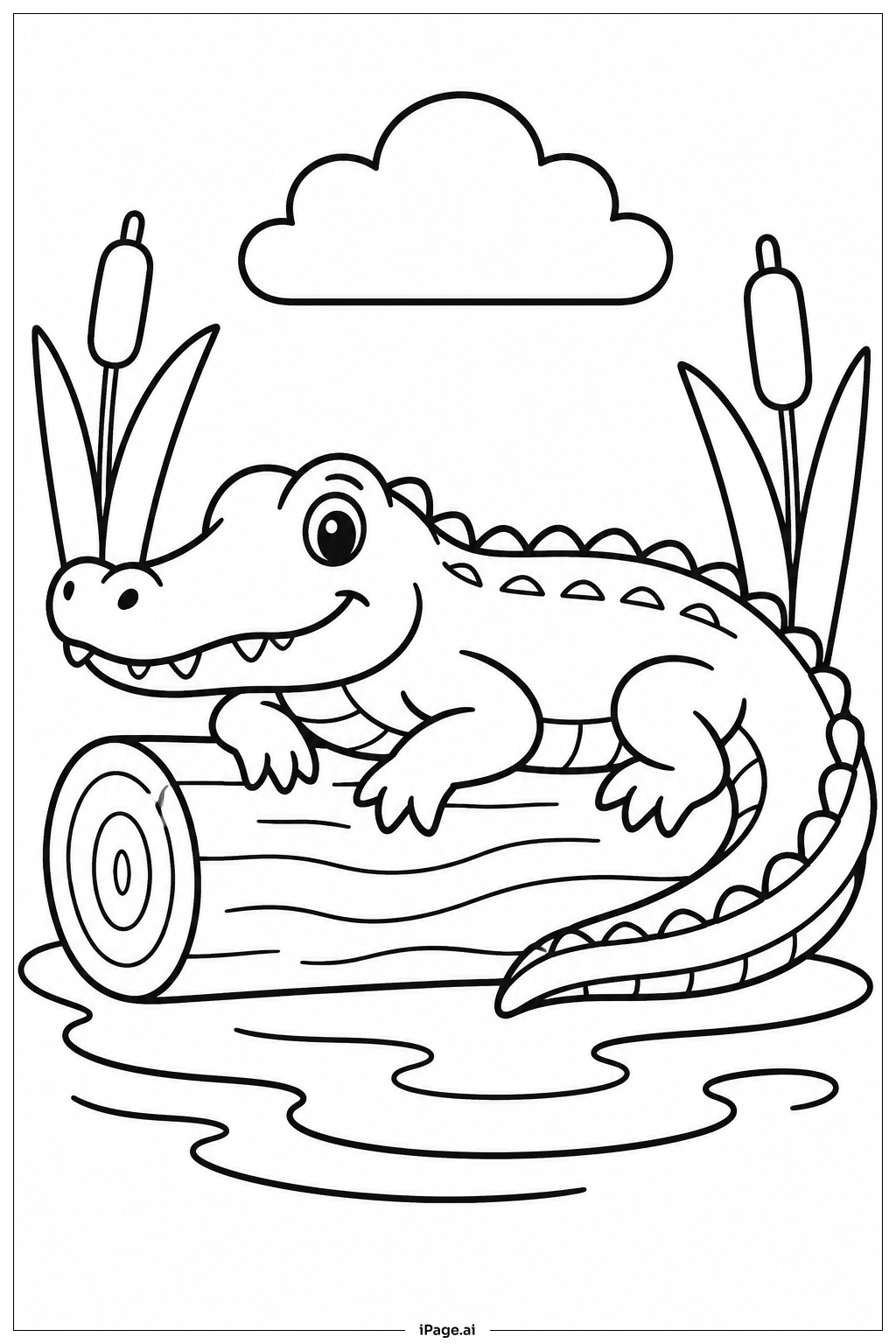
Coloring tips: How to color Alligator On Log coloring page well?
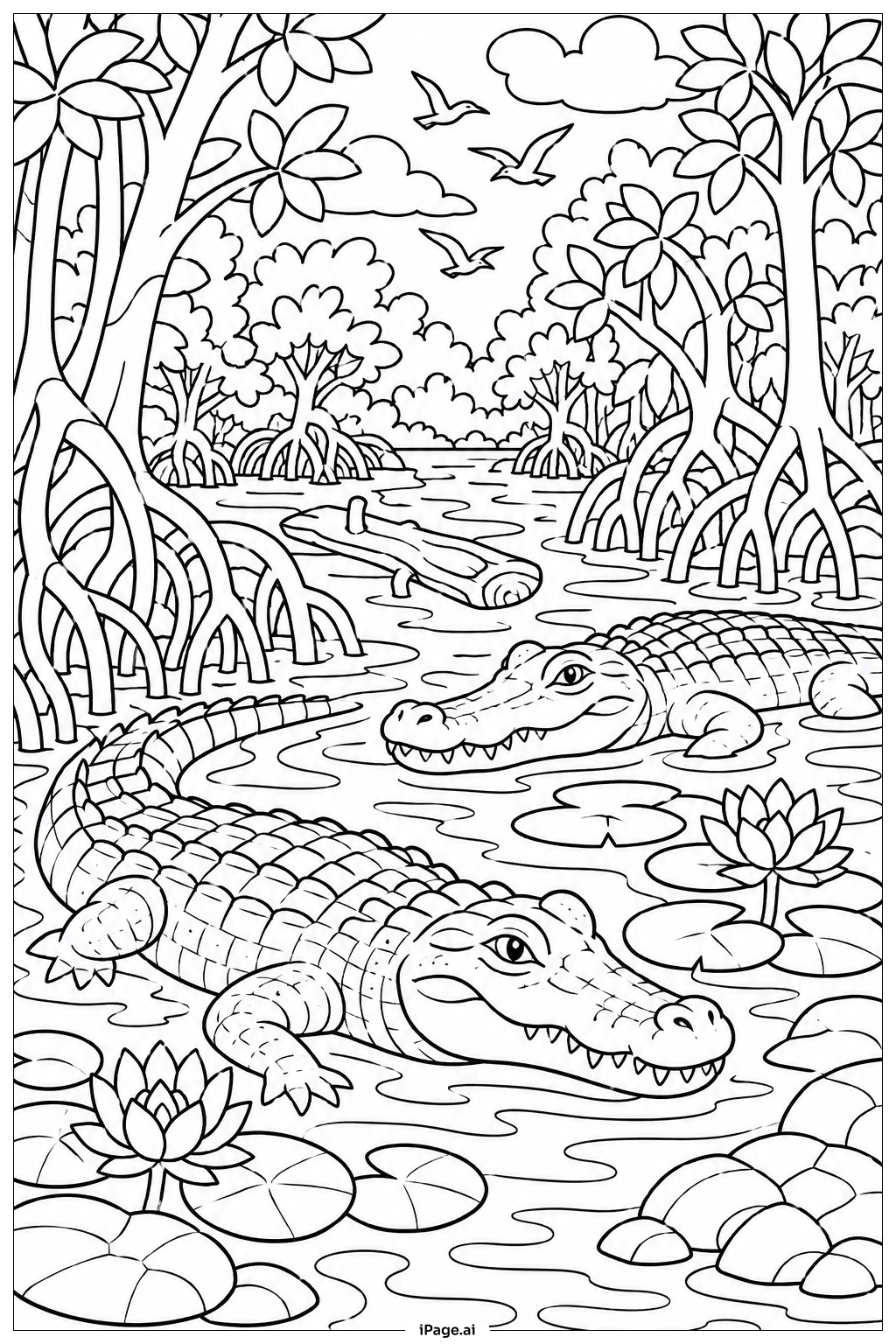
For the alligator, use shades of green like forest green, olive, and dark lime to create a natural look. You can add hints of brown or yellow to highlight the textures of the scales. The log can be colored with warm browns and tans, blending lighter and darker areas to show the rough wood surface. For the water, try blues and turquoise colors to give a fresh, cool feeling. You can add a little white or light blue to indicate gentle ripples. The grass and reeds around can be different greens, from light to dark, to add variety. Feel free to be creative—using some unusual colors like purple or blue on the alligator’s scales can make the picture fun and unique.
Coloring challenges: Which parts are difficult to color and need attention for Alligator On Log coloring page?
• Scale Texture: The alligator’s skin has many small, detailed scales that require careful coloring to show the texture without overwhelming the image. Keeping the scales distinct but blended can be challenging. • Log Surface: The log’s wood texture has a rough and uneven look. Capturing this with different shades and lines needs patience to make it appear realistic. • Water Effects: Coloring water with ripples requires smooth blending of blues and whites to convey movement, which can be difficult to do evenly. • Contrast Balance: Balancing the darker colors of the alligator with the lighter colors of the log and water can be tricky to maintain clear shapes and depth. • Natural Colors: Choosing natural colors that closely resemble the habitat while still making the image lively might require experimenting with shades to avoid the picture looking too dull or flat.
Benefits of coloring books: Advantages of drawing Alligator On Log coloring page
Coloring this image helps develop focus and fine motor skills because of the detailed scales and textures. It encourages observation of nature, teaching children about alligators and their habitat through creative play. The mix of organic shapes like the alligator’s body, the log’s rough surface, and flowing water invites experimentation with colors and shading techniques. Completing the picture boosts confidence and gives a sense of accomplishment. It also sparks imagination, as kids can decide how natural or imaginative their alligator and surroundings will be. This activity is perfect for helping young artists learn patience and detail while having fun.