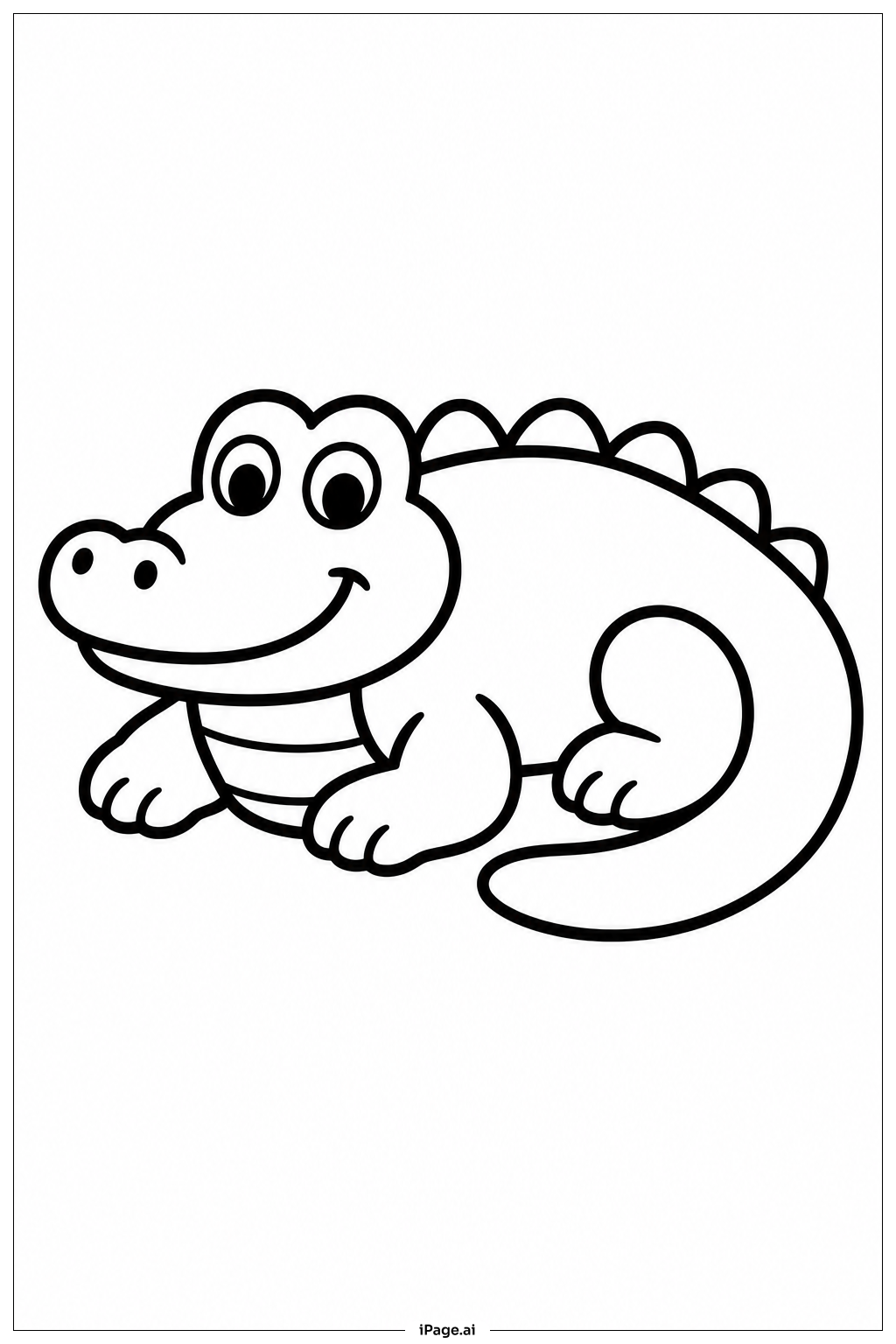
Coloring tips: How to color Alligator Lying Down coloring page well?
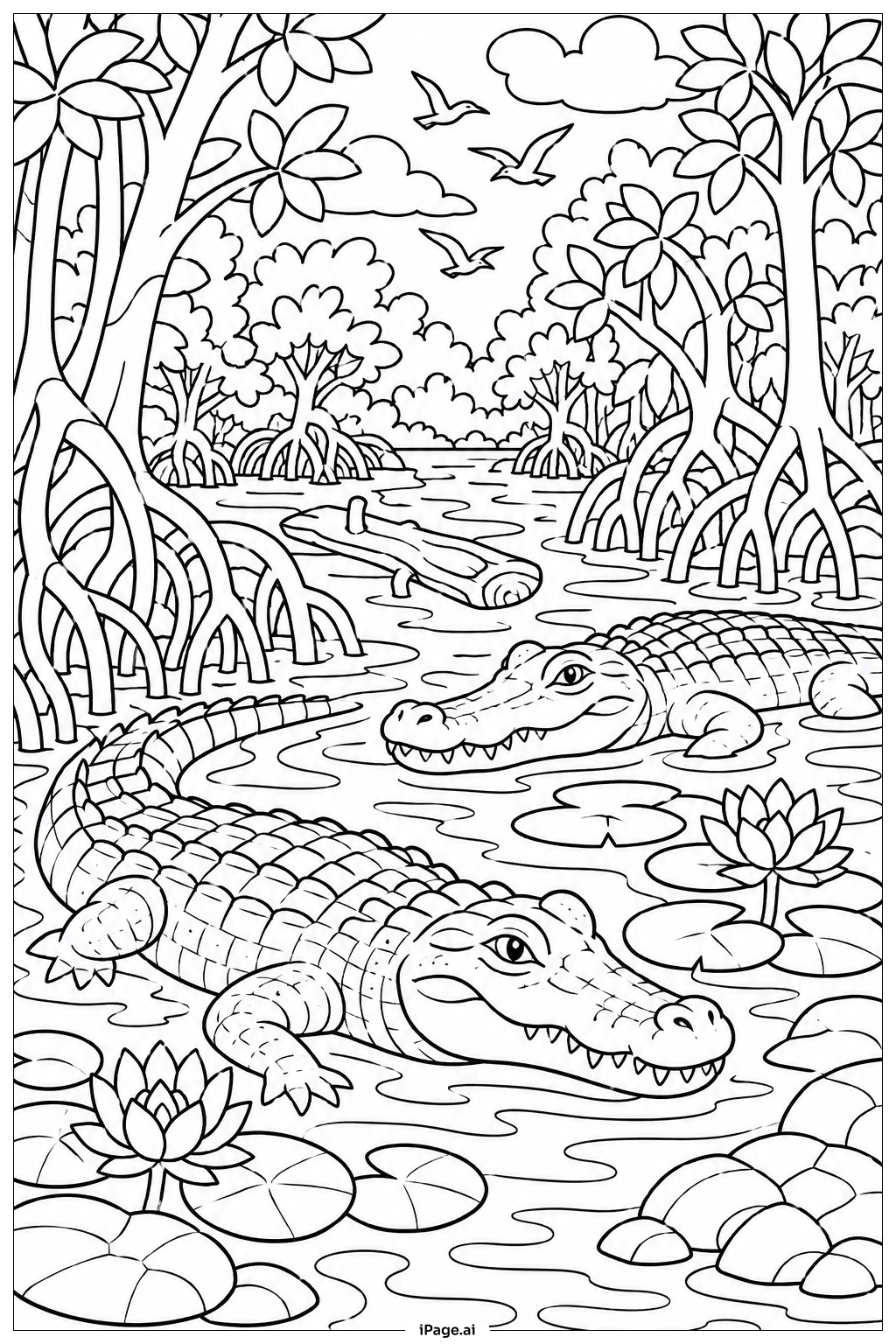
When coloring this alligator, try using different shades of green to bring the scales to life. You might choose a darker green for the back and tail, and a lighter green or yellowish-green for the belly. You can add some brown or gray for the rough skin textures to make the alligator look more realistic. Don’t forget to color the claws with a dark gray or black shade. For the eyes, golden yellow or amber can make them stand out. You could also color the background with brown earth tones or shades of blue and green to suggest water and plants, making the whole scene lively.
Coloring challenges: Which parts are difficult to color and need attention for Alligator Lying Down coloring page?
• Scale Texture: The alligator’s body is covered with many small scales and ridges, which require careful attention to detail to color evenly without going outside the lines.
• Body Shape: Coloring the body lying flat with legs underneath demands awareness of the alligator’s three-dimensional shape to add suitable shading and depth.
• Claws and Tail Details: The claws and the long curved tail have small features that can be hard to color precisely, especially for younger children.
• Color Variation: Choosing and blending different shades of green, browns, and yellows to create natural-looking skin can be challenging but rewarding.
• Eye Expression: Capturing the calm and alert look in the alligator’s eyes with the right colors and shading needs focus and patience.
Benefits of coloring books: Advantages of drawing Alligator Lying Down coloring page
Coloring this alligator lying down helps improve focus and fine motor skills due to its detailed scales and body parts. It encourages creativity in choosing colors and blending different shades to reflect natural textures. This image also teaches children about reptiles and nature, sparking curiosity about animals and their environments. Working on such a detailed coloring page can boost patience and perseverance, especially for younger kids learning to color carefully within lines. Overall, it is a fun and educational activity that combines art with a bit of natural science.