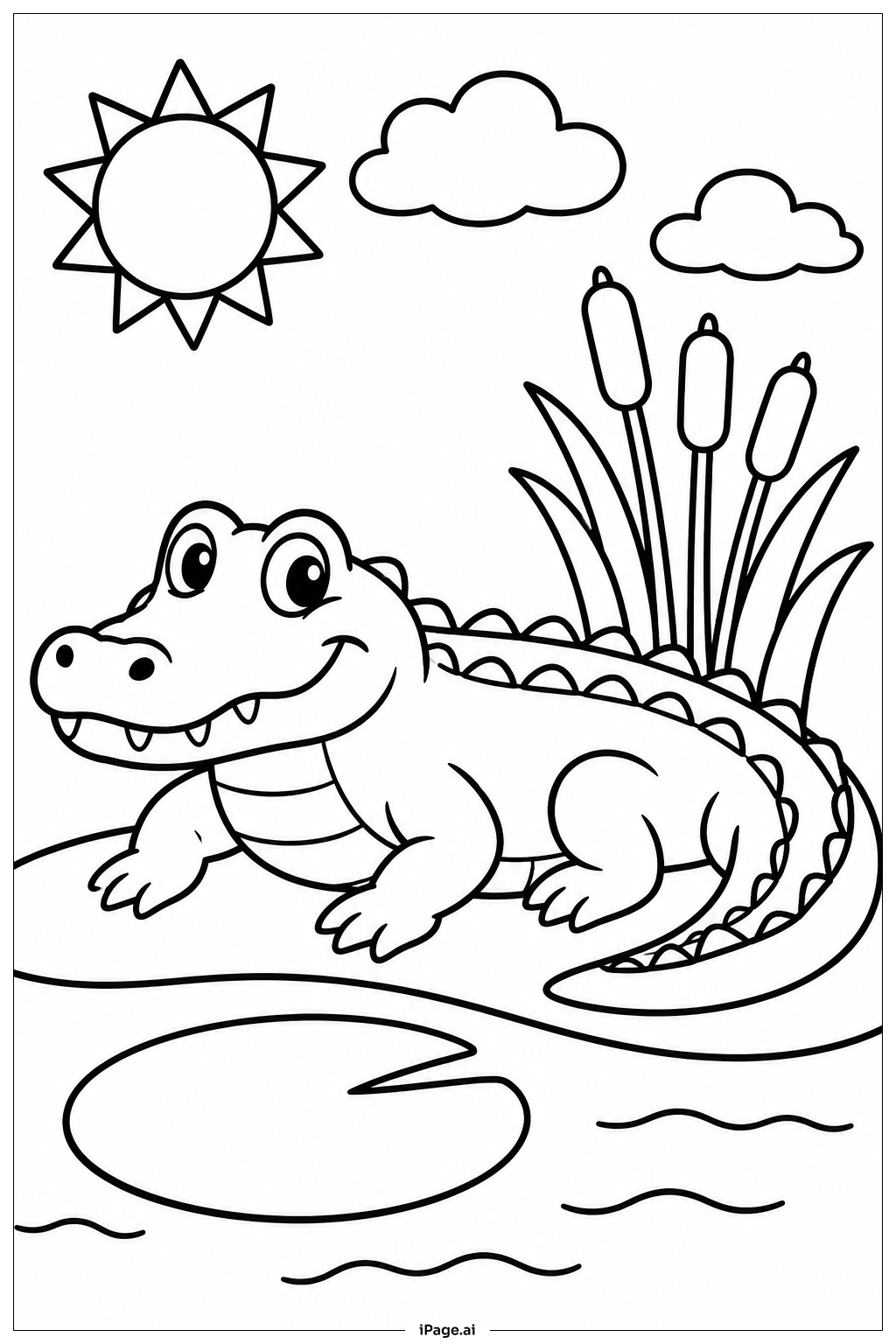
Coloring tips: How to color Alligator In Swamp coloring page well?
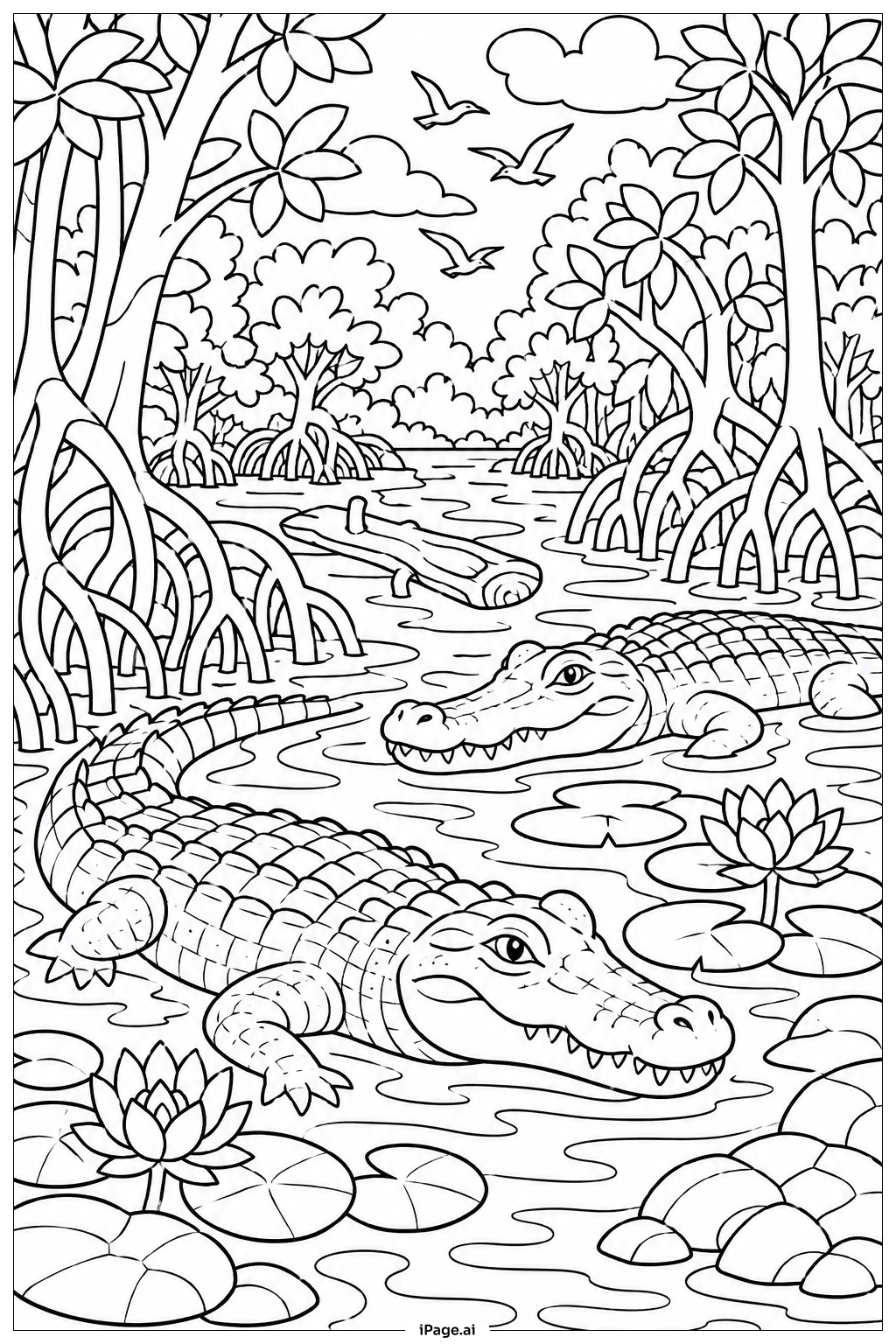
For this Alligator In Swamp picture, use greens and browns to bring the swamp plants to life. Try different shades of green for the grasses and leaves to create depth. The alligator itself can be colored in darker greens, olive tones, and even a touch of gray or brown to show its rough scales. Use lighter colors like blue or pale gray to fill in the water, adding some white or light blue highlights to suggest reflections. Don’t be afraid to add small details with brighter colors for flowers or insects to make the swamp feel lively. Experimenting with blending colors can make the swamp look more natural and three-dimensional.
Coloring challenges: Which parts are difficult to color and need attention for Alligator In Swamp coloring page?
• Scale Texture: Coloring the alligator’s rough scales and bumpy skin requires attention to small details and careful shading to create texture.
• Overlapping Plants: The dense swamp grasses and leaves overlap in many places, which can be tricky to color neatly without mixing colors.
• Water Reflections: Showing water reflections involves using smooth blending and subtle color changes to capture light and movement.
• Contrast Balance: Balancing dark colors for the alligator and lighter colors for the swamp plants and water needs planning to keep the main subject visible.
• Fine Line Work: Some parts of the alligator’s teeth, eyes, and claws are small and detailed, requiring steady hand control to color inside the lines.
Benefits of coloring books: Advantages of drawing Alligator In Swamp coloring page
Coloring this Alligator In Swamp image helps develop focus and patience, especially when working on textures like scales and plants. It encourages observation skills by noticing natural colors and light in a swamp environment. The detailed nature of the image supports fine motor skill improvement as children carefully color small areas. It also sparks creativity by letting colorists experiment with blending and layering to produce vibrant natural scenes. Engaging with this picture promotes a connection to wildlife and nature, fostering appreciation for alligators and their habitat.