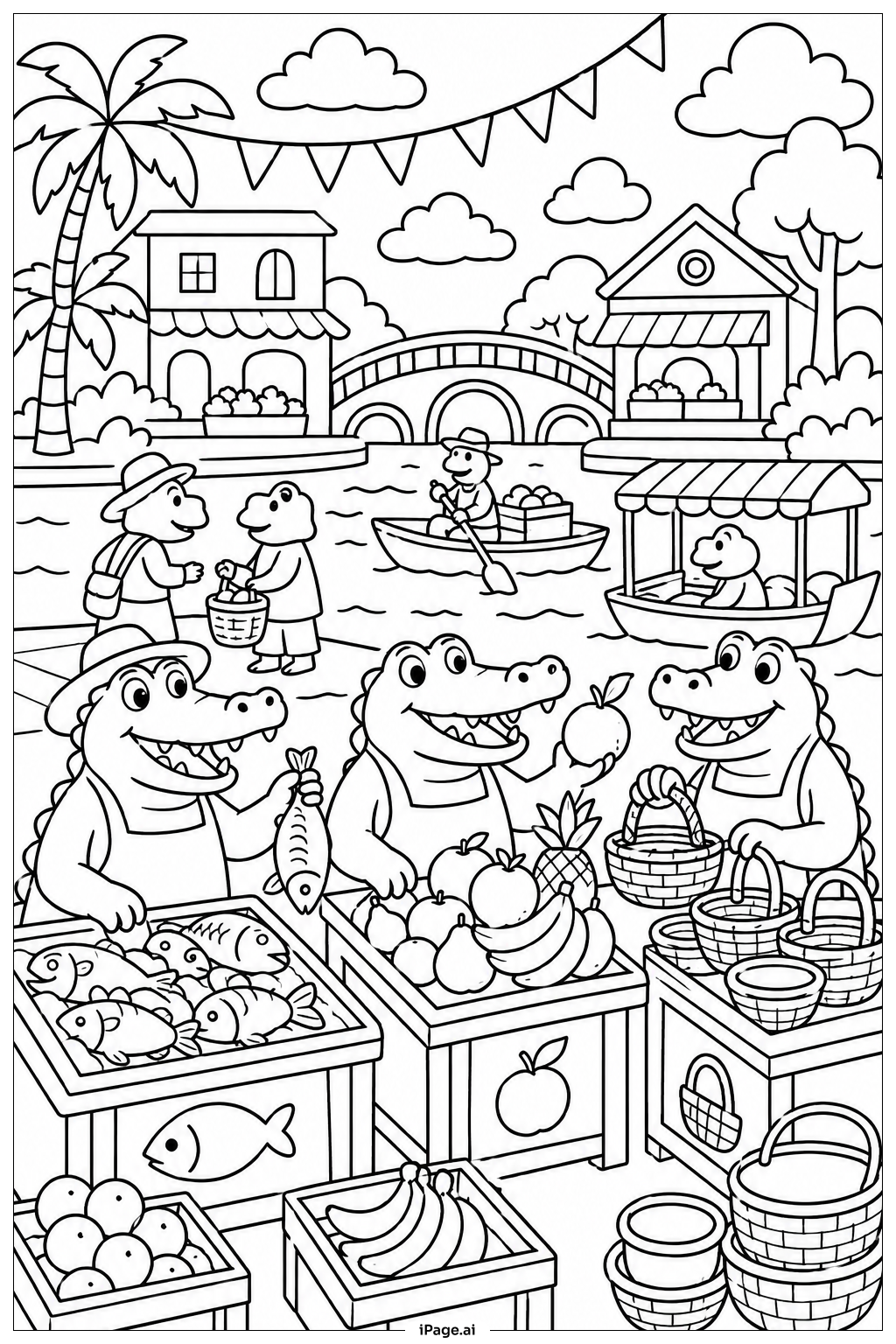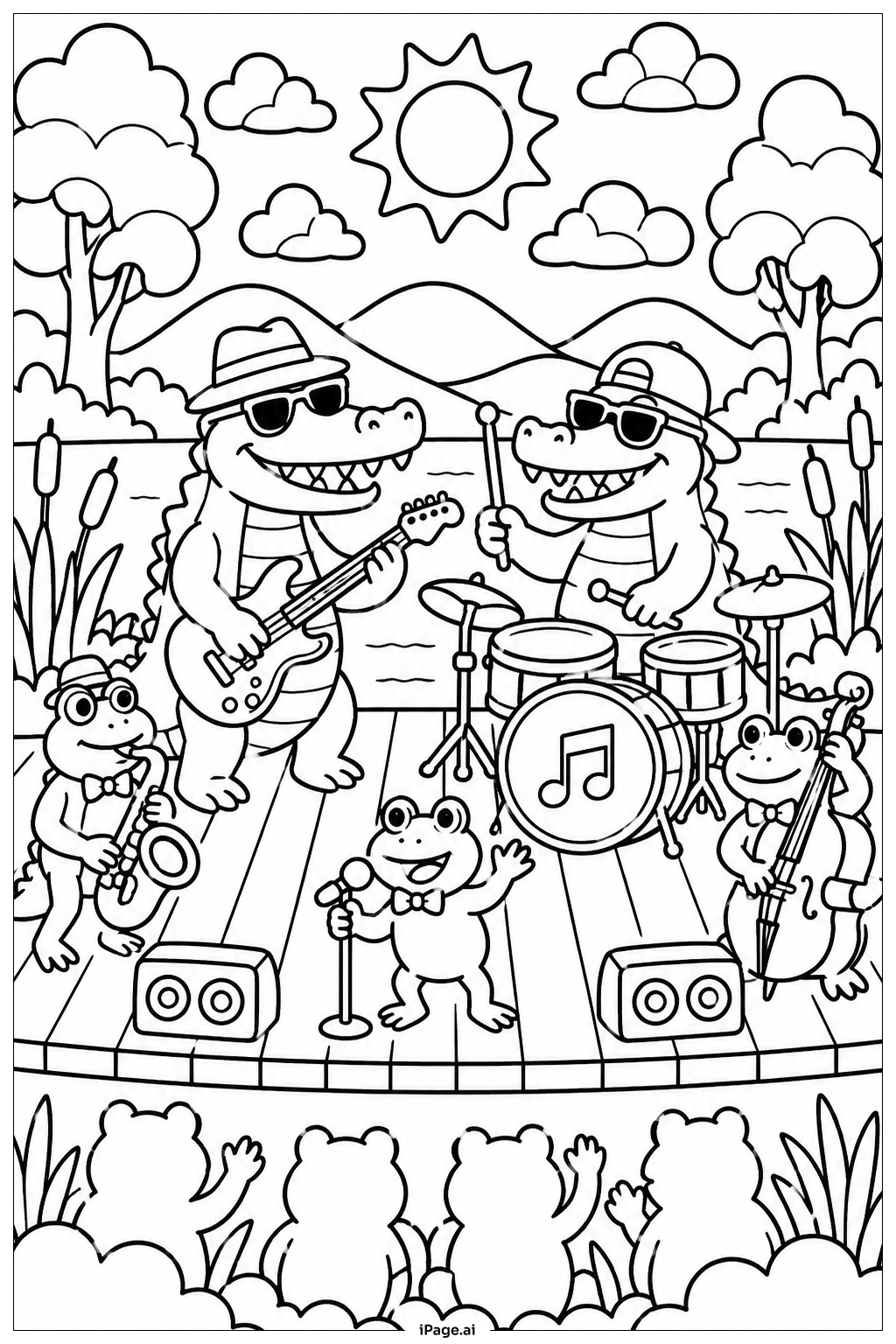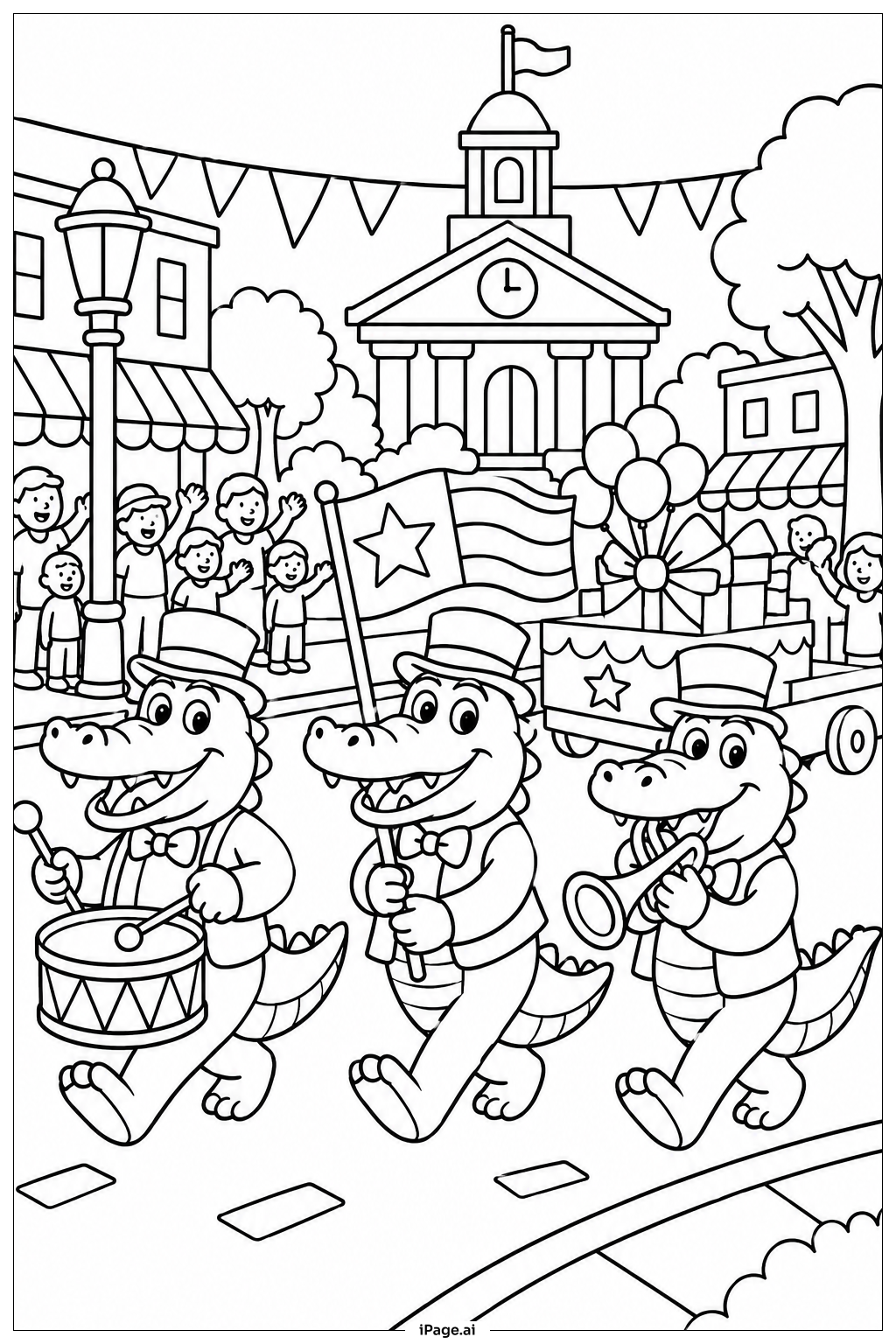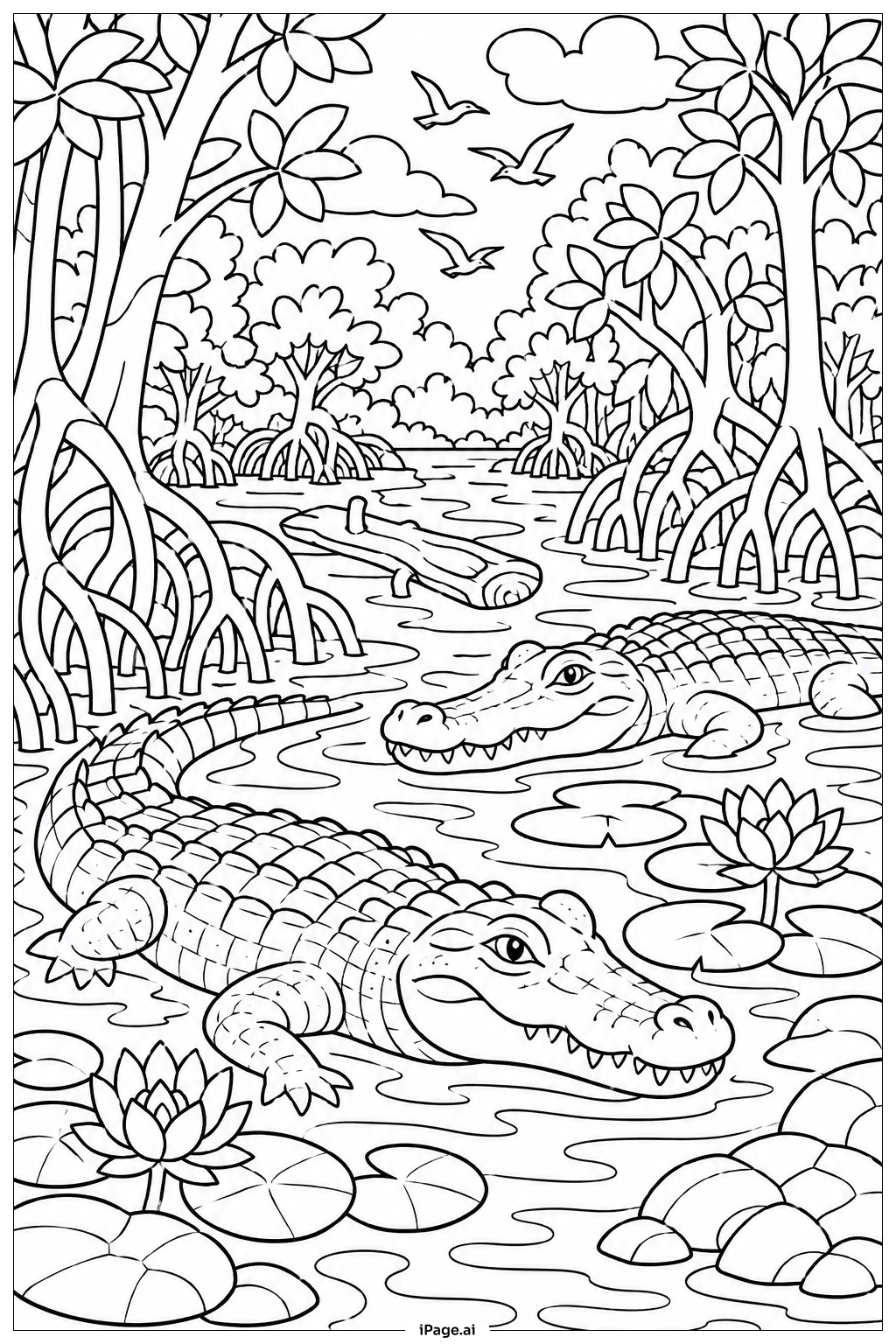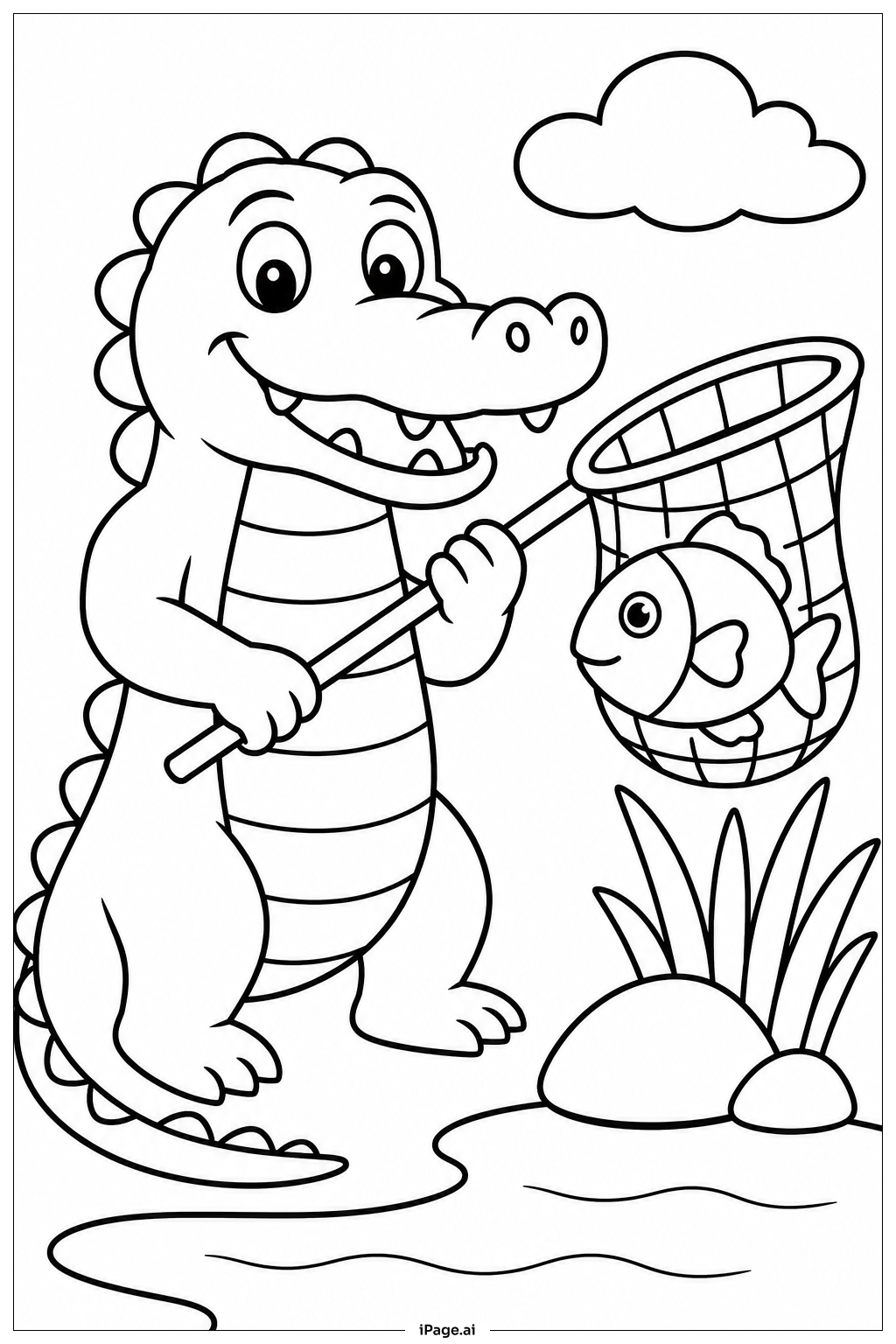
Coloring tips: How to color Alligator Fishing Net coloring page well?
Start with the alligator's body using different shades of green. Use a darker green for the back and tail, and a lighter green or yellow-green for the belly area. Add texture by lightly shading between the scales with an even darker green or olive tone. For the eyes, use bright yellow or golden tones with dark pupils to give them a lively look. Color the fishing net in warm shades like tan, beige, or light brown to make it stand out against the green body. Use a sandy brown or wood color for the net handle. If the scene includes a water background, soft blues and teals work beautifully. Don't be afraid to add a sky with light blue and white, or some green reeds along the water's edge. Keep colors bold and fun to bring this friendly alligator to life!
Coloring challenges: Which parts are difficult to color and need attention for Alligator Fishing Net coloring page?
• Scale Texture Consistency: The alligator's body is covered in many small, repeated scales. Keeping a consistent color pattern across all of them takes patience and a steady hand. Using colored pencils rather than markers can help you blend shades smoothly between each scale without going over the lines.
• Net Mesh Complexity: The fishing net is made up of a detailed crisscross grid pattern. Each small diamond shape in the mesh needs careful coloring to avoid the lines blending together. A fine-tipped tool works best here. Try leaving some areas slightly lighter to give the net a natural, slightly transparent look.
• Color Contrast Between Subject and Net: Since both the alligator and the net occupy most of the image, choosing colors that clearly separate the two is a real challenge. If you color both in similar warm or cool tones, the image can look flat. Picking contrasting colors, like a green alligator against a tan or golden net, helps each element stand out clearly.
• Facial Expression Details: The alligator's face has small features like eyes, nostrils, and a wide smile. These areas are tight and close together, making it easy to accidentally color outside the lines. Use a sharpened pencil or a fine marker to carefully fill in these small sections without smudging nearby areas.
• Shading and Depth: Adding shading to round out the alligator's body and give the net a three-dimensional feel can be tricky for younger colorists. Try pressing harder on your pencil for darker areas and lighter for highlights to create a sense of depth.
Benefits of coloring books: Advantages of drawing Alligator Fishing Net coloring page
Coloring this fun Alligator Fishing Net page offers a wonderful mix of learning and creativity. Here are some great reasons to pick up your colors and get started:
• Fine Motor Skills: Carefully coloring the scales and net mesh trains small hand muscles, improving pencil control and coordination for kids of all ages.
• Focus and Patience: Working through the detailed patterns on the alligator's body and the fishing net encourages children to slow down, concentrate, and build lasting attention skills.
• Color Awareness: Choosing colors for the alligator, net, and background teaches kids how colors work together and how contrast makes images pop visually.
• Creative Expression: There is no single right way to color this page. Kids can experiment with wild, imaginative color choices, building confidence in their own artistic decisions.
• Stress Relief: The repetitive, calming motion of coloring is a proven way to reduce anxiety and bring a sense of calm, making it a great quiet-time activity for both children and Adults.
• Nature Learning: The image sparks curiosity about alligators and fishing, opening doors for fun conversations about animals, habitats, and the natural world.