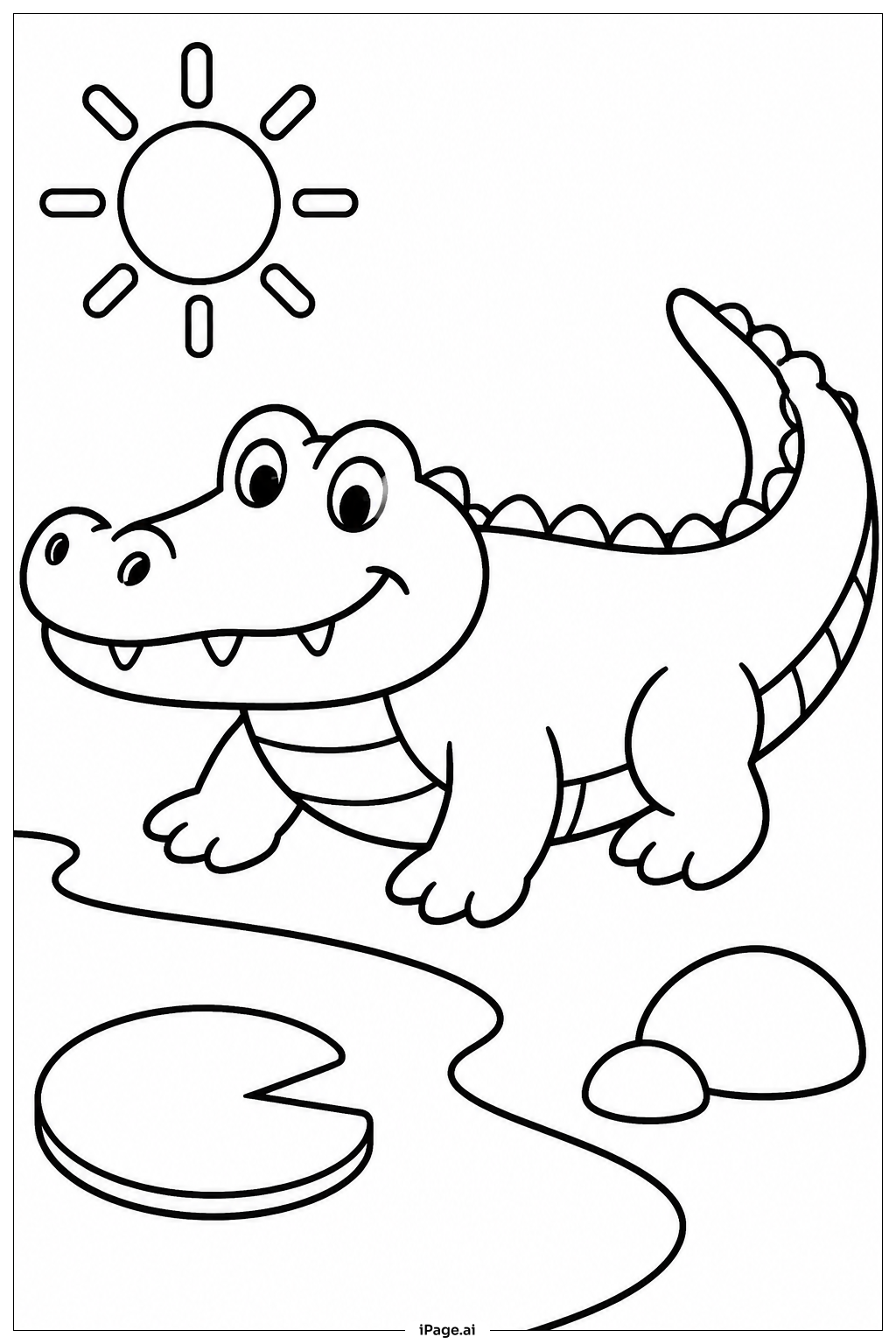
Coloring tips: How to color Alligator At Pond coloring page well?
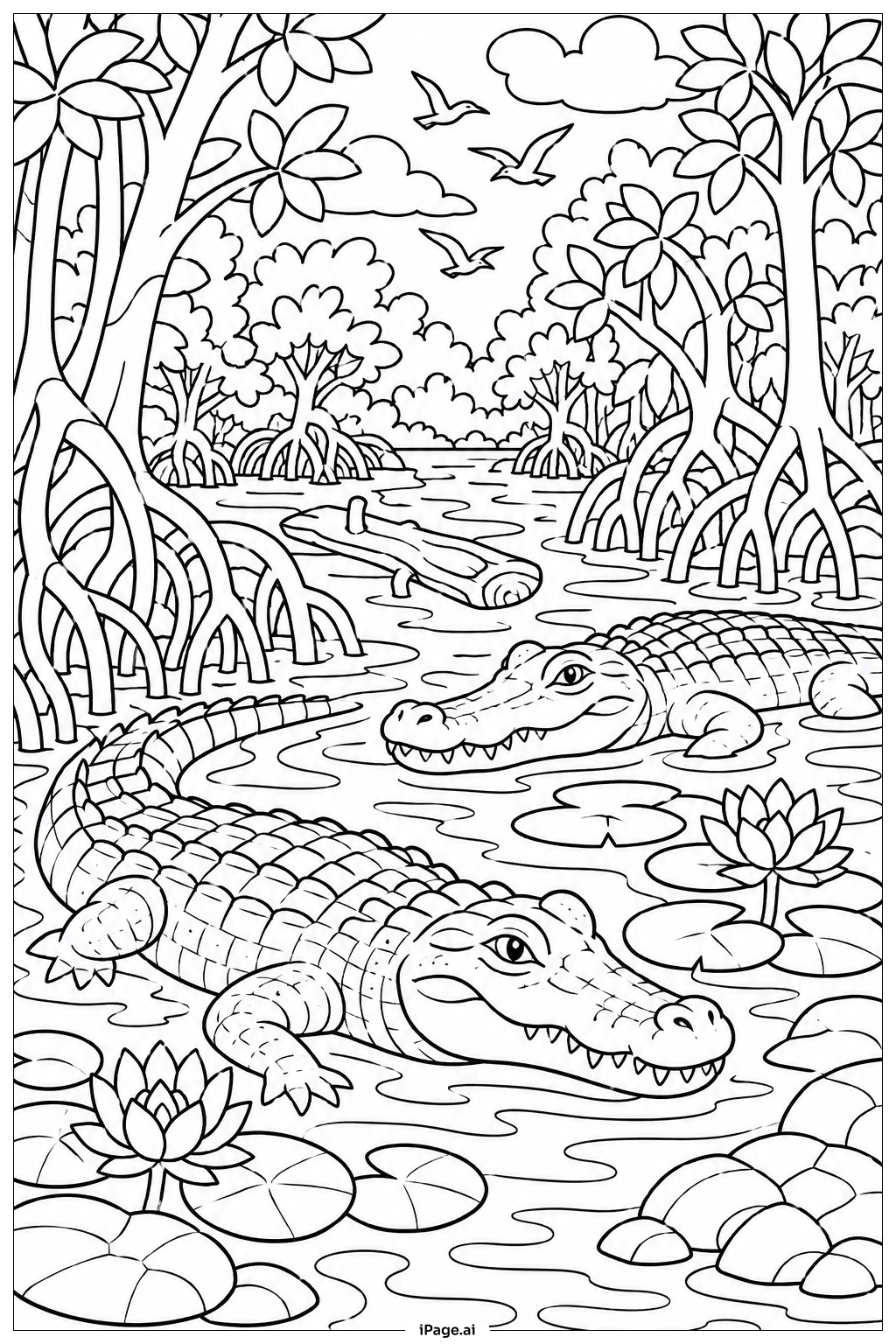
Start with the alligator's body using different shades of green. Use dark green or olive green for the back and tail, where the scales are thickest. Add lighter green or yellow-green on the sides and belly for a natural look. You can mix in some gray or brown tones to make the skin look rough and real. Color the eyes bright yellow or orange with a dark slit pupil to make them pop. For the pond water, use soft blue or blue-green tones. Add streaks of white or light gray to show the water's ripples. Color the lily pads in medium green and give the lily flowers a soft pink or white. Use brown and tan for the cattails and dried reeds. Paint the background grasses in various shades of green and yellow to show depth. Dragonflies can be colored with bright blues or purples to add fun detail. Take your time with each section and enjoy bringing this wild wetland scene to life.
Coloring challenges: Which parts are difficult to color and need attention for Alligator At Pond coloring page?
• Alligator Scale Texture: The alligator's body is covered in many small, overlapping scales and ridged bumps. Coloring each scale individually takes patience and a steady hand. Using a fine-tipped marker or colored pencil works best here. Try coloring in the direction the scales grow to keep it looking natural. Layering two or three shades of green adds depth and dimension to the textured skin.
• Transition Between Body Zones: The alligator has different skin textures on its back, sides, and belly. Blending from dark green on the top to a lighter, softer tone on the belly can be tricky. Going too fast may result in harsh color jumps. Use gentle, overlapping strokes to create a smooth gradient between the darker and lighter areas.
• Water Ripples and Reflections: The pond surface has subtle ripples that are easy to overlook. Capturing the look of moving water requires soft, curved strokes in varying shades of blue and green. Adding white highlights or leaving small areas uncolored can give the water a shimmering, realistic feel.
• Dense Background Vegetation: The cattails, grasses, and lily pads behind and around the alligator involve many overlapping shapes. Keeping each plant element distinct while still making the whole scene feel unified is a challenge. Using a range of green tones, from dark to light, helps separate the layers without making the background look flat or muddy.
• Small Detail Elements: Tiny details like the dragonfly wings, the alligator's teeth, and the lily flower petals require careful, precise coloring. These small areas are easy to color outside the lines. Patience and a sharp pencil tip will make these details stand out beautifully.
Benefits of coloring books: Advantages of drawing Alligator At Pond coloring page
Coloring this Alligator At Pond scene offers many wonderful benefits for kids and adults alike. Working through the alligator's detailed scales and the layered wetland background builds fine motor skills and strengthens hand-eye coordination. Choosing the right color combinations for the skin, water, and plants encourages creative thinking and color awareness. Children learn about real-world habitats as they color, gaining a gentle introduction to wetland ecosystems and the creatures that live in them. The variety of textures in this image, from rough scales to smooth water and soft grasses, gives colorists a chance to practice different coloring techniques. Focusing on each small section of the image promotes mindfulness and patience, helping children slow down and concentrate. Completing a detailed scene like this also builds a sense of pride and accomplishment. For older kids and adults, the complexity of the image offers a satisfying creative challenge. Overall, this coloring page turns a fun artistic activity into a rich learning experience that sparks curiosity about nature and wildlife.