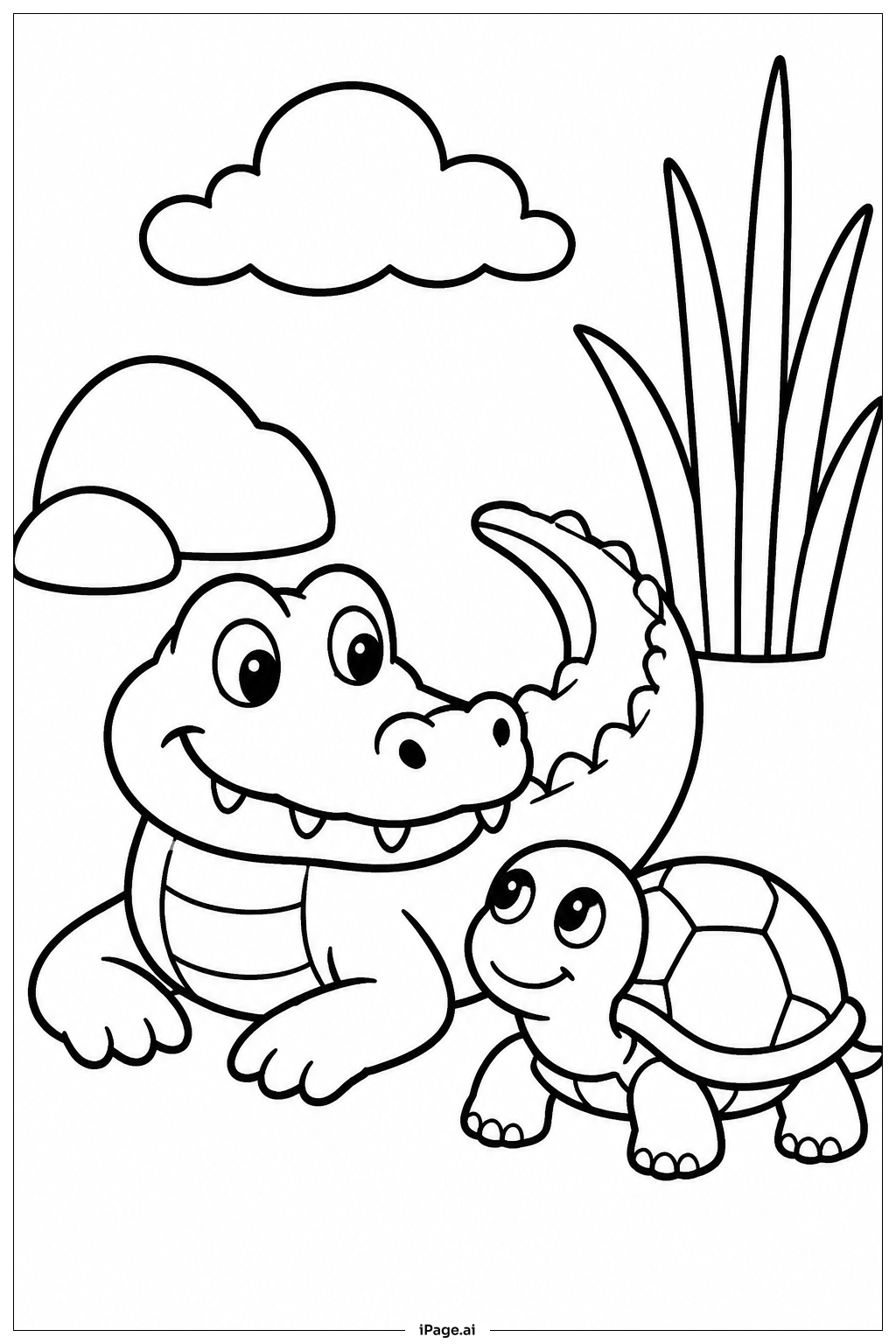
Coloring tips: How to color Alligator And Turtle coloring page well?
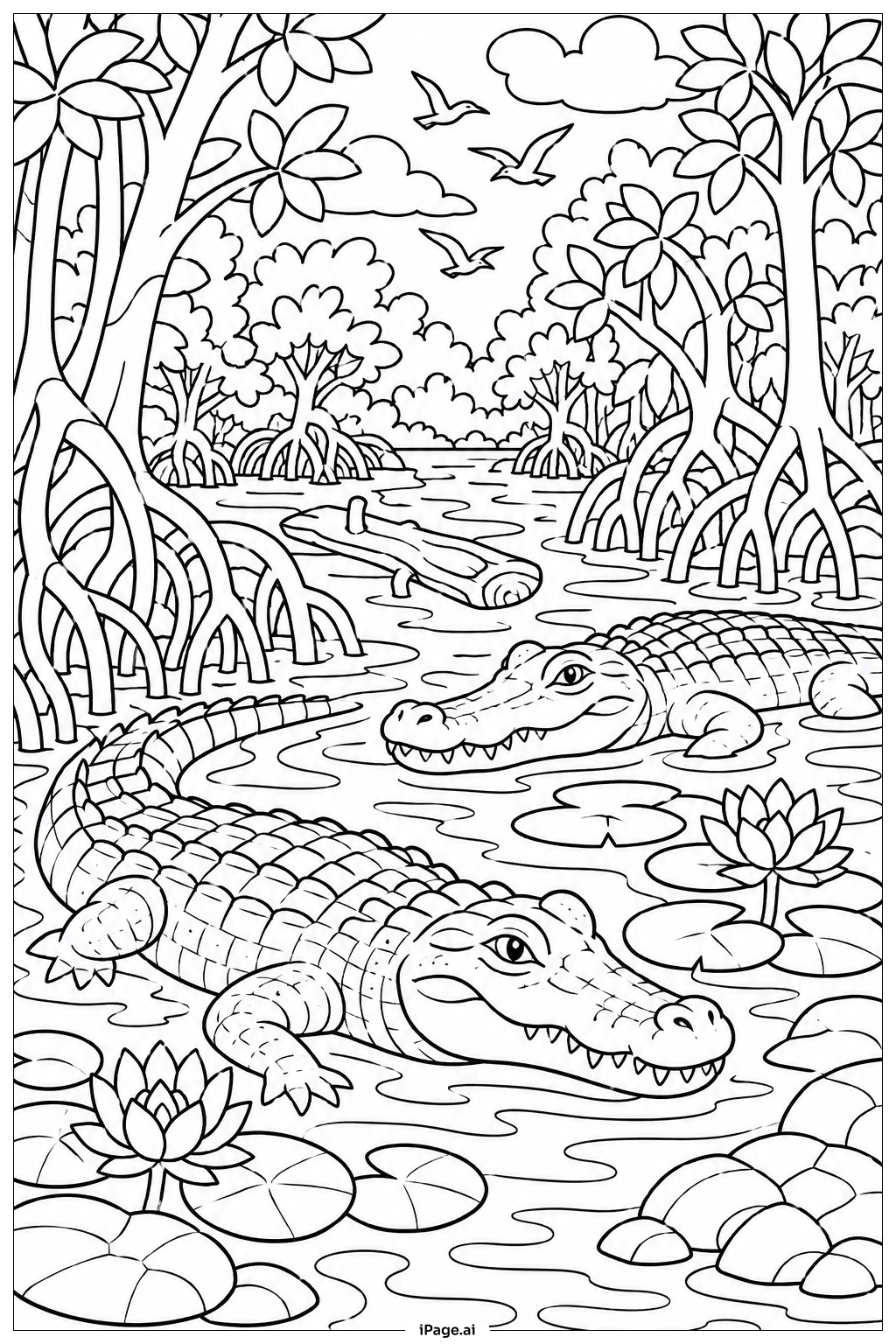
Try using shades of green for the alligator, like dark green for its body and lighter green for the belly area. For the turtle’s shell, choose colors such as brown, orange, or olive green to show different textures. You can make the water blue with some light reflections, and add yellow or light green for the grass nearby. Don’t be afraid to try different color combinations like adding some bright colors on the plants or stones to create an interesting background. Using crayons or colored pencils works well to stay inside the lines and add small details.
Coloring challenges: Which parts are difficult to color and need attention for Alligator And Turtle coloring page?
• Textured Skin: The alligator's skin has many small ridges and scales, which require careful coloring to show depth and pattern. It can be challenging to color these details neatly. • Turtle Shell Pattern: The shell has a detailed pattern that needs precise coloring to keep the different sections distinct. It might be tricky to balance colors for a natural look. • Fine Details: Small elements like the turtle’s tiny legs and the plants around require steady hand control to avoid coloring outside the lines. • Layered Areas: The scene has overlapping parts like the alligator’s tail and the turtle's shell, which demand attention to avoid mixing colors unintentionally. • Color Blending: Showing different shades on the alligator’s body and the water to create a realistic effect may require blending colors smoothly, which can be difficult for beginners.
Benefits of coloring books: Advantages of drawing Alligator And Turtle coloring page
Coloring this image helps improve hand-eye coordination and fine motor skills, especially when filling in small patterns on the alligator’s skin and turtle’s shell. It encourages focus and patience as children learn to stay inside the lines and use color creatively. Coloring animals like an alligator and turtle also promotes learning about nature and wildlife, sparking curiosity and imagination. This image offers a fun way to practice using different shades and blending colors to create depth. Overall, it builds confidence and artistic expression for children while keeping them engaged.