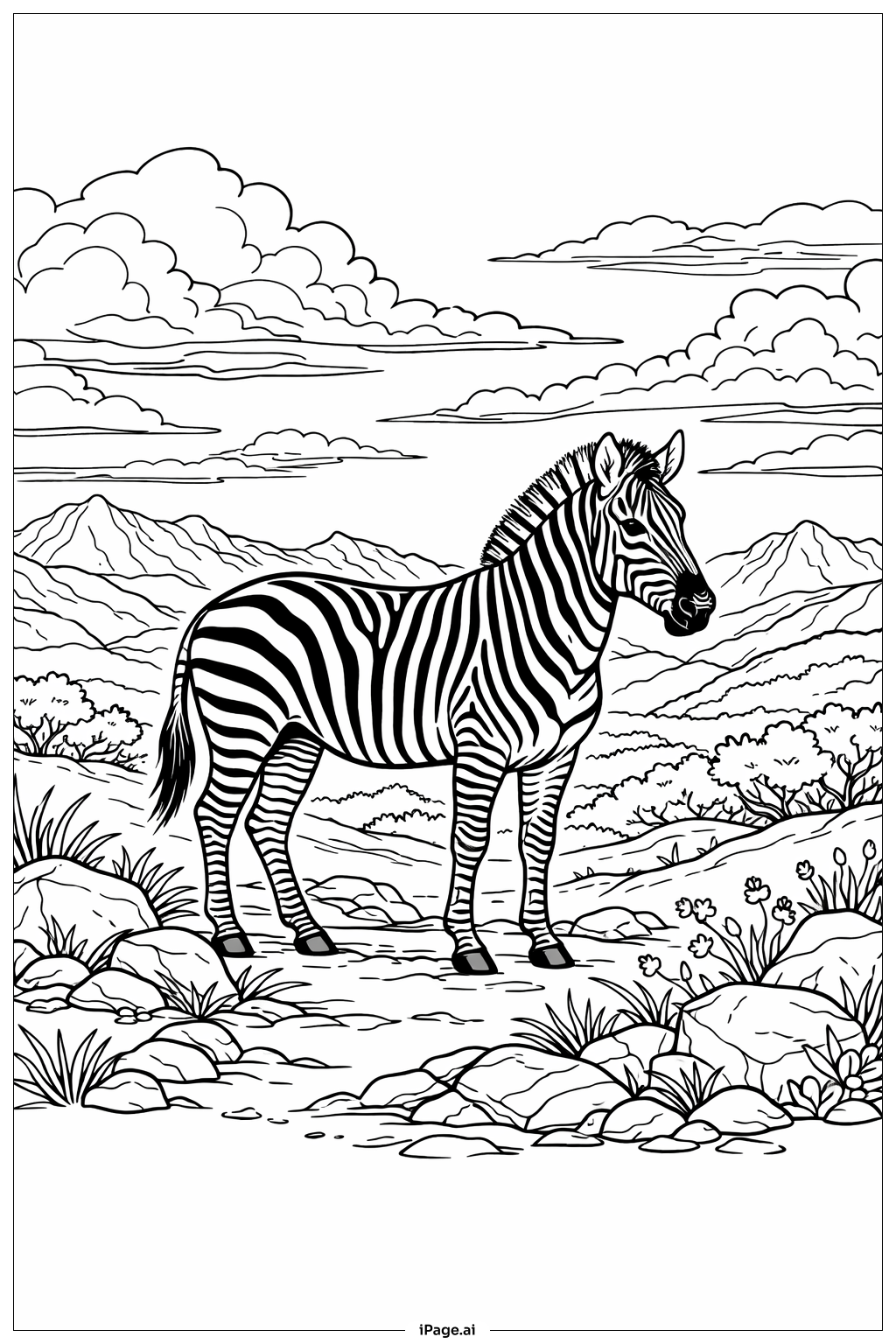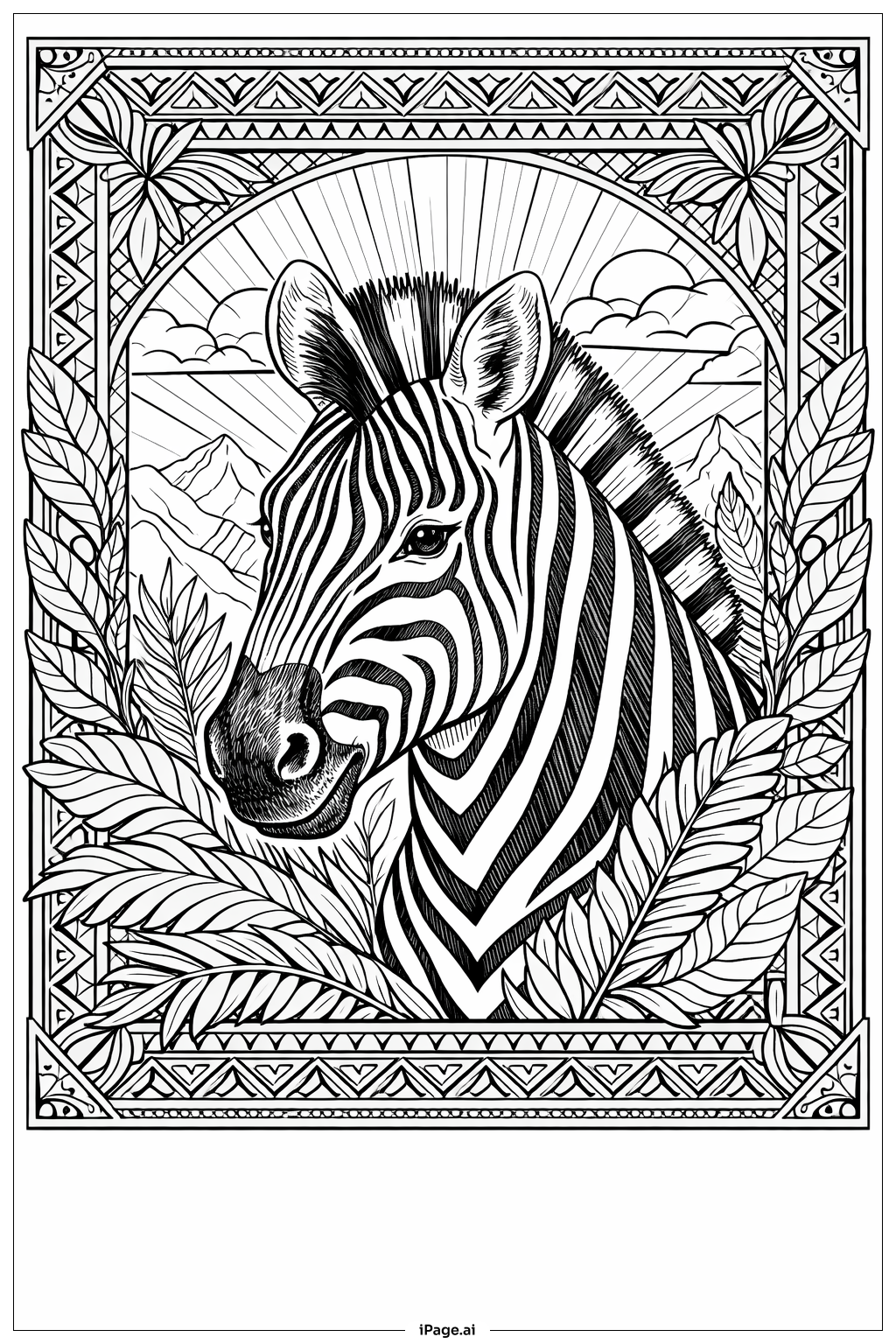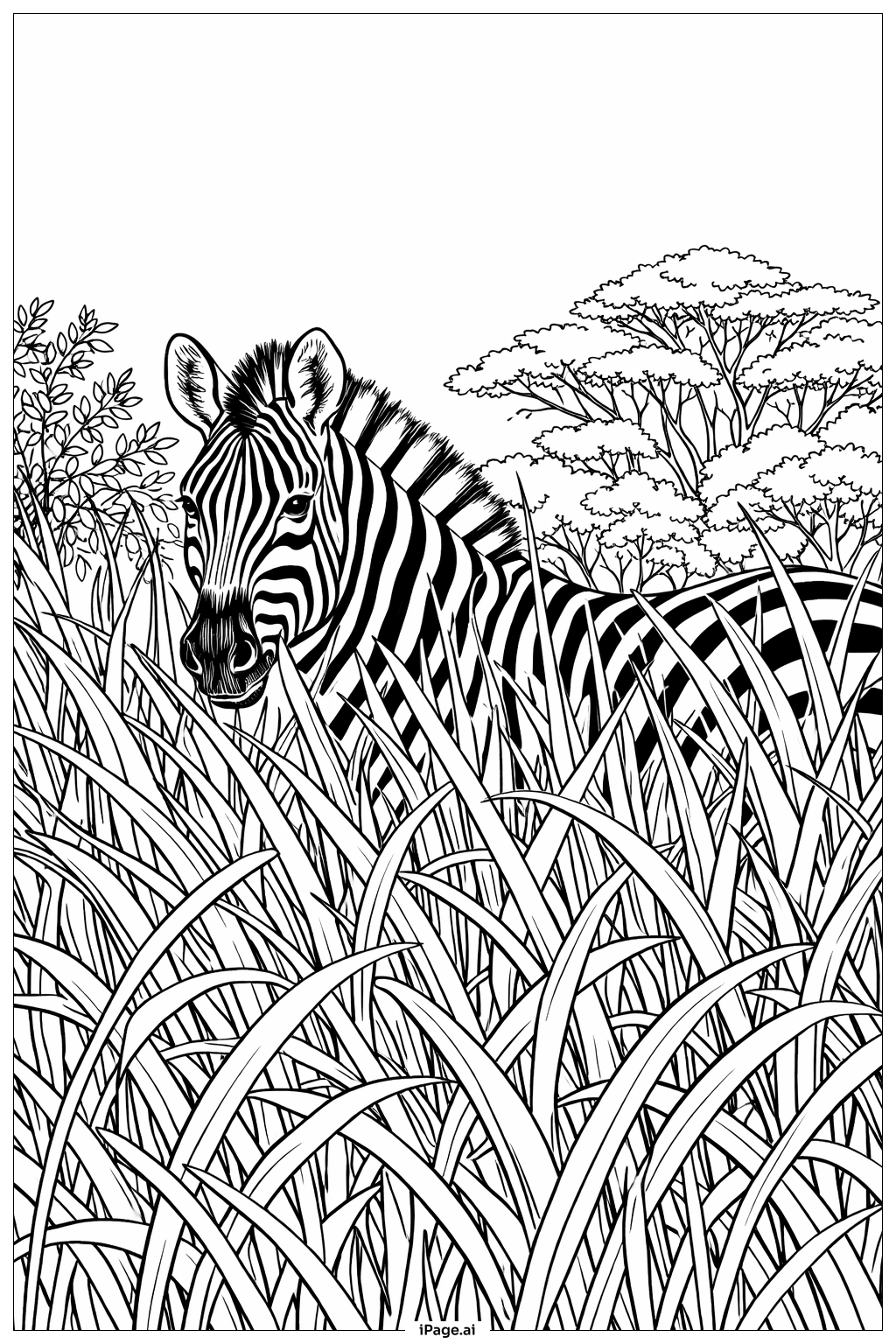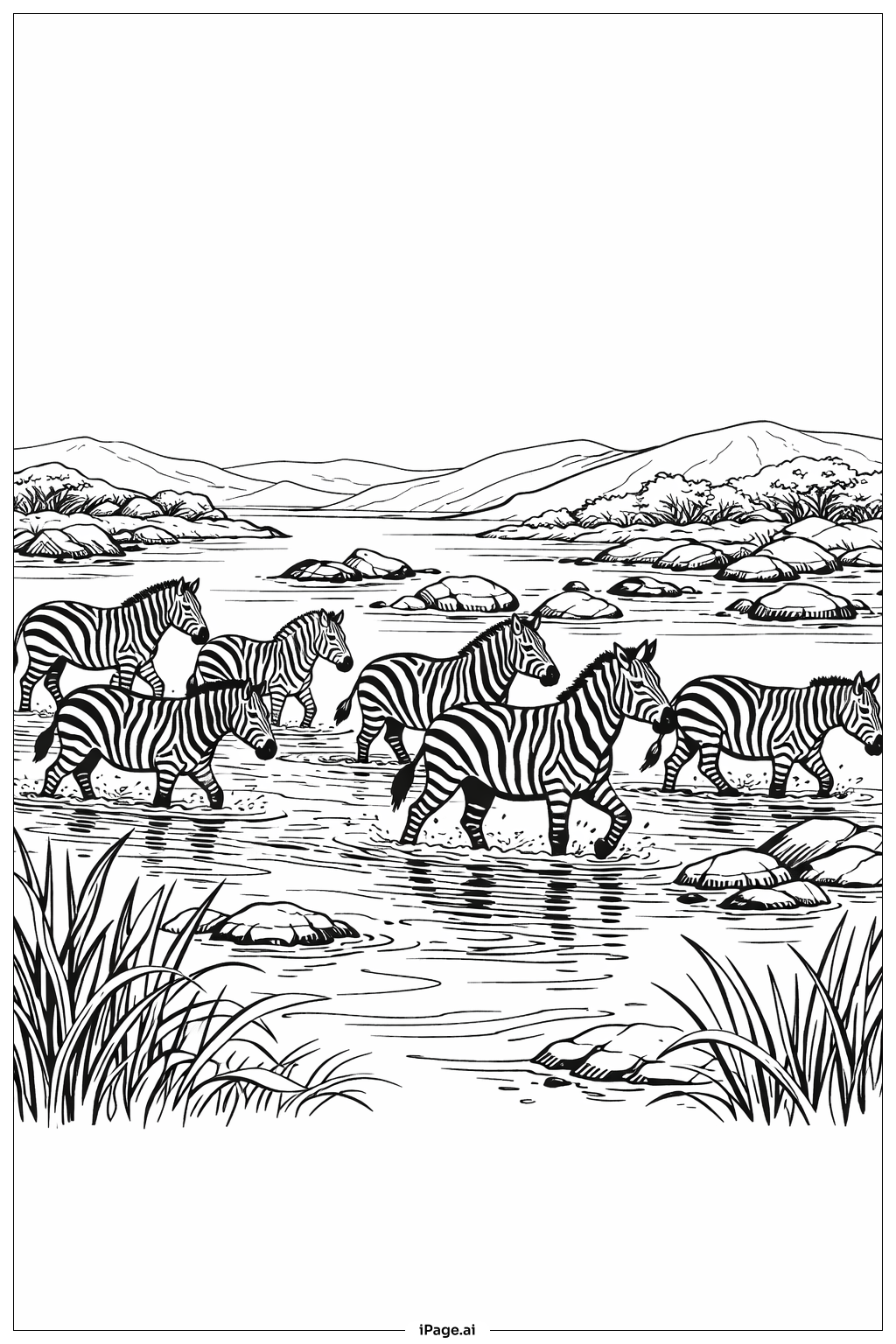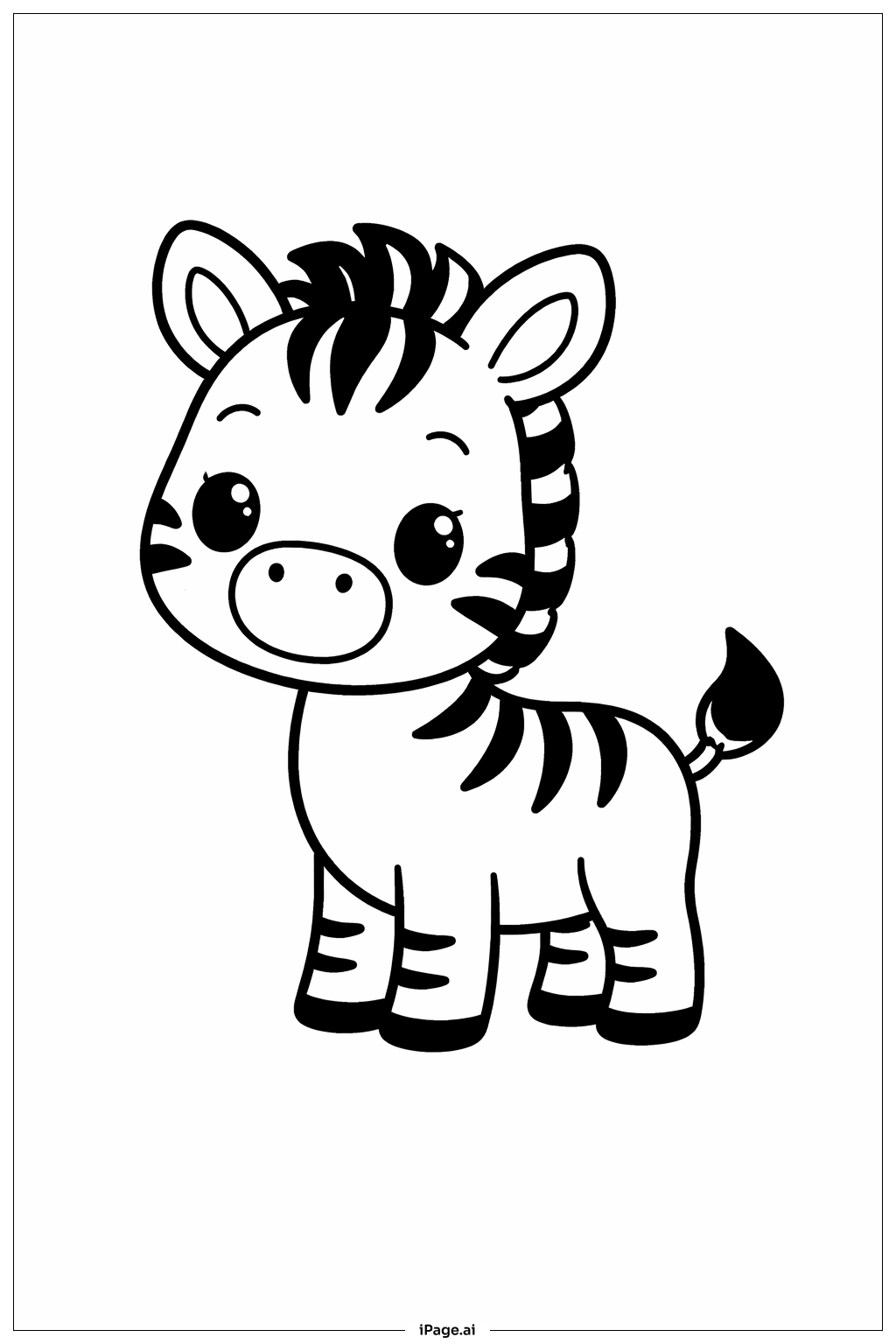
Coloring tips: How to color Baby Zebra Standing coloring page well?
Use black or dark gray for the zebra’s stripes to keep them realistic. For the body, use light shades such as white, pale gray, or light beige to contrast nicely with the dark stripes. Try giving the eyes a glossy finish with shiny black or dark brown and a white dot to show sparkle. The mane can be colored black or dark gray, and the inner ears may be soft pink or light beige. For the hooves and tail tip, black or dark brown works well. Feel free to add a colorful background, like green grass or blue sky, to make the picture lively and appealing.
Coloring challenges: Which parts are difficult to color and need attention for Baby Zebra Standing coloring page?
1. Coloring the stripes evenly can be tricky because they are curved and cover different parts of the body. Staying within the lines requires attention and patience. 2. The small details in the eyes and face need careful coloring to maintain the baby zebra’s cute expression. Mistakes here may change its look. 3. The mane and tail have fine sections that might be difficult to color neatly without crossing boundaries. 4. Choosing the right shades to make the zebra look natural but fun can be challenging for children learning about colors. 5. Balancing between the dark stripes and lighter body needs some understanding of color contrast to avoid the zebra looking too dark or too plain.
Benefits of coloring books: Advantages of drawing Baby Zebra Standing coloring page
Coloring this baby zebra helps children improve their fine motor skills and hand-eye coordination. It encourages focus and patience as they work on the small stripes and details. The zebra’s simple but cute design makes it accessible and fun for young artists, boosting their confidence. Coloring animals like this zebra can also spark curiosity about wildlife and nature, promoting learning through creativity. Additionally, choosing colors allows kids to express their imagination and develop a sense of color harmony.